8 Day Oregon Coast & Redwoods National Park Roadtrip from Seattle: Itinerary Overview
THIS POST MAY CONTAIN AFFILIATE LINKS. WHEN YOU CLICK ON THESE LINKS WE RECEIVE COMPENSATION, AT NO EXPENSE TO YOU, THAT HELPS THIS BLOG RUN. ALL OPINIONS ARE OUR OWN.
One of the most scenic road trips in the world, the Oregon Coast is a must see. This road trip is easily accessible from Portland and Seattle and is easy to do no matter who is in your group. The roads are well-paved, even if a bit windy, and the must-see stops are frequent. This road trip can be customized to fit the interests of your family - from focusing on nature and gorgeous photo spots to wildlife spotting to eating your way down the coast. Just a short extension and across the border into California, the Redwoods National Park and its moody forests are the perfect addition to the moody Oregon Coast. This guide will help you with planning your own trip along the coast.
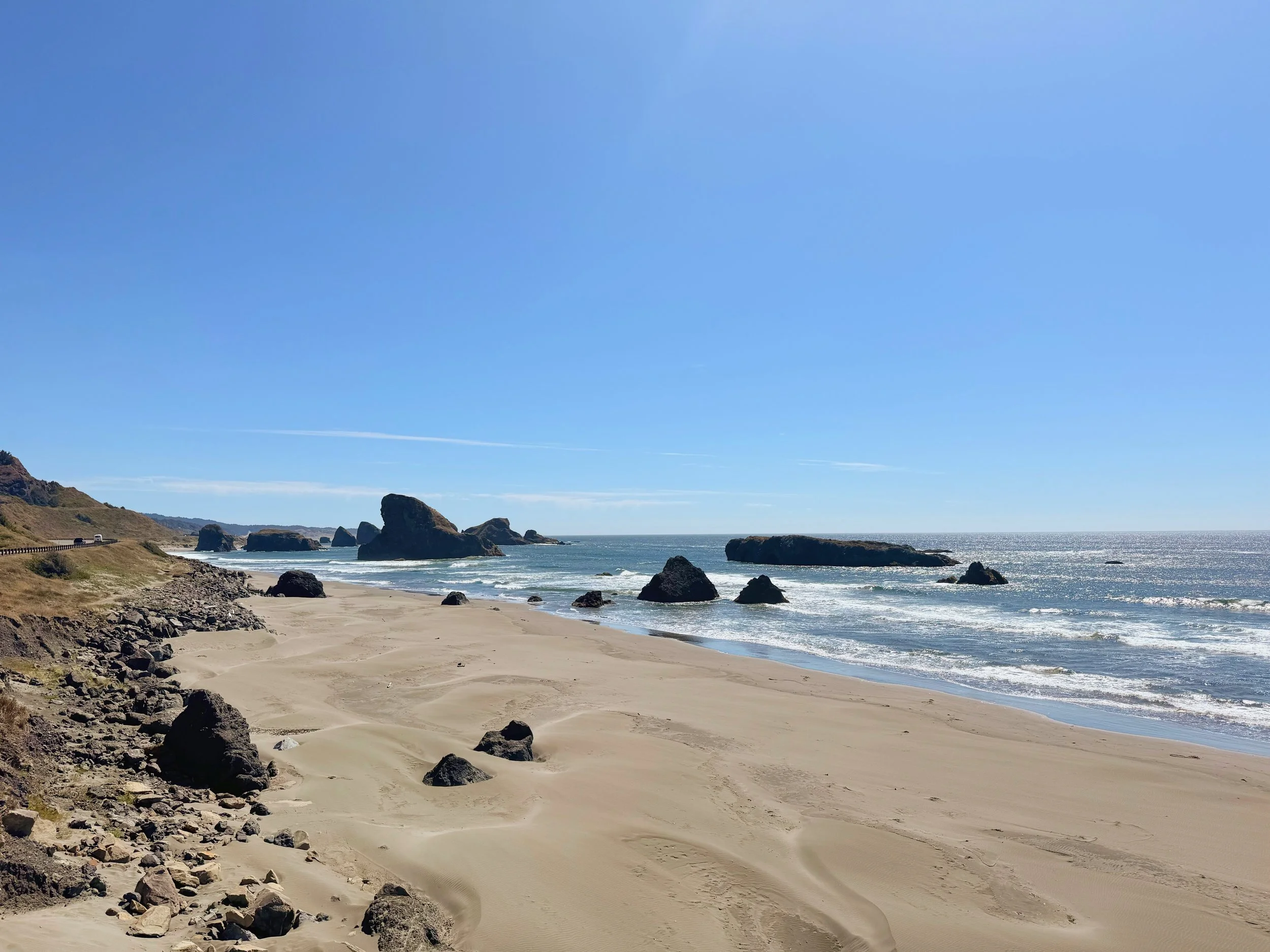
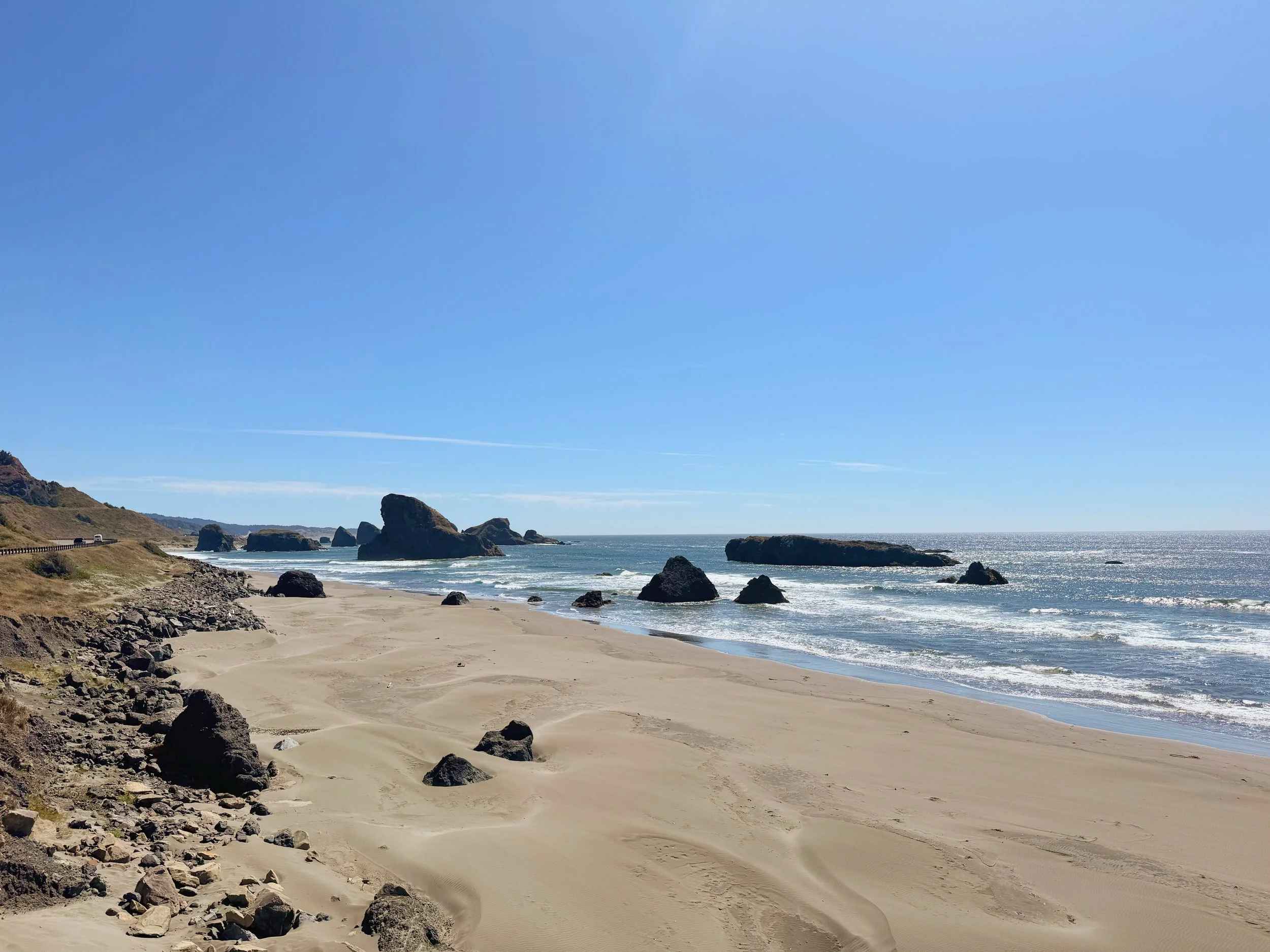
Along the southern Oregon Coast, Meyers Creek Beach
Best time of year
Oregon’s weather changes quite a bit depending on the seasons, while the Redwoods national park is typically more consistent. Here are the pros and cons of visiting at different times in the year.
Summer (July-September)
The ideal time of year to visit. The summer months give you the warmest and driest weather. Summers along the Oregon coast are perfect - think a mild 60s-70s temp during the day. Then chance of rain is considerably less in the summer, although you might get some fog in the mornings. If you are planning to explore the amazing Oregon coast tide pools, late spring through summer is often the best time for daytime low tides. Cons of the summer - peak crowds and higher accommodation prices. Accommodations also book up and you likely will need to plan ahead of time. However, the crowds are there for good reason. If this is a once in a lifetime trip - go in the summer to get the best of the coast. We went in late August, when there was still great weather but a lot of school districts were back at school so crowds might have been lower.
If you wanted to time your trip with different festivals and events, here are some that take place every summer along the coast:
Many cities along the coast have 4th of July celebrations
Lincoln City has a Kite Festival every June
Cannon Beach has a Sandcastle contest every June
Oregon Coast Music Festival is a 16-day festival in July
DuneFest with dune buggy races takes place in late July
Seaside Beach hosts a Beach Volleyball Tournament each August
Artists draw intricate labyrinths at Face Rock Viewpoint in Bandon, OR on select dates throughout the summer.
You can find artist crafted glass floats along Lincoln City beach that you can take home throughout the year. However, there are special times when they drop extra floats to increase your chances.
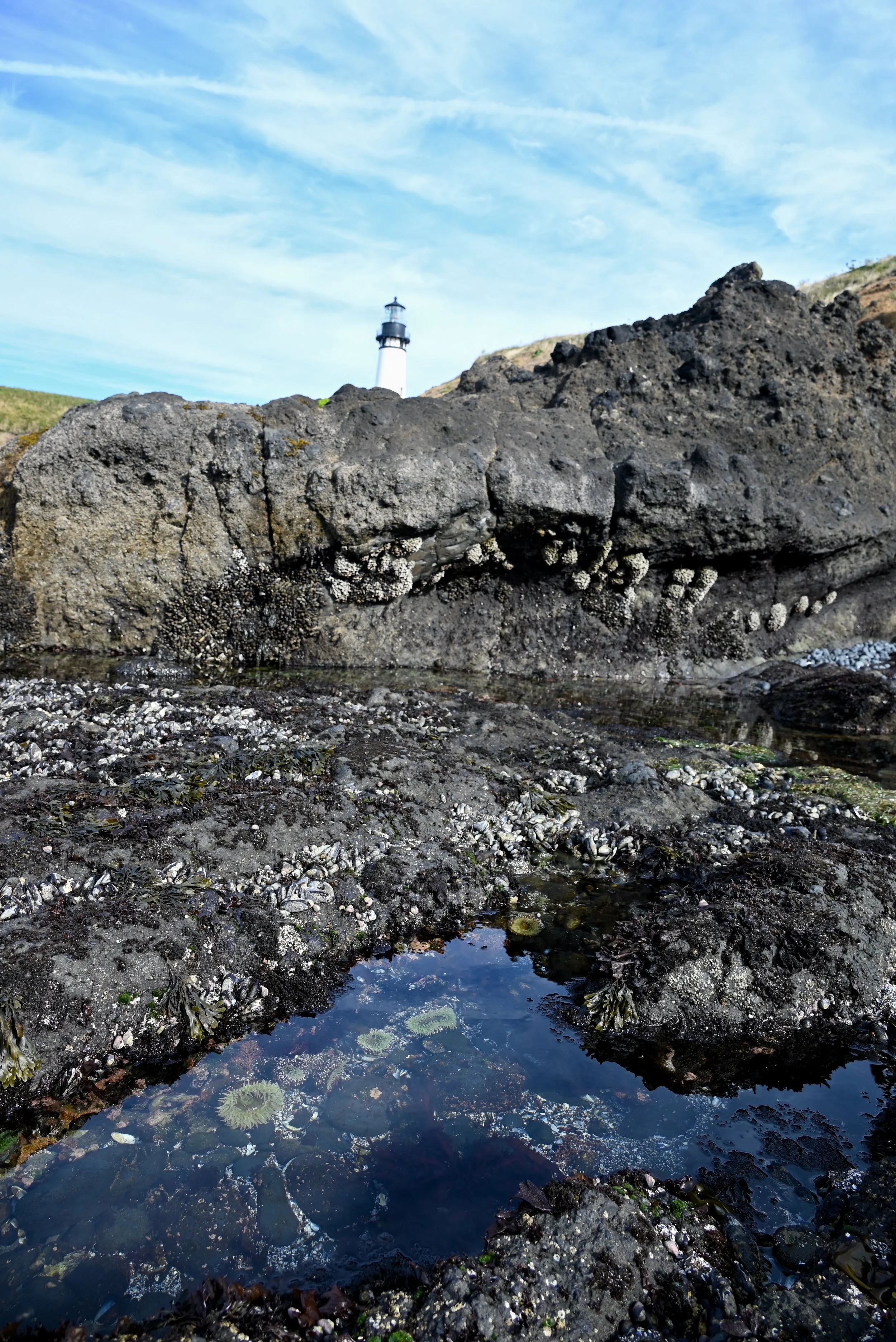
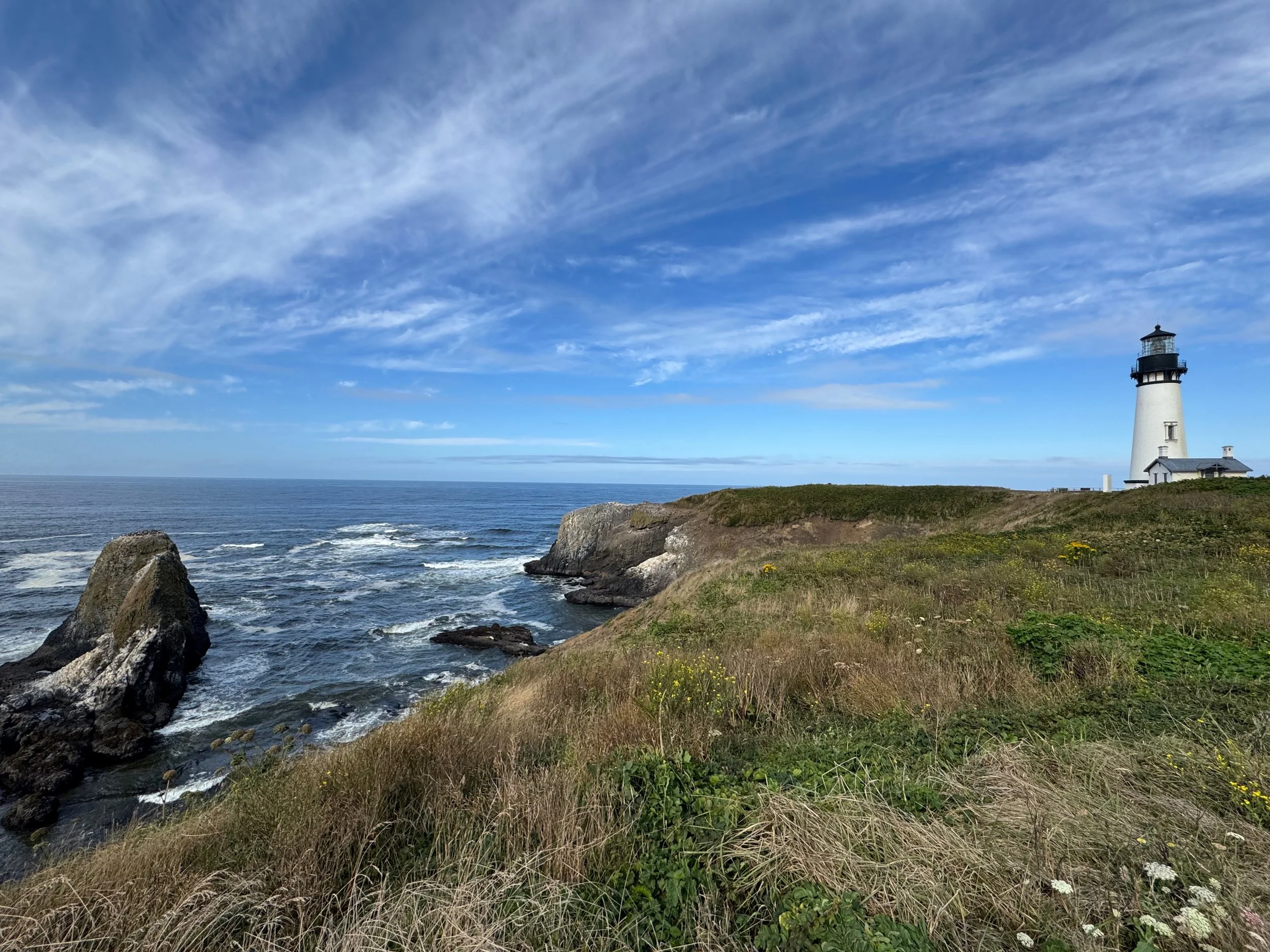
Yaquina Head Lighthouse Natural Area Tidepools
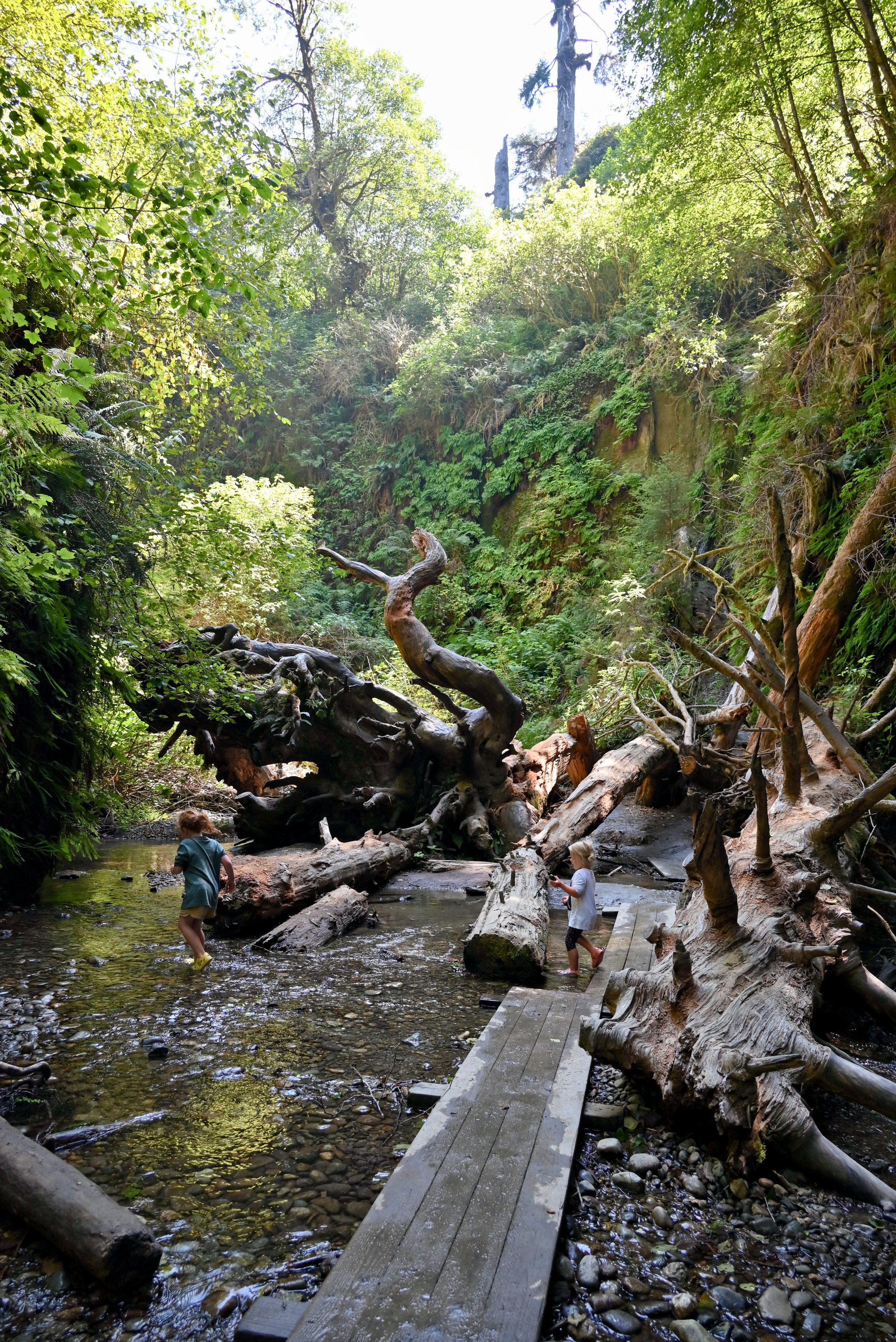
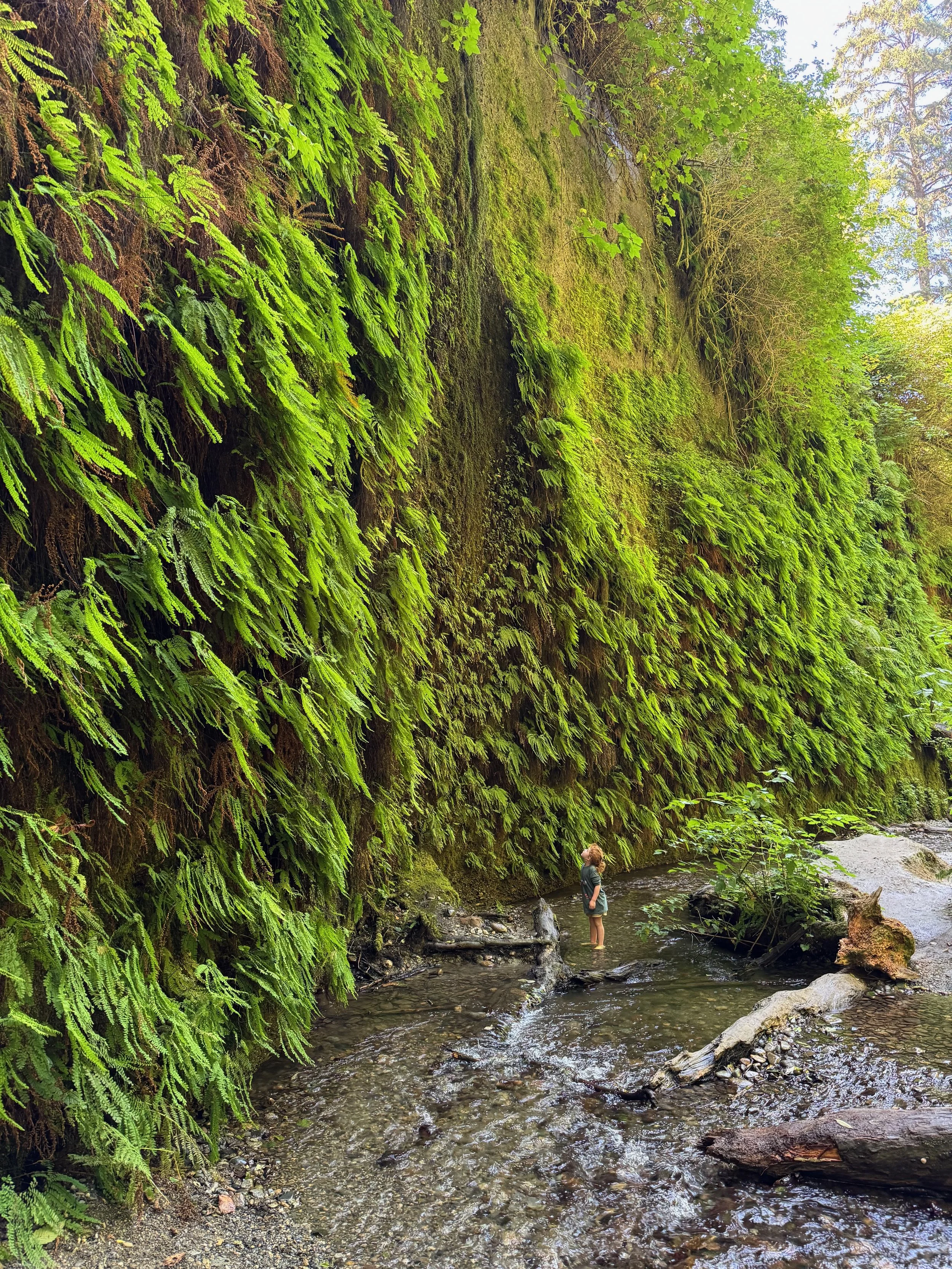
Fern Canyon Trail in Redwoods National Park
Fall (Late September - October)
Early fall is a great time if you want a good balance between good weather and lower crowds. September and October often still have great weather, but the chance of rain does increase as you get farther into October. Moody skies can definitely add to the jaw-dropping scenery, redwood trees and sea stacks. This is a great time if you don’t have to worry about minimizing missing school days. If you are interested in tide pools, note that often in the fall low tides are quite early in the morning.
Spring (april - june)
Great time to visit if you are interested more in the nature than hanging out on the beach. Spring weather is good for enjoying the reduced crowds, trails, wildflowers and full-strength waterfalls. Weather can be unpredictable and you will likely experience some sun, rain and heavy winds throughout the week, if not all in the same day. Very low tides during the day are great in the spring. Gray whale head north past the coast from March to June, so spring can often be the best time to spot whales.
Winter (November - March)
Winter on the Oregon coast typically means rain. Many coastal viewpoints won’t be as visible. Hikes will be less enjoyable due to the weather. Winter is a nice time on the Oregon coast if your plan is to stay cozy in a cabin and watch the large waves. If you have been to the coast before or just want to visit one place. Prices and crowds will be lower. But this is not the ideal time to do this multi-stop itinerary and get the most of each spot. One positive though is the whales that went north in the spring, head southbound from December to January.
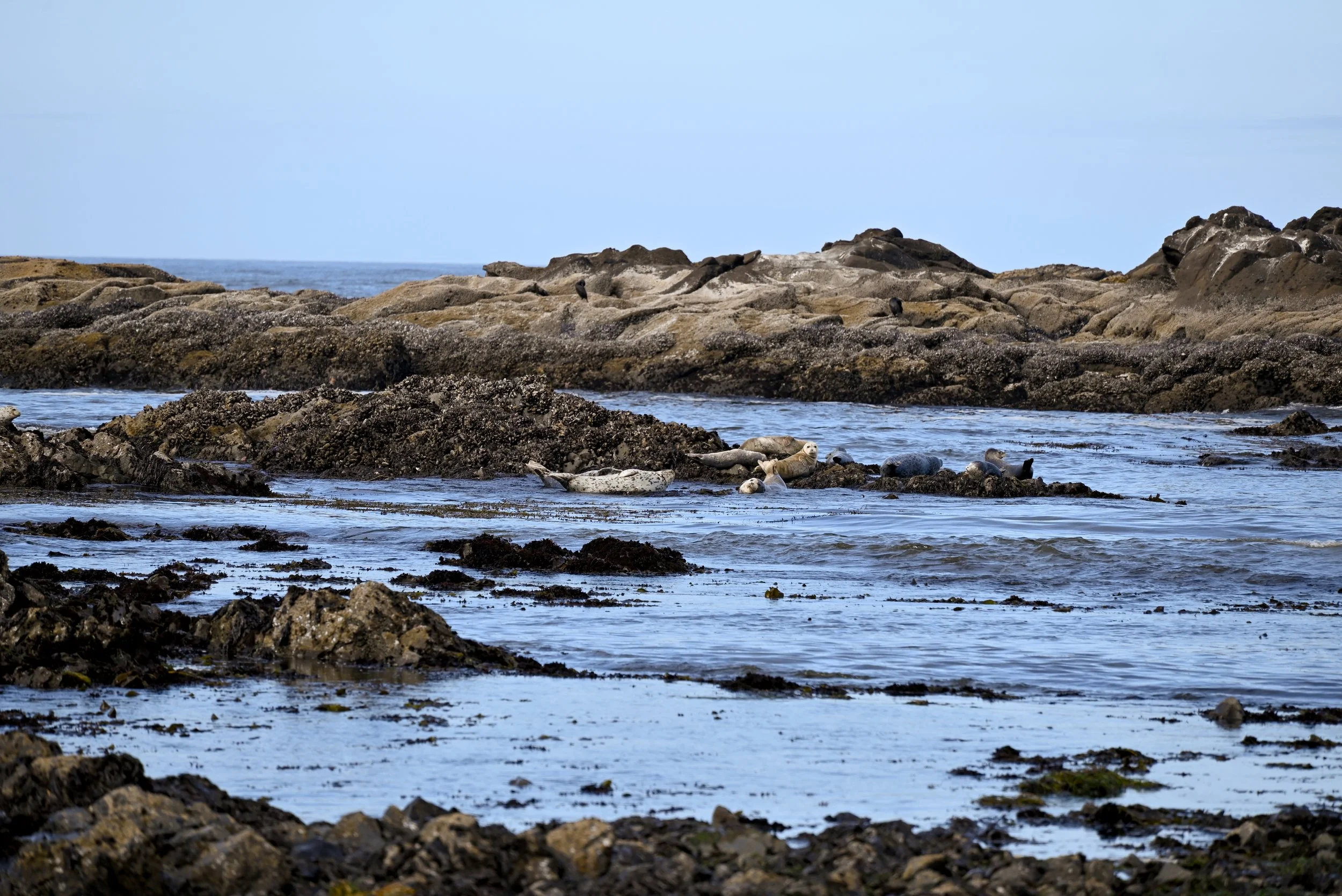
Seals resting near Yaquina Head Natural Area
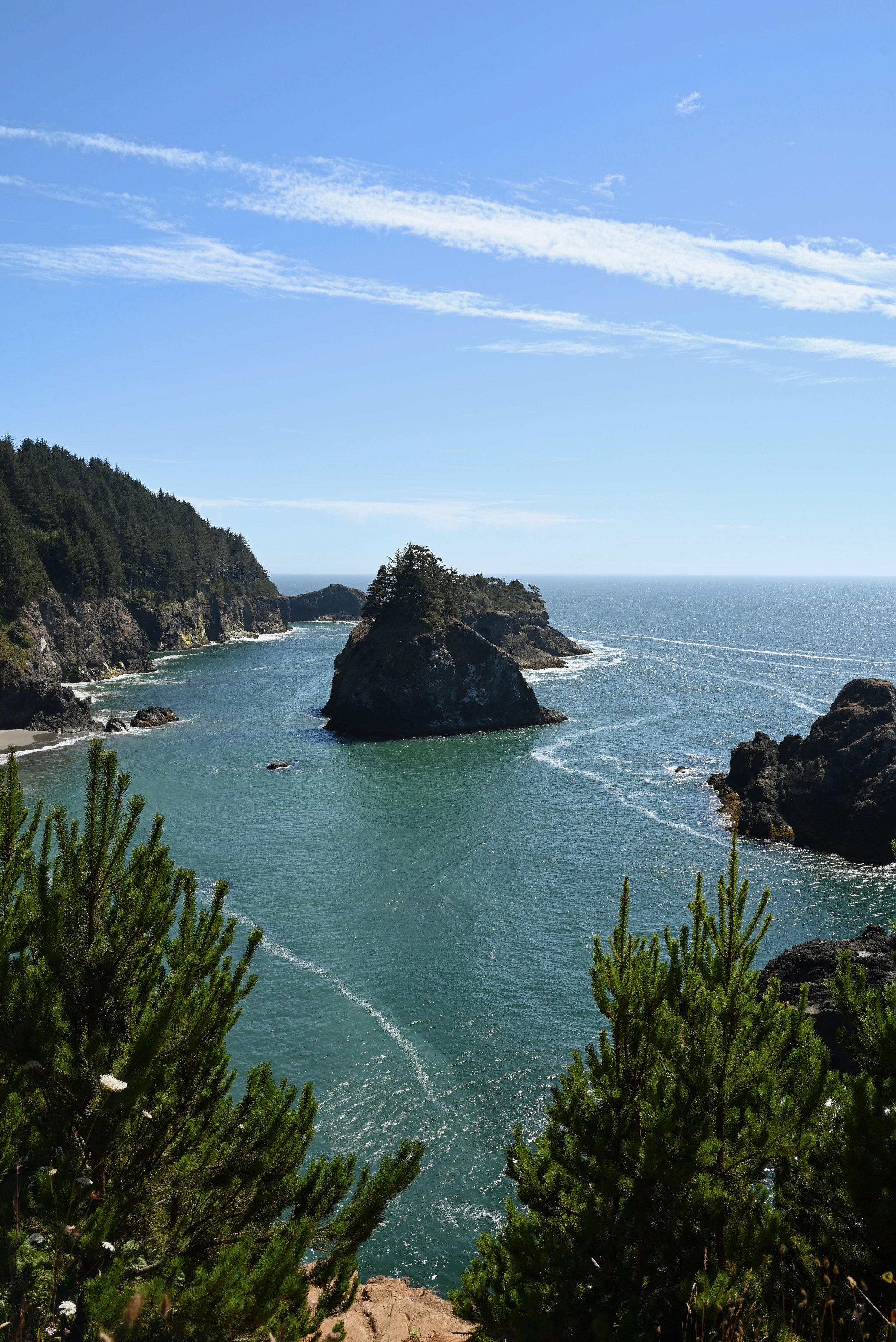
Near Arch Rock in Samuel H. Boardman State Scenic Corridor
RV or Car?
Should you do this roadtrip in a car or a RV? It depends on your priorities and what you have access to. We researched both while planning our trip and here are all of the pros and cons and actual numbers we debated:
Trip cost using a Car:
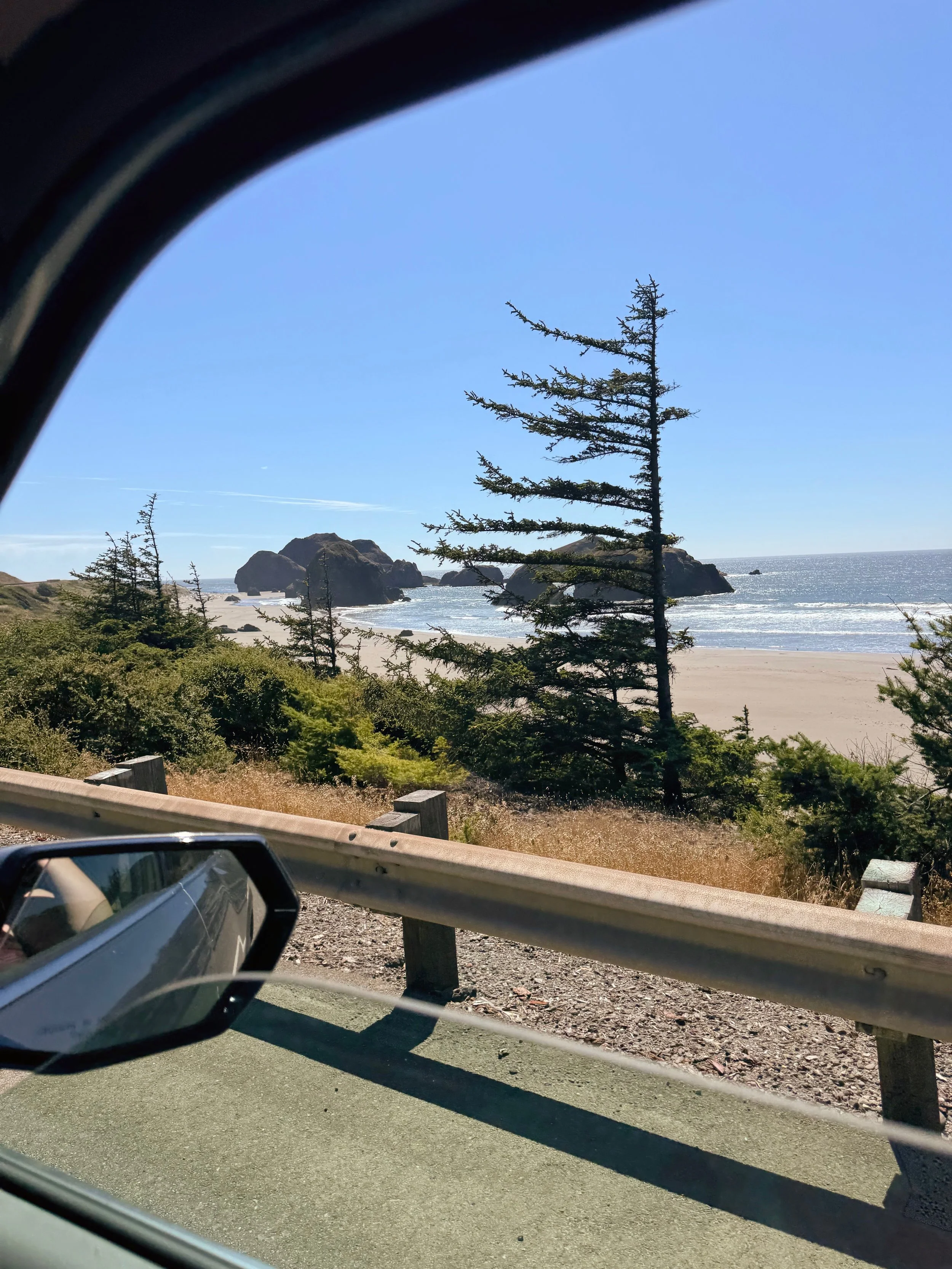
Along the southern Oregon Coast, Meyers Creek Beach
We live in Seattle and were doing the trip starting from Seattle, which meant we could use our own car. We would have no expense for the car itself. If you need a rental car, this might cost between $30-90/day depending on how big of a car your group will need. To average it out, we’ll estimate $500 for the 8 day trip.
Fuel. We own an electric car and had plenty of charging credits to use so we spent $0 on fuel or charging our car. More details on doing this trip with an electric car below. If you are using a gas car, expect to pay around $300-400 for fuel for this itinerary depending on the fuel prices at the time and the type of car you have.
Accommodations. With our trip being in the summer season, we booked hotel rooms and VRBOs that ranged from $150-$250 a night. For an 8 day trip, we spent $1,500 on accommodations.
Food. With using a car, we did not have access to a kitchen at all times. Even with using some VRBOs with kitchens, we were often on the road for lunch. Some accommodations had free breakfasts but not all. We were able to cook about 2 meals (dinners) and ate out for 13 meals. We focused on budget food options and ended up spending close to $700 for food for the 4 of us.
Total: for us - $2200. If you need to rent a car and pay for gas - $3050.
trip cost using a RV:
RV rental. We do not own an RV, but if you do you can eliminate this cost from the total. We saw RV rentals between $100 and up to $300 a night depending on size. We will estimate $200 a night, totaling $1600.
Fuel. Expect to pay more for fuel due to the lower MPG of RVs. We will estimate $500 for the 8 day trip, but this can be quite variable depending on fuel prices and the RV you have.
Campgrounds. There are a limited number of free dispersed camping spots along this route. There are apps and other guides that will give you more details about how to find the best free or cheap parking spots. If you want to stay at campgrounds so you have access to showers, amenities and the peace of mind of having a guaranteed spot - expect to pay between $25-$85 a night. We’ll average that to $360 for the 8 day trip.
Food. This will likely be considerably lower than using a car and relying on eating out at restaurants. We’ll estimate it at $350 for the 8 days.
Total: if you already own an RV: $1210. If you need to rent an RV: $2810
Winner for cost depends on your situation and what you already have access to or would need to rent. For us, using our car was cheaper even with paying for accommodations every night. Hopefully this helps determine what is the cheapest for you.
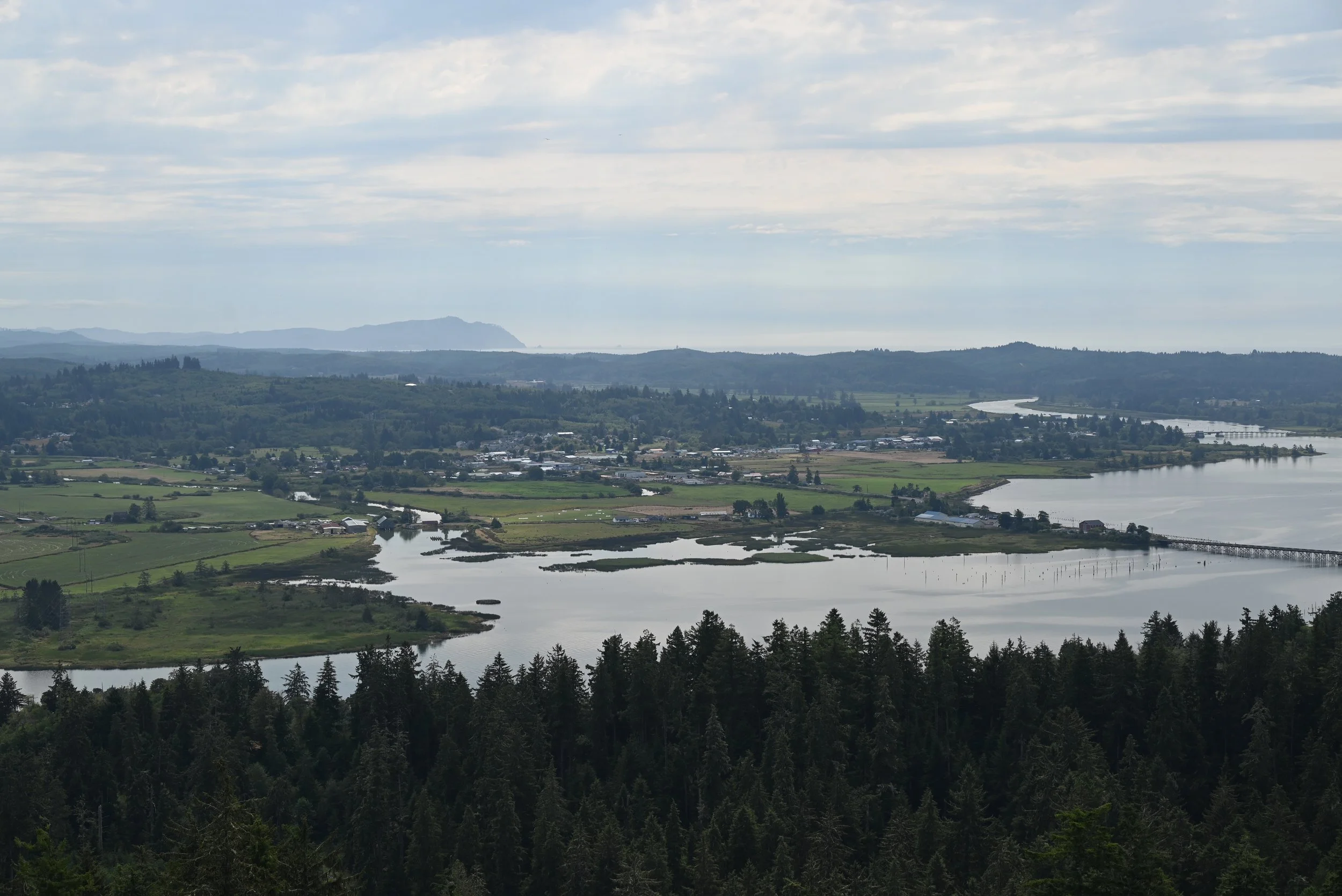
View from Astoria Column in Astoria, OR
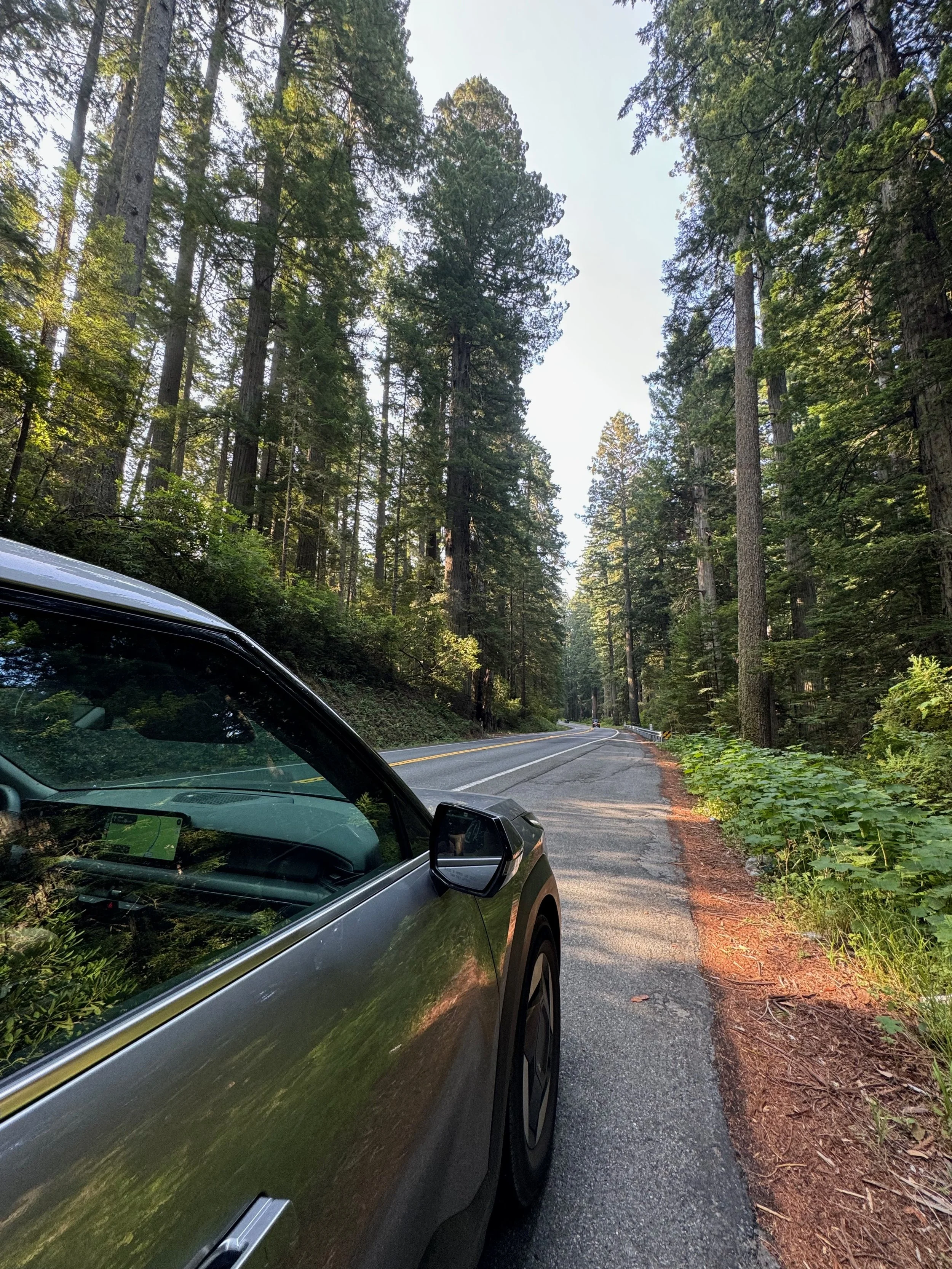
Driving through the Redwoods National Park
Logistics of using a car:
+ A lot of the coastal roads are quite winding. Driving a car on these roads is typically a lot easier than a larger RV.
+ Stopping at the viewpoints is straight forward as your car should fit in any spot.
+ There are more hotel options than campgrounds, so you might be able to book lodging last minute. This gives you some flexibility if you want to stay longer in one area of the coast than another. I still would recommend booking your accommodations in advance, but there is possibly a bit more flexibility in this aspect with a car vs RV.
+ It is easier to access towns and restaurants.
– You will need to unpack and repack almost every night. We only stayed in one hotel for two nights, the rest were all just for one night. You will need to be a pretty efficient and organized packer.
– You will be eating out more and it might be harder if you have specific dietary restrictions or want healthy or well-rounded meals.
Logistics of using an RV:
+ No need to pack and unpack
+ Access to a kitchen for your whole trip. You can get and keep groceries for your whole trip. This can make some things easier if you are traveling with kids or have dietary restrictions.
+ It is a unique experience. Kids often like traveling in an RV and it offers a unique way of traveling rather than just hotel hopping.
+ Many campgrounds are found in more scenic locations. You might get a view of the coast or be in a beautiful forest.
– There are narrow, winding sections of the road which make driving harder, especially if you are not used to driving an RV or large car.
– Parking can be tricky at viewpoints. Not every viewpoint or attraction has parking for RVs. Even popular spots only have parking for a couple RVs and those might fill up.
– Campgrounds, especially in the summer, fill up. You will need to book these in advance and an RV might not offer more flexibility despite it seeming like it might.
– You will have to worry about water, dumping and hookups that come with being in an RV.
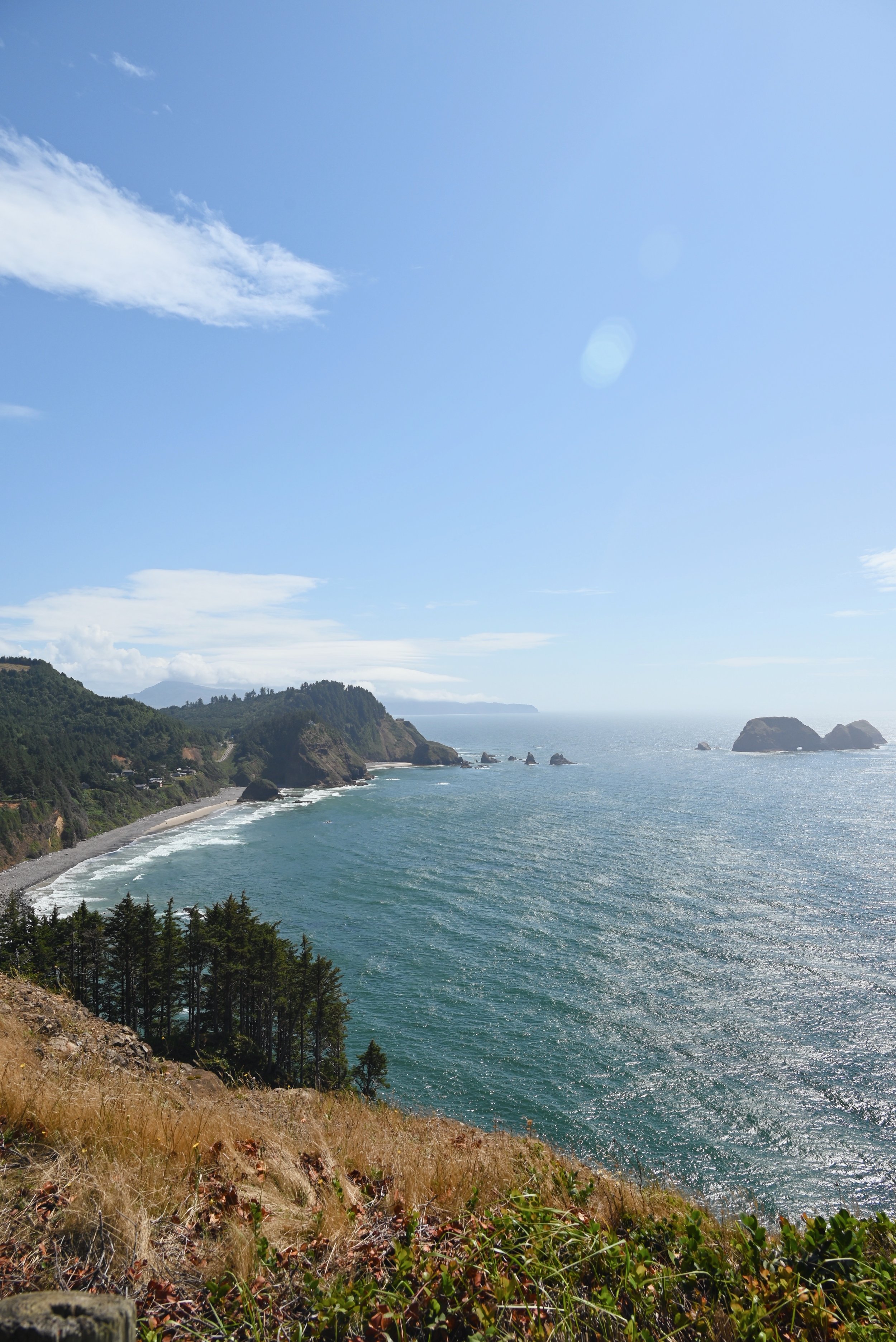
Cape Meares, Oregon - Three Capes Scenic Loop
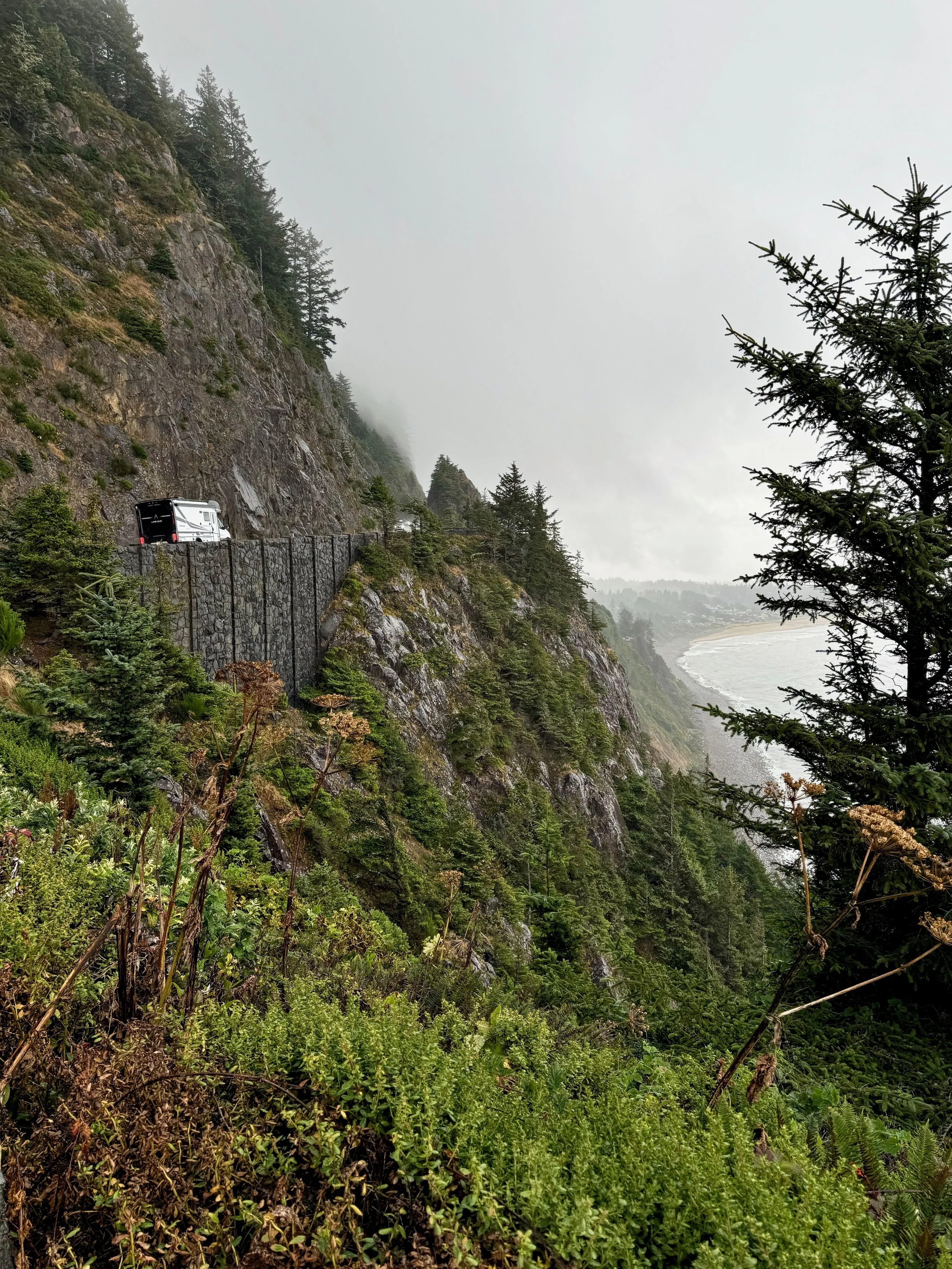
Neahkahnie Viewpoint
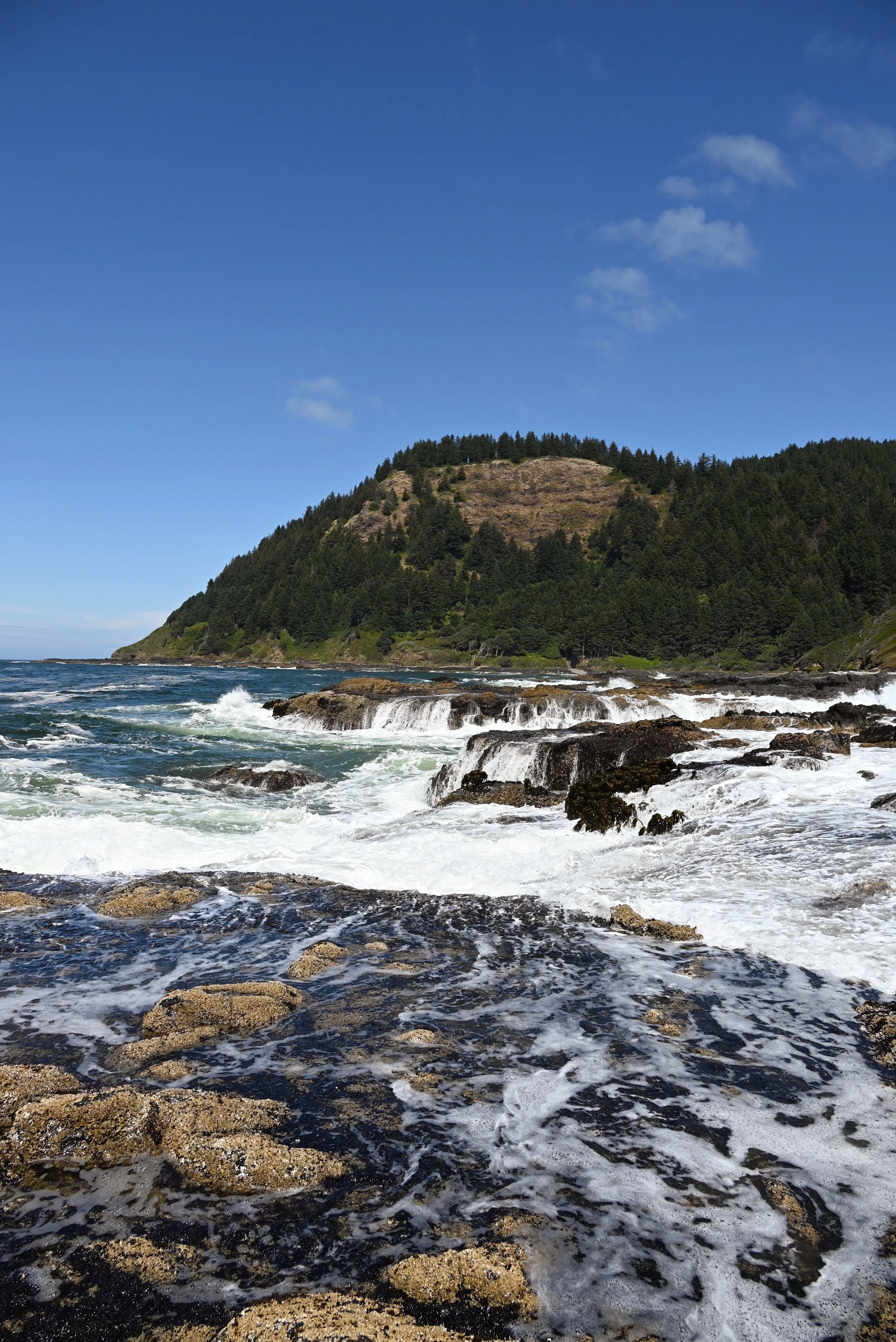
Near Thor’s Well on Cape Perpetua
For us, we have a lot of experience with trips that involve lots of accommodation changes and that did not feel like as much of a hurdle as some of the aspects of an RV. We chose to use our car, but we saw so many RVs on the road and know that that is a great option for many.
Electric Car logistics:
We did this road trip with our electric car and were pleasantly surprised how easy it was to find chargers along the way. We were given Electrify America credit from our car dealership when we bought the car and solely used those chargers to charge our car. Even with restricting which chargers we used, we had plenty of options along the way. We chose when to charge based on what worked best with our schedule. For example, we timed charging with lunch breaks and picked up food beforehand and ate it in the car while the car charged. It typically took the same amount of time to eat our lunch as it did to charge the car. Once the car reaches 80% battery capacity, the charging speed drops significantly. With the frequency of the chargers, we typically only ever charged to 80% as that maximized our time. There were occasionally times when we had to wait for a charger to open up, but we typically looked at the Electrify America app about 15 minutes before arriving at the charger to see how many spots it said were empty. We would do his roadtrip with an electric vehicle again in a heartbeat as long as the car had a good enough range. We used our Kia EV 9, with a range of usually about 240 miles.
Route Basics
This route starts in Seattle, Washington but you can also follow this itinerary if you are starting from Portland, Oregon, you’d just need one less day. While on the Oregon Coast, you’ll be on U.S. Route 101 - an incredibly scenic dry that hugs rocky cliffs, has amazing ocean views, goes through forests and along beaches. There are frequent pull-offs to get out and admire the views and several worthwhile stops along the way. It is the kind of road trip where you spend more time out of the car than in. From the northern coastal city of Astoria, OR to the southernmost city of Brookings, OR is 340 miles. If you were to drive it straight through it would take just under 8 hours. For the Oregon Coast part of the trip, we split this drive across 4 days. We then spent about 2 days for the Redwoods National Park. The final 2 days were for driving back up Oregon on I-5 and stopping at a couple stops along the way including Portland before making it back to Seattle. In total, we drove a 1,100 miles across the 8 days - which equates to about 140 miles per day on average.
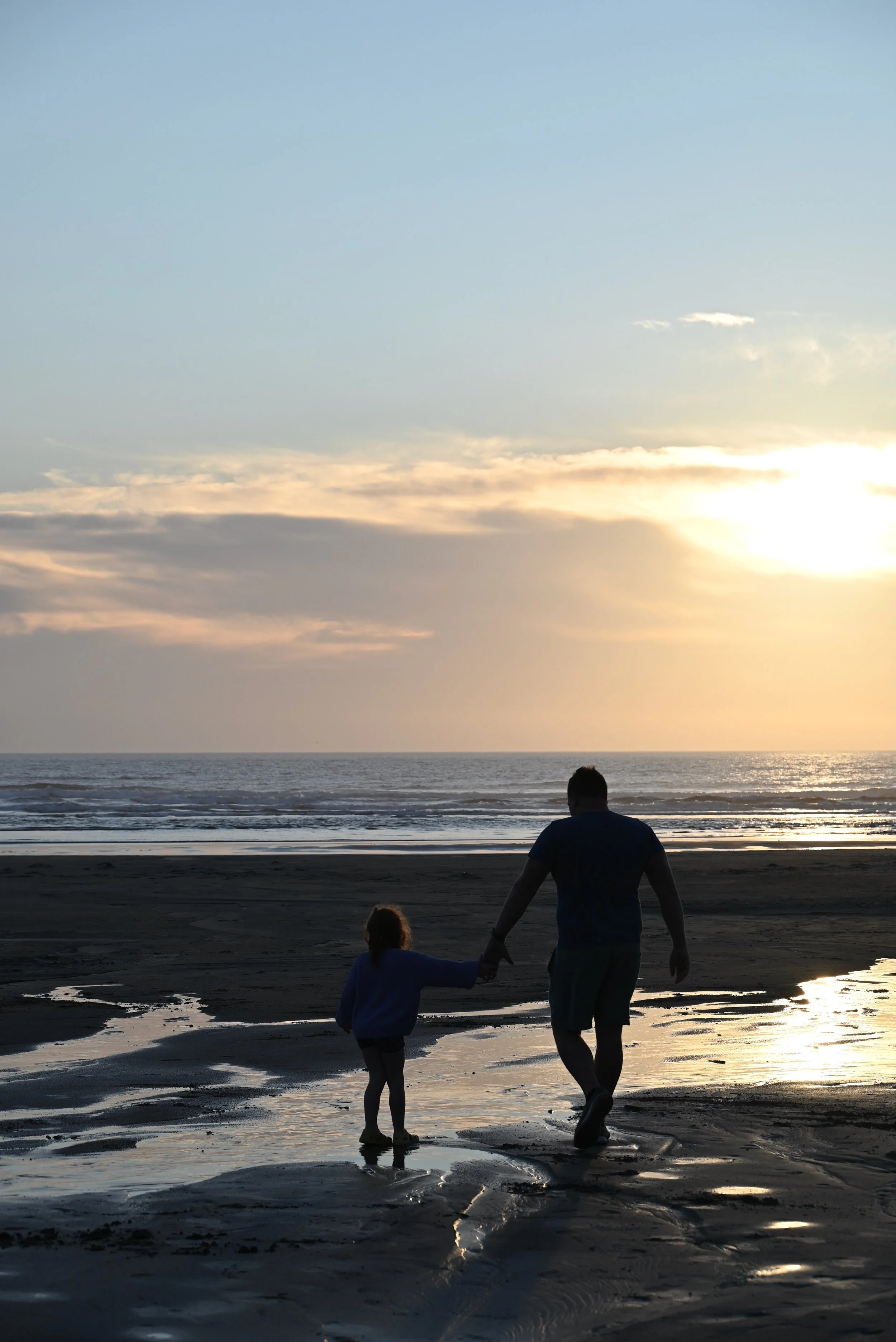
Nye Beach in Newport, Oregon
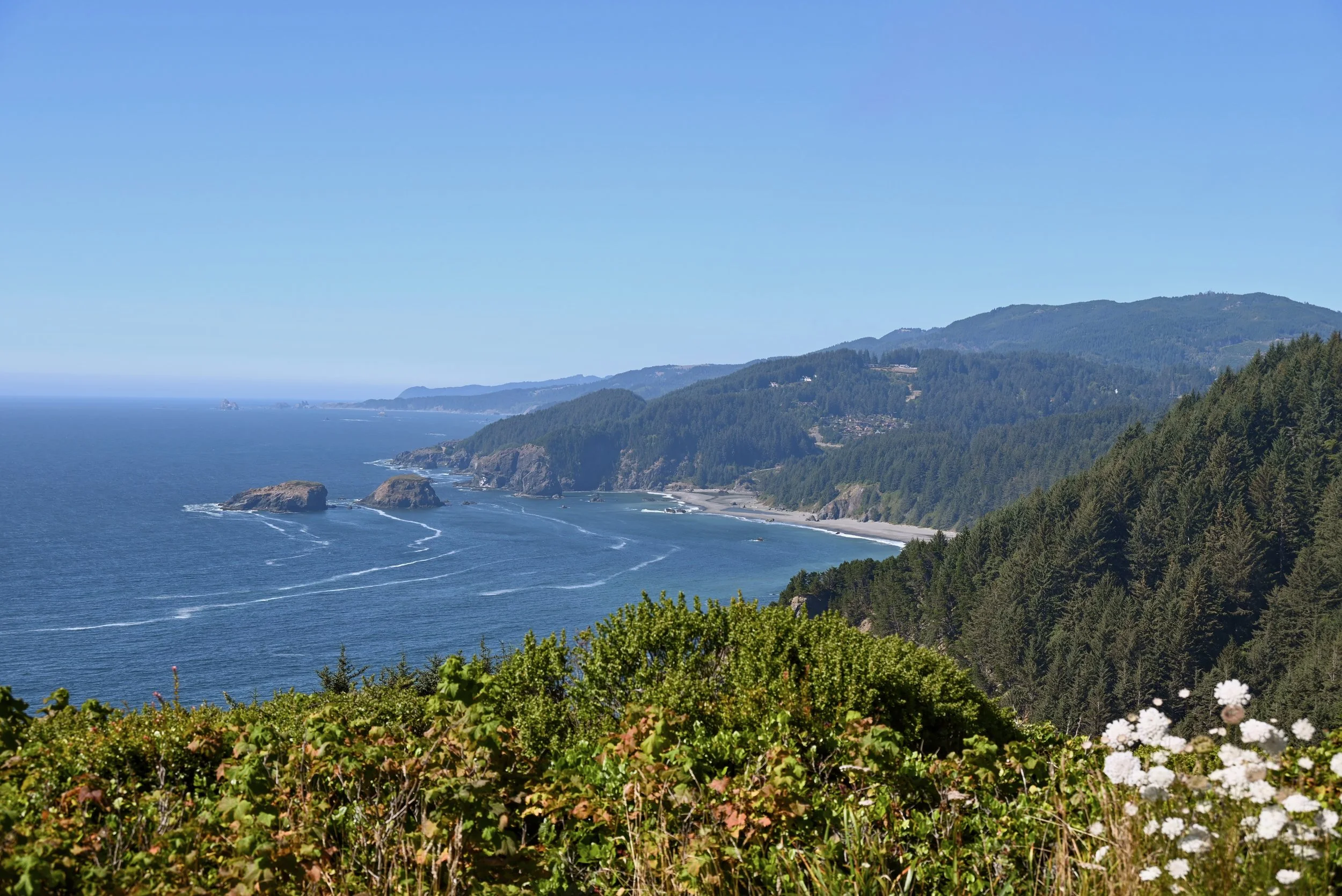
Samuel H. Boardwalk Scenic Corridor
All beaches in Oregon are public, unlike other parts of the country. While the beach and shoreline are public, you have to access them by using the public access points rather than walking through people’s property. Pets are typically allowed on all beaches but often dogs need to be leashed. Oregon beaches are a mix of wide sandy beaches and rocky shores with smaller cove beaches. You might find driftwood on the beaches or soft sand. The scenery changes quite dramatically as you make your way along the coast. Along with the nature, the landmarks and attractions change. The northern coast is known for more of its cute historic towns and wide sandy beaches. This area is often more busy due to its easy access from Portland. The central coast starts to get less crowded and has gorgeous lighthouses to see, sea lions and sand dunes. The south coast is more remote and is known for its dramatic rocky cliffs and more nature focused landmarks. Cell service can be more spotty as you make your way south down the coast. Downloading offline maps is definitely helpful as you try navigating between stops.
Map of spots to see
How many days do I need?
8 days for this itinerary felt like the perfect amount for our family. You could technically do this route in a bit less or far more time. There are countless things to do along the way and you can fill up a full month slowly making your way down the coast. There is a great diversity in activities from wildlife spotting to tide pools to gardens to admiring landscapes to hiking to trying new restaurants to culture. While we could have done this itinerary in more days and got to see more things, this felt like a good pace where nothing felt too repetitive and every experience was awe-inspiring. If you want to do the Oregon Coast in a different amount of days then 8, here is how I would adjust the itinerary:
If you have 3 days - Start in Portland and focus only on the Oregon coast
If you have 5 days - Start in Portland and either focus only on the Oregon Coast or add a day for the Redwoods and plan to have a longer travel day back up to Portland without many stops on your final day
If you have 7 days - It is still feasible to start in Seattle and just skip the stops along the I-5 in Oregon (Portland and the Enchanted Forest).
If you have 10 days - Spend more time along the Oregon Coast or add in a night or two at Crater Lake National Park
If you have 14 days - Spend extra time along the Coast, in the Redwoods, at Crater Lake National Park and add in more time in Portland or elsewhere in Oregon (Mt. Hood, Columbia River Gorge, etc)
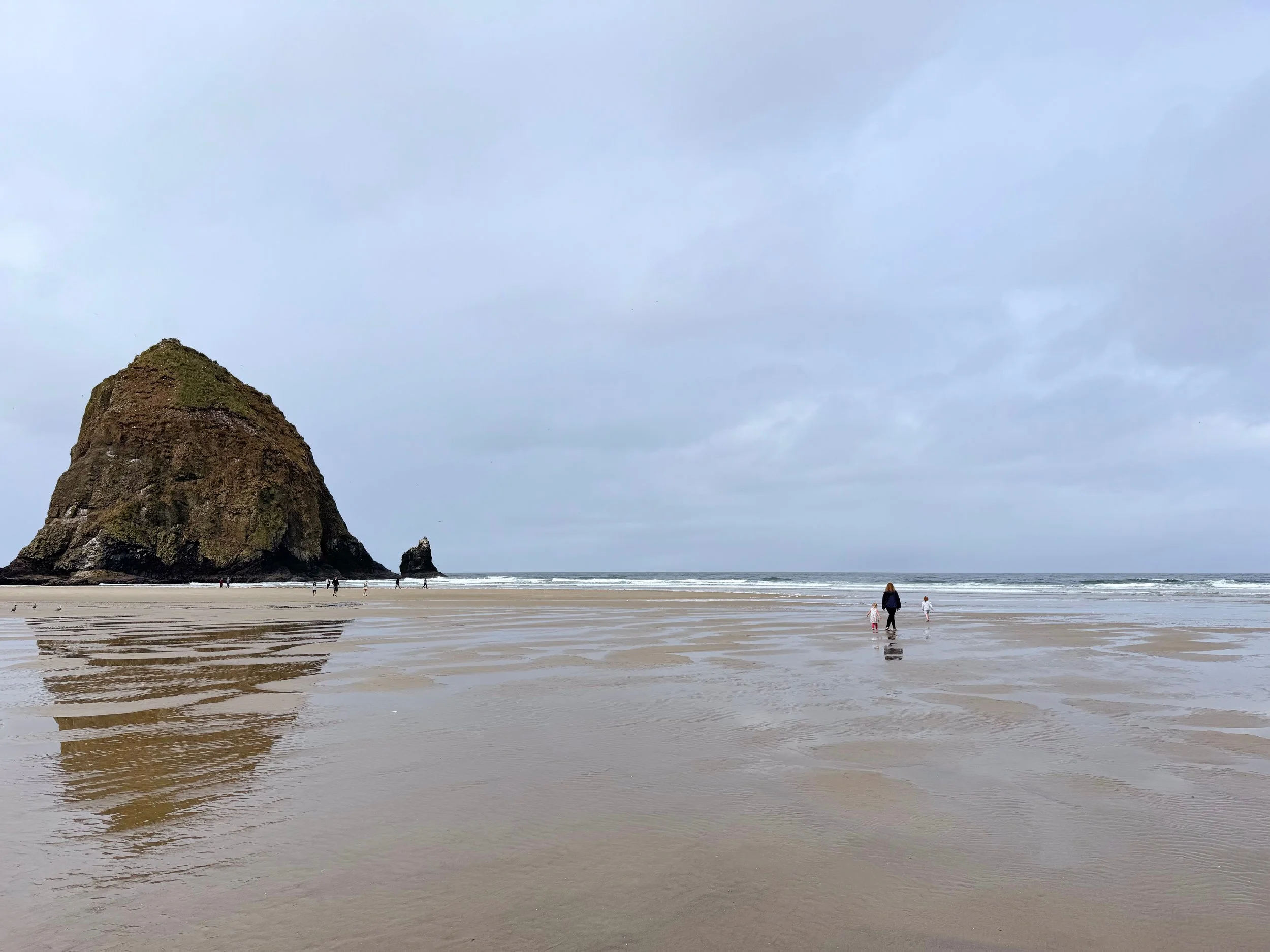
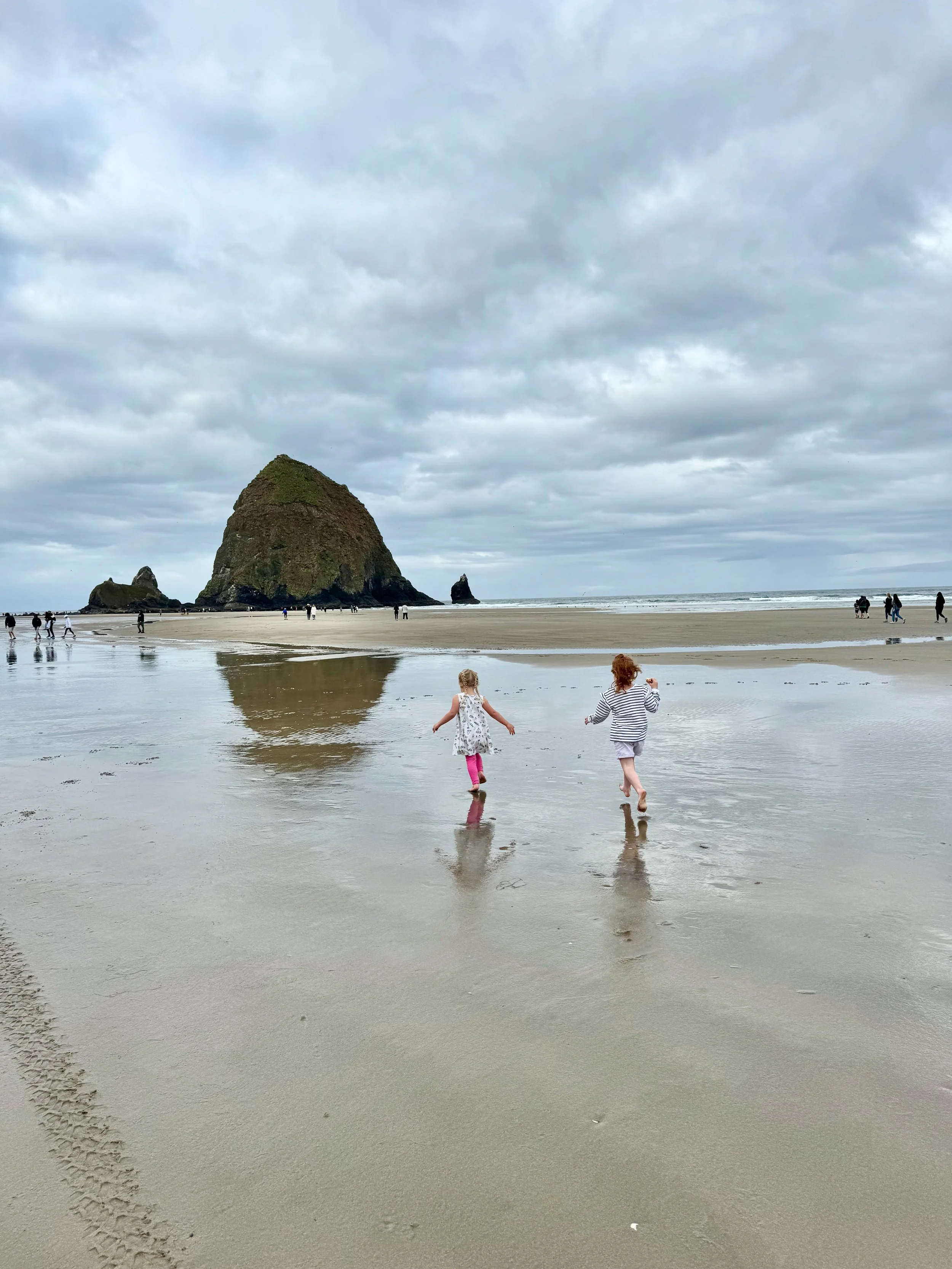
Cannon Beach, Oregon
Itinerary Overview
A couple notes before starting with the itinerary. We picked the places where we stayed the night based on the best deals we could get for accommodations for that day and how many things we wanted to see between each stop. We tried to limit our driving to 4 hours a day max. Some days were at that and some days were closer to 1.5 hours. I tried to plan just 2 long activities (activities that were at least an hour) per day, knowing that there would be lots of smaller stops and pull offs. When you are planning your trip, make a list of your must see places in order of where they are along the route. Then try to equally divide them between how many days you have or how full you want your days. That will help you determine where you should look for accommodations for each night. We also found that our family liked starting the day with a short drive to our first big stop. It was a good motivation for us to all get out of bed, packed and moving again.
Day 1:
Drive from Seattle to Seaside, OR. 4 hours total driving.
Stops at Penny Playground in Chehalis, WA for kids to get their energy out and Astoria, OR to go up the Astoria Column.
Stay in Seaside, OR
Day 2:
Drive from Seaside, OR to Newport, OR. 3 hours total driving.
Stops a Cannon Beach; lunch and self-guided tour of Tillamook Creamery; Three Capes Scenic Loop; and Otter Crest Loop & the Devil’s Punchbowl.
Stay in Newport, OR.
Day 3:
Drive from Newport, OR to Florence, OR. 1.5 hours total driving.
Stops at Yaquina Head Lighthouse; Hatfield Visitor Center; Cape Perpetua, Devil’s Churn, and Thor’s Well; and Heceta Head Lighthouse
Stay in Florence, OR.
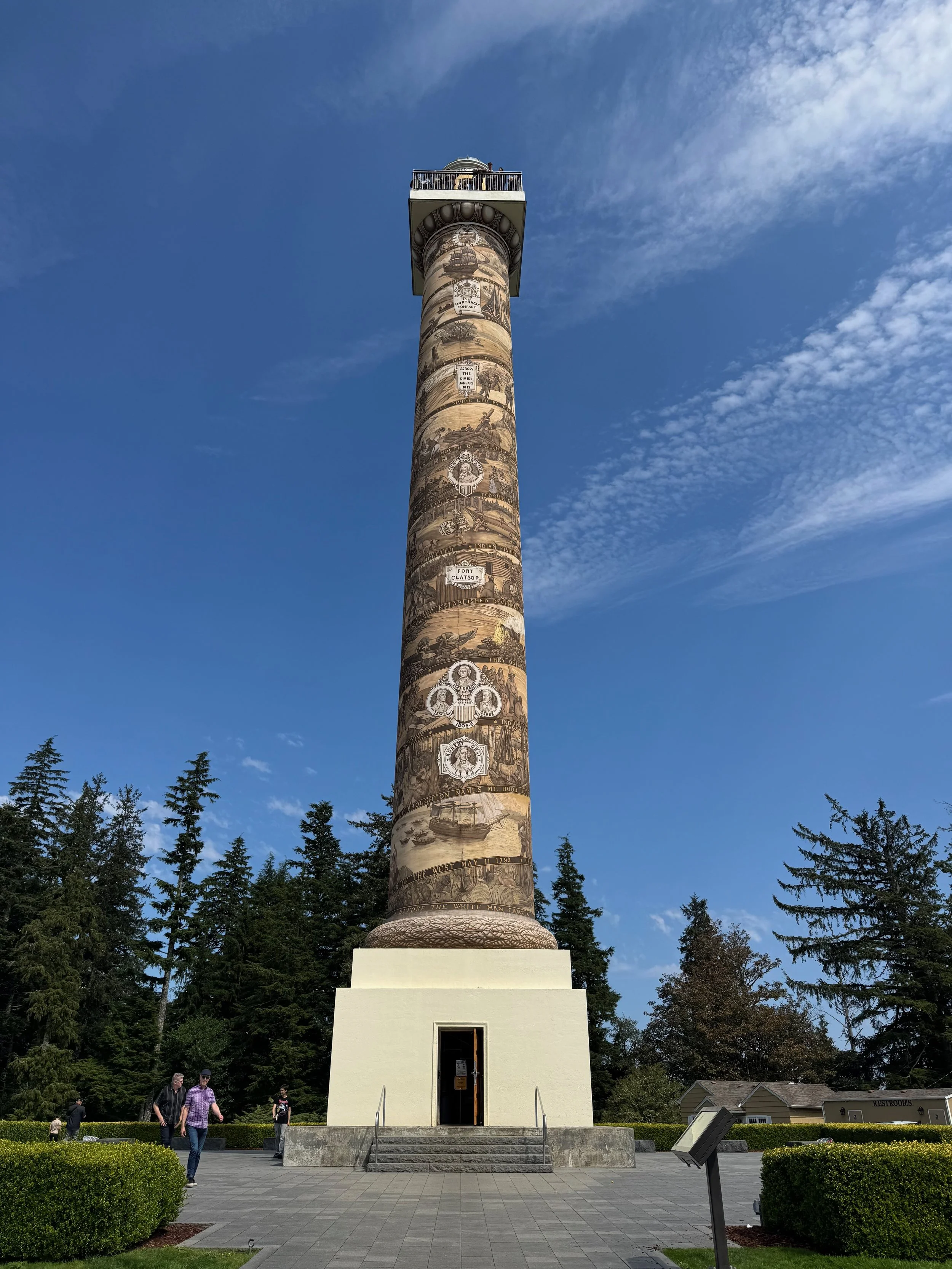
Astoria Column in Astoria, Oregon
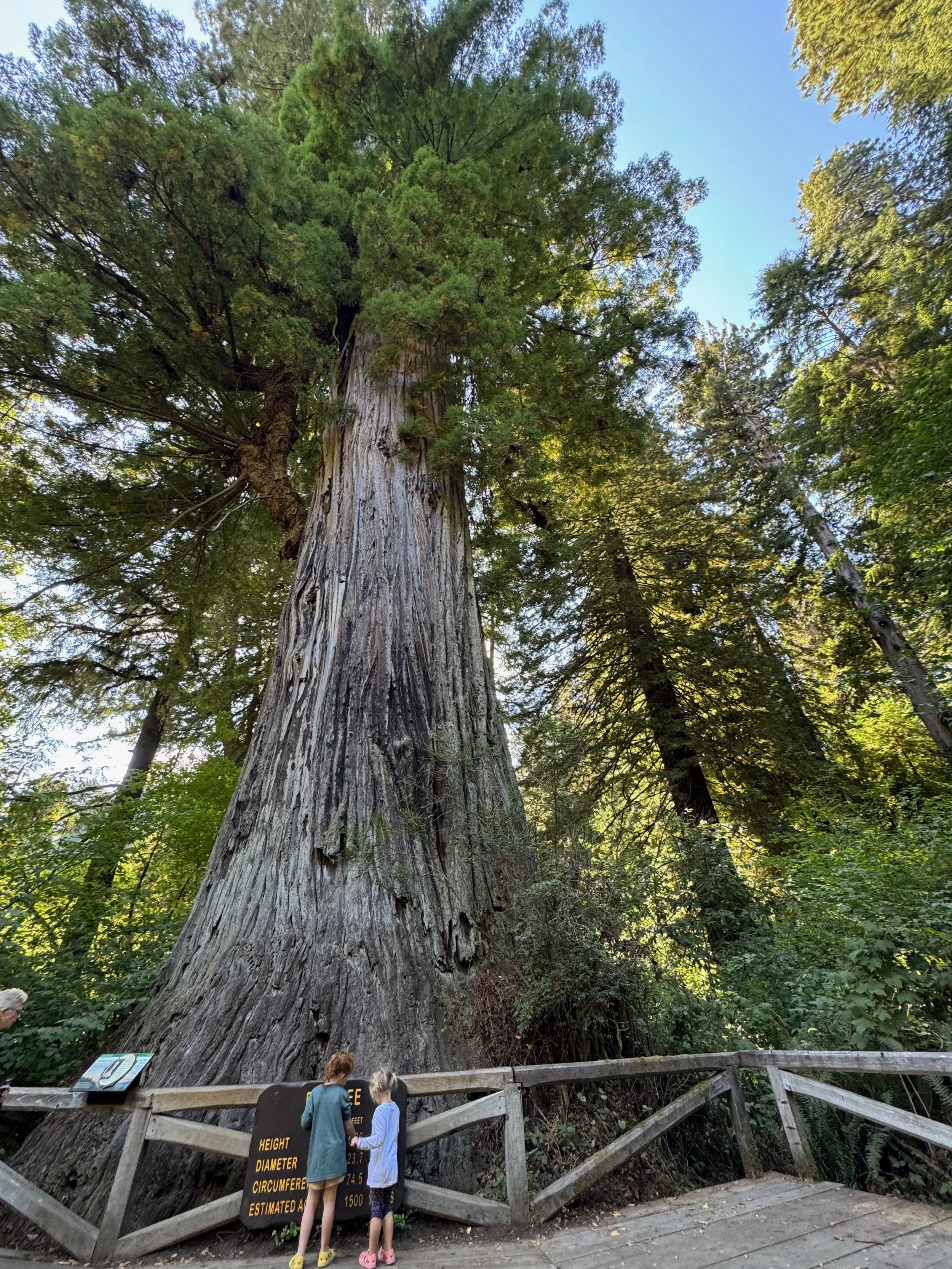
Big Tree at Redwoods National Park
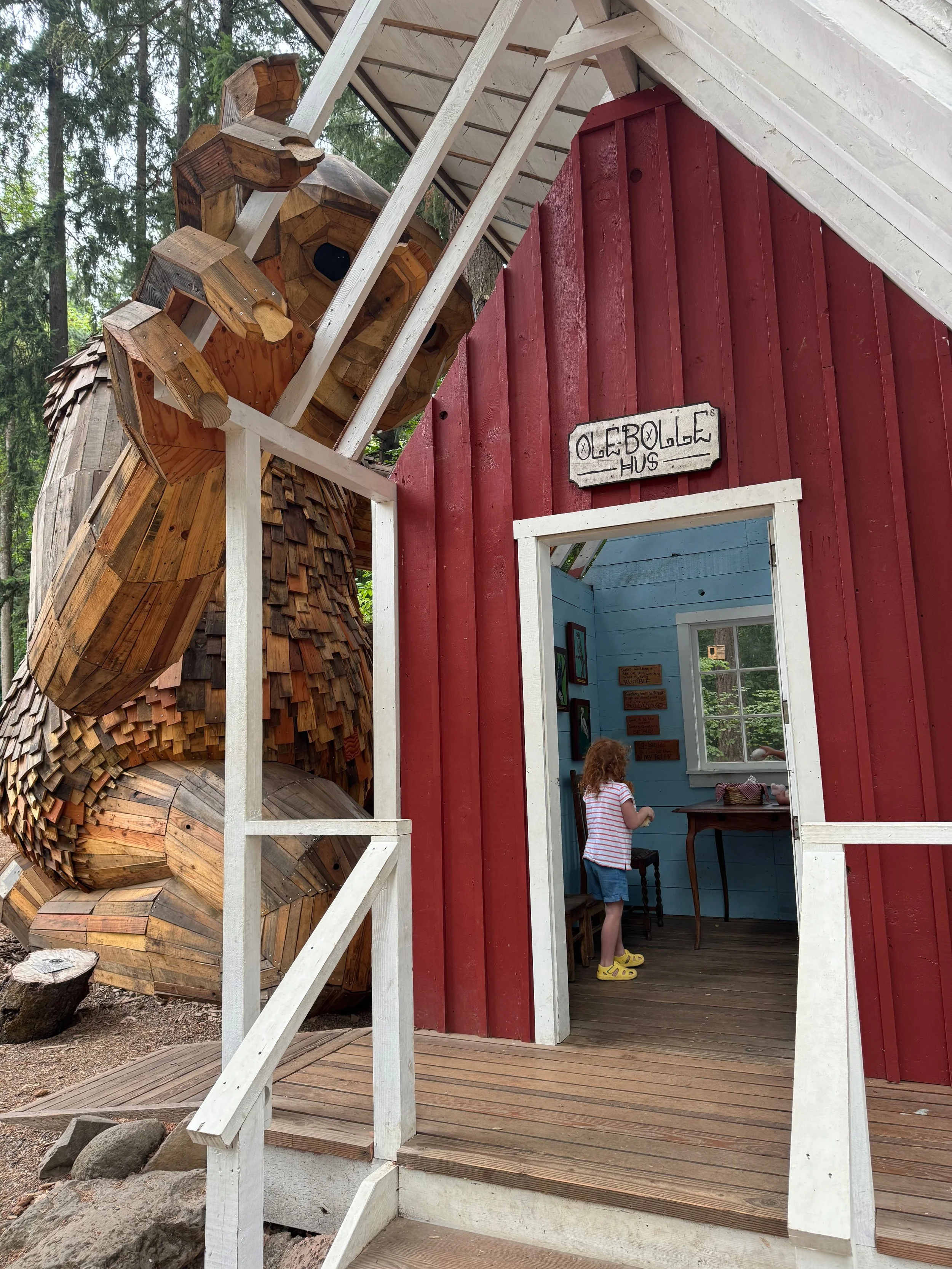
Ole Bolle Troll in Portland, OR
Day 4:
Drive from Florence, OR to Crescent City, CA. 4 hours total of driving.
Stops at Oregon Dunes; Shore Acres State Park; Face Rock State Scenic Viewpoint; Otter Point State Recreation Site; and Samuel H. Boardman State Scenic Corridor
Stay at Crescent City, CA
Day 5:
Redwoods National Park. 2.5 hours of driving around the national park.
Stops at Fern Canyon Trail hike; Lady Bird Johnson Trail; and Big Tree Wayside
Stay at Crescent City, CA
Day 6:
Drive from Crescent City, CA to Eugene, OR. 4 hours total of driving.
Stops at Howland Hill Rd drive, the Wildlife Safari and playgrounds.
Stay in Eugene, OR.
Day 7:
Drive from Eugene, OR to Portland, OR. 2 hours total of driving
Stops at Enchanted Forest, Powell’s Books, and Ole Bolle.
Stay in Portland, OR
Day 8:
Drive from Portland, OR to Seattle, WA
Stops at Voodoo Donuts and playgrounds.
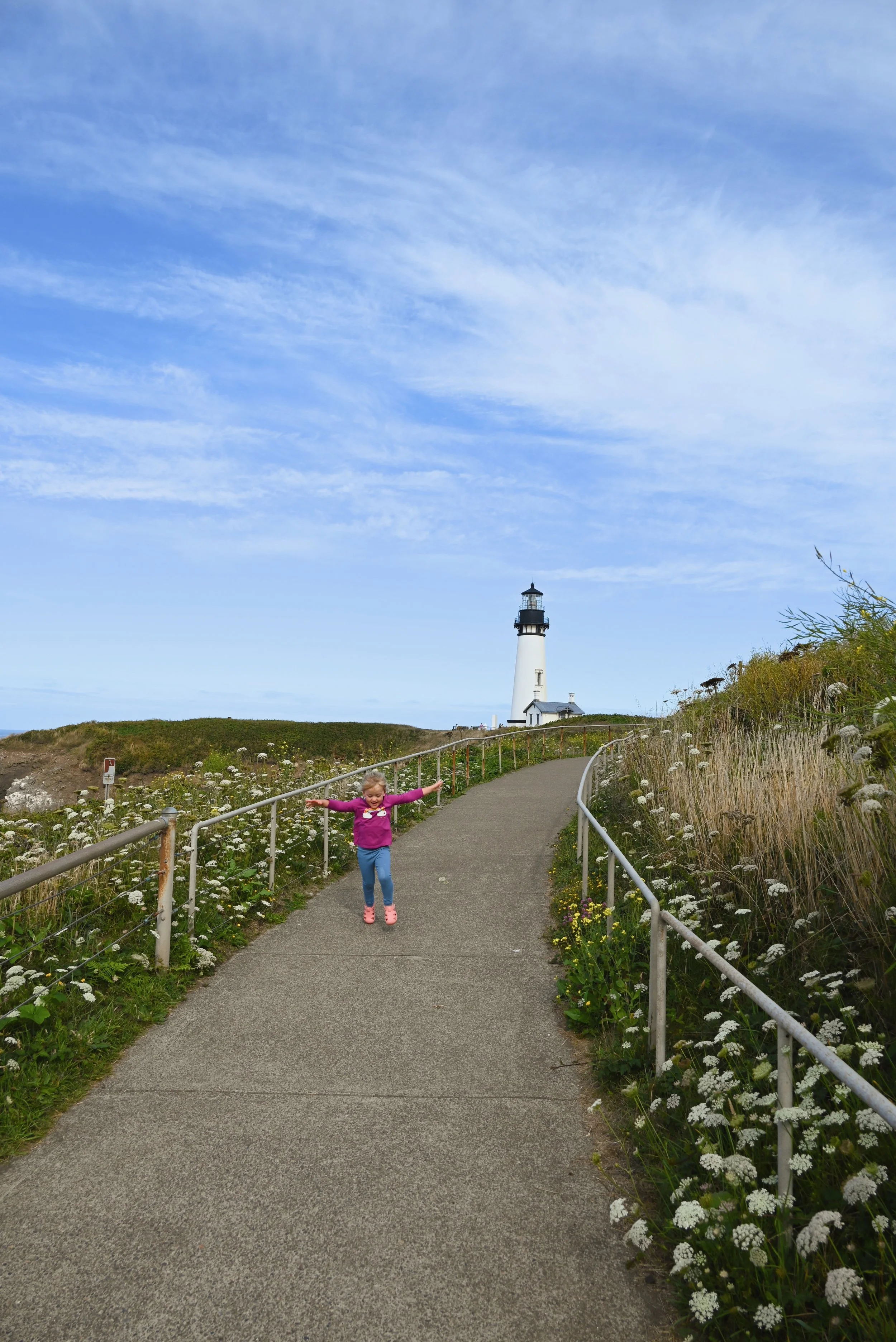
Yaquina Head Lighthouse
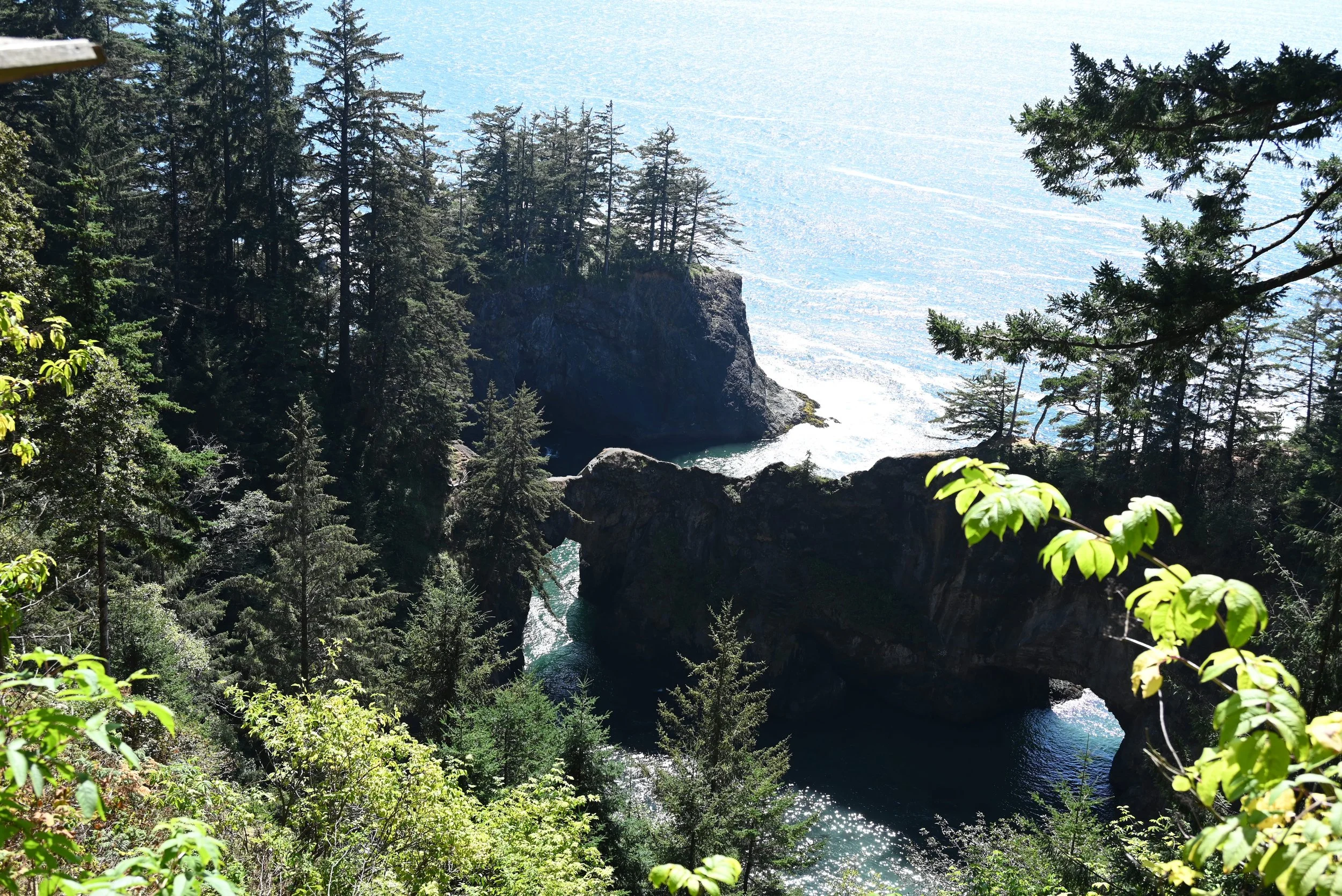
Natural Bridges at Samuel H. Boardman State Scenic Corridor
What to Pack
Here are some practical items to consider to add to your packing list for the Oregon Coast and the Redwoods.
Clothing
Rain Jackets - even in the summer, there can be occasional rain showers.
Fleece jacket or a warm layer - the weather stays mild year round and can be chilly in the mornings and evenings.
Sturdy sandals or water shoes for walking around the rocky tide pools. Boots are another good option.
Easy to access bag of a change of clothes. We kept a bag of one change of clothes for each person in the car outside of the suitcase so it was easy to access in a hurry. We used this more than once.
Beach items
Turkish cotton beach towels that dry fast and roll up thin.
Organization & Car items
Packing cubes to keep everything organized. Can separate items per day/hotel stay rather than per person to minimize the time of packing up each day.
Car organizer for easy access to kids toys or gear for stops like jackets or hiking shoes
Car trash can to avoid some of the inevitable mess
Travel potty - this was a lifesaver for my recently potty trained kids, when bathroom breaks have little warning
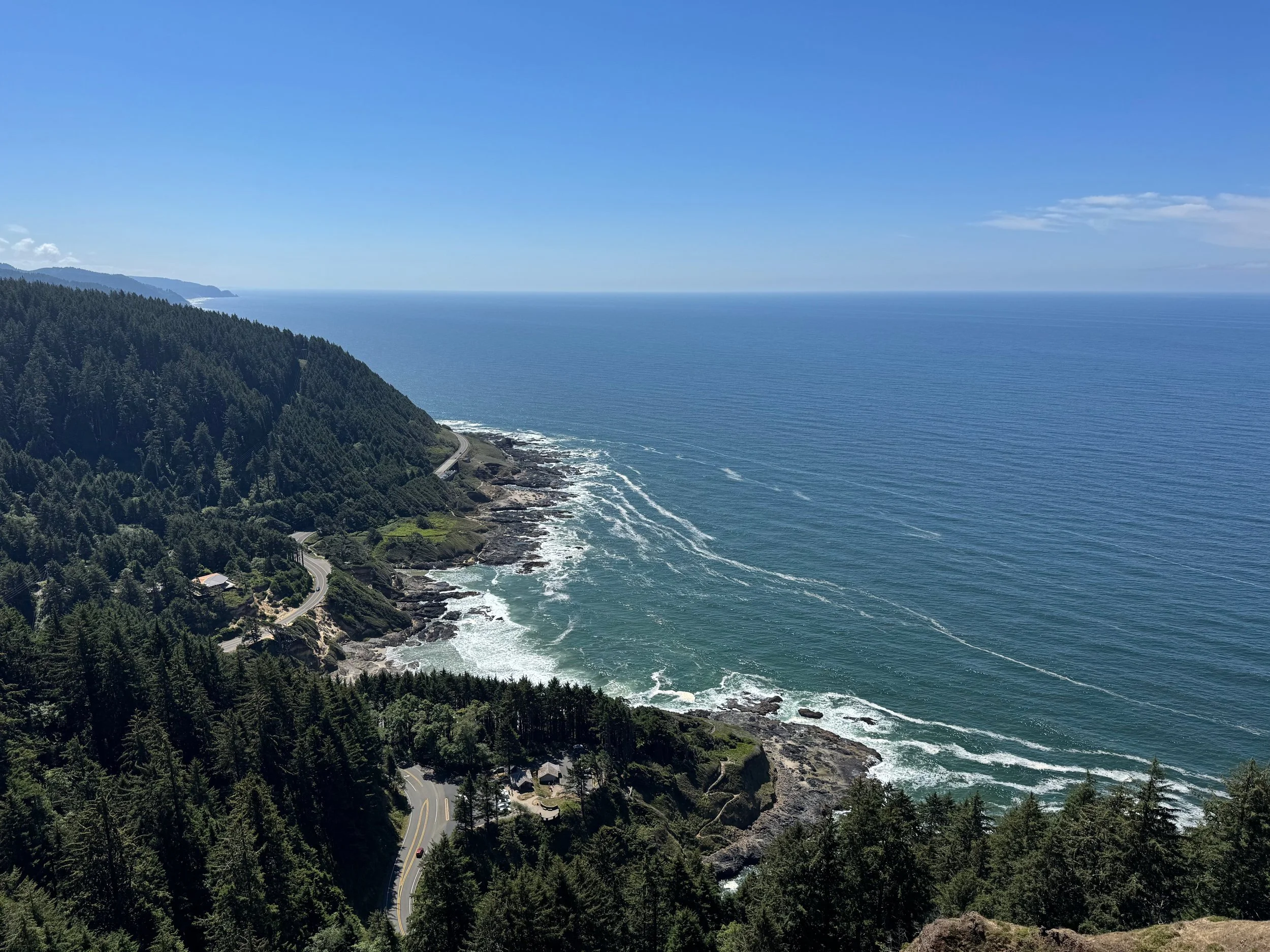
View from Cape Perpetua Overlook
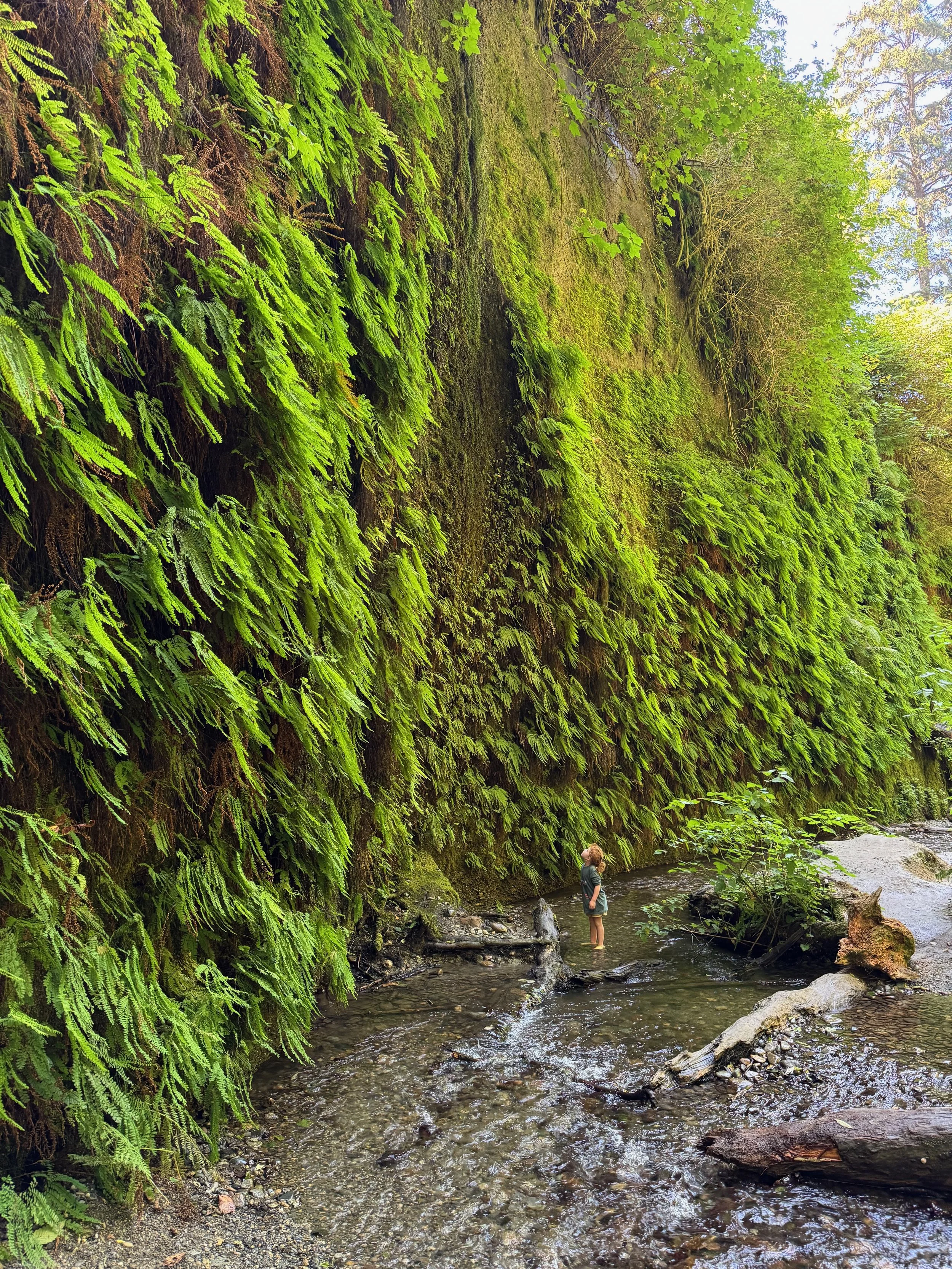
Fern Canyon Trail at Redwoods National Park
Food
Small cooler for snacks, drinks and picnic lunches
Easy picnic foods - fruits, bars, sandwich fixings
Water jug to refill water bottles on the road
Wet wipes/napkins
Hand sanitizer
Hiking or outdoorsy Items
Daypack for hikes
Bug spray
Binoculars for spotting wildlife
Tech
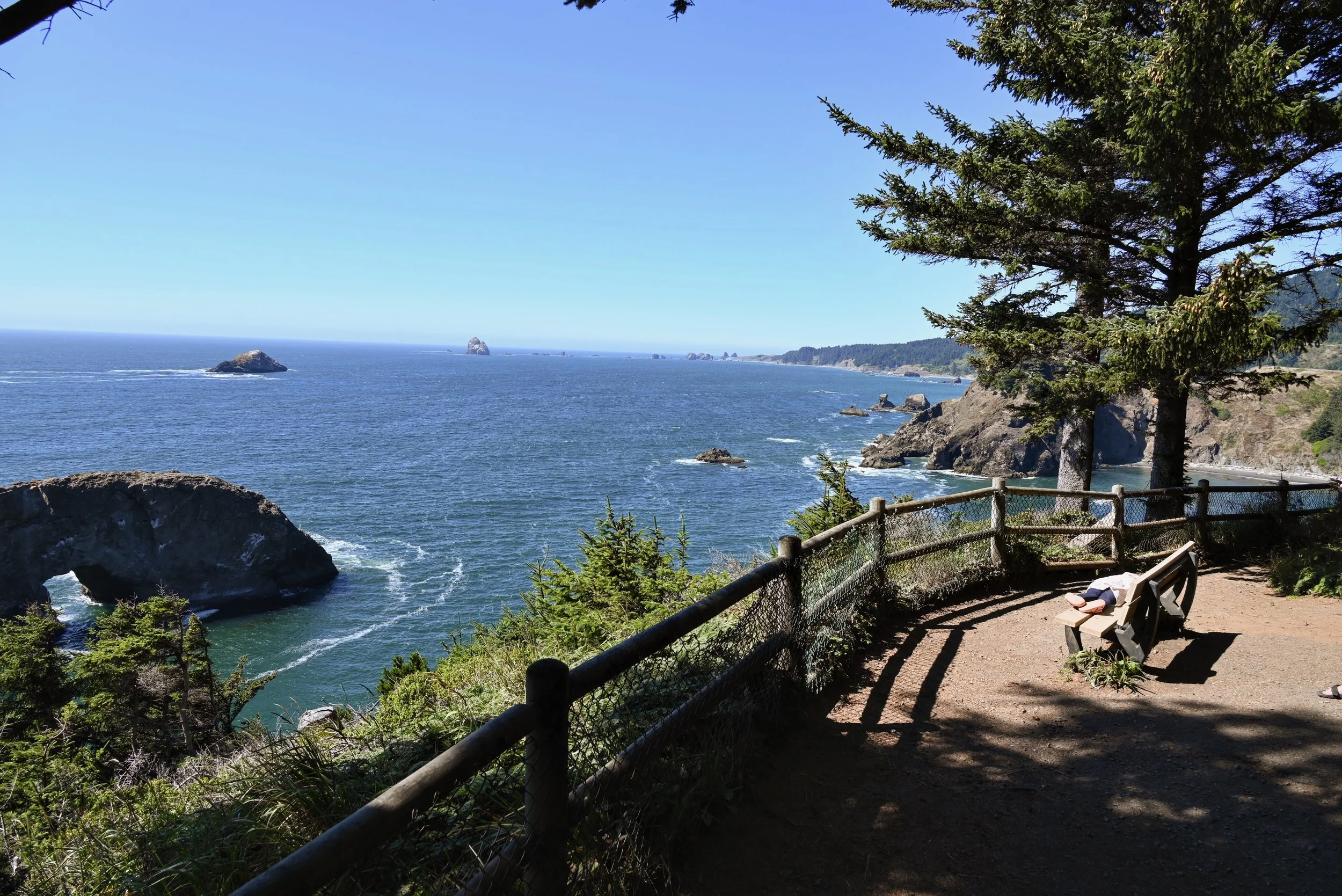
Arch Rock
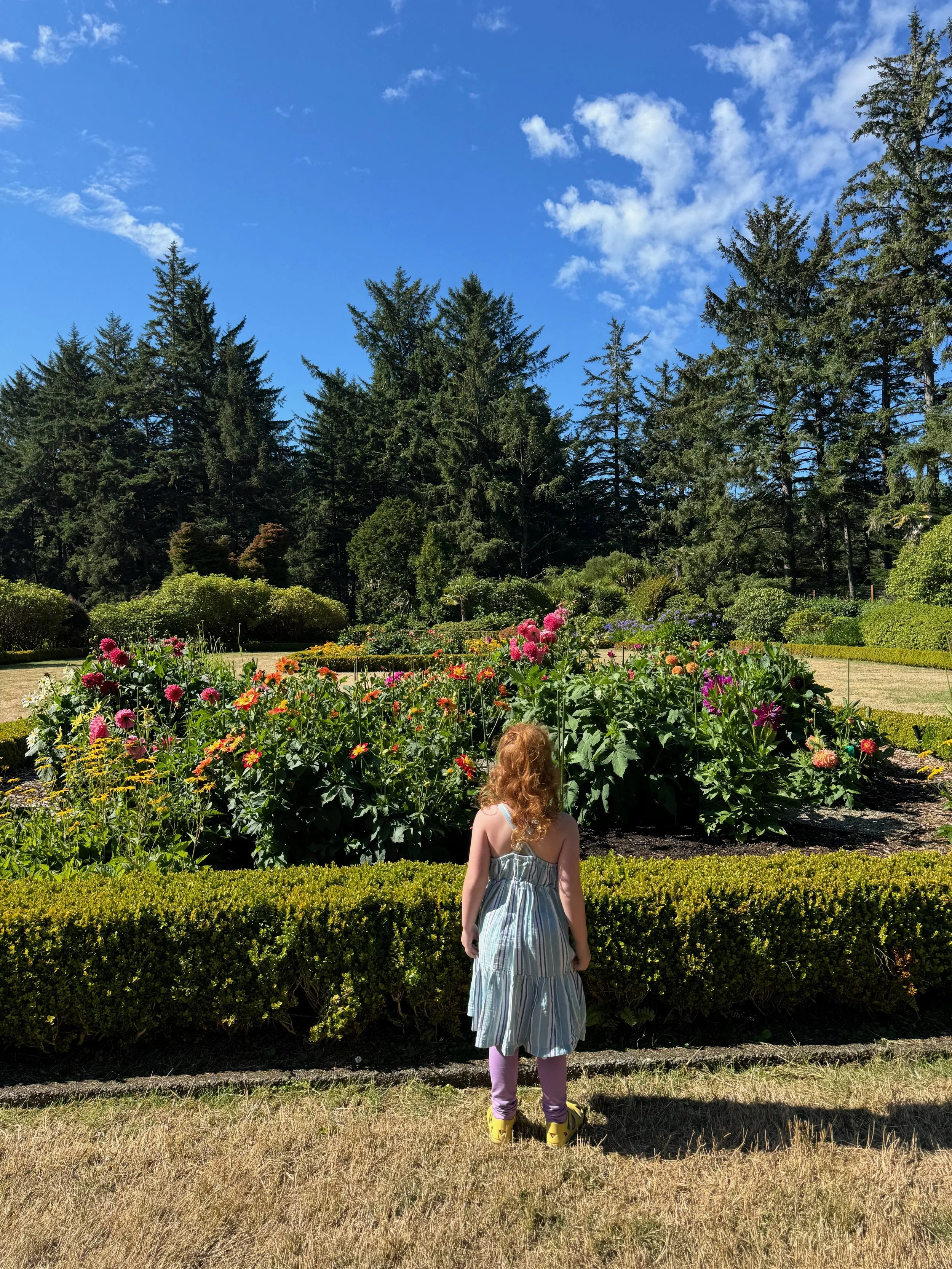
Shore Acres State Park
Book Recommendations
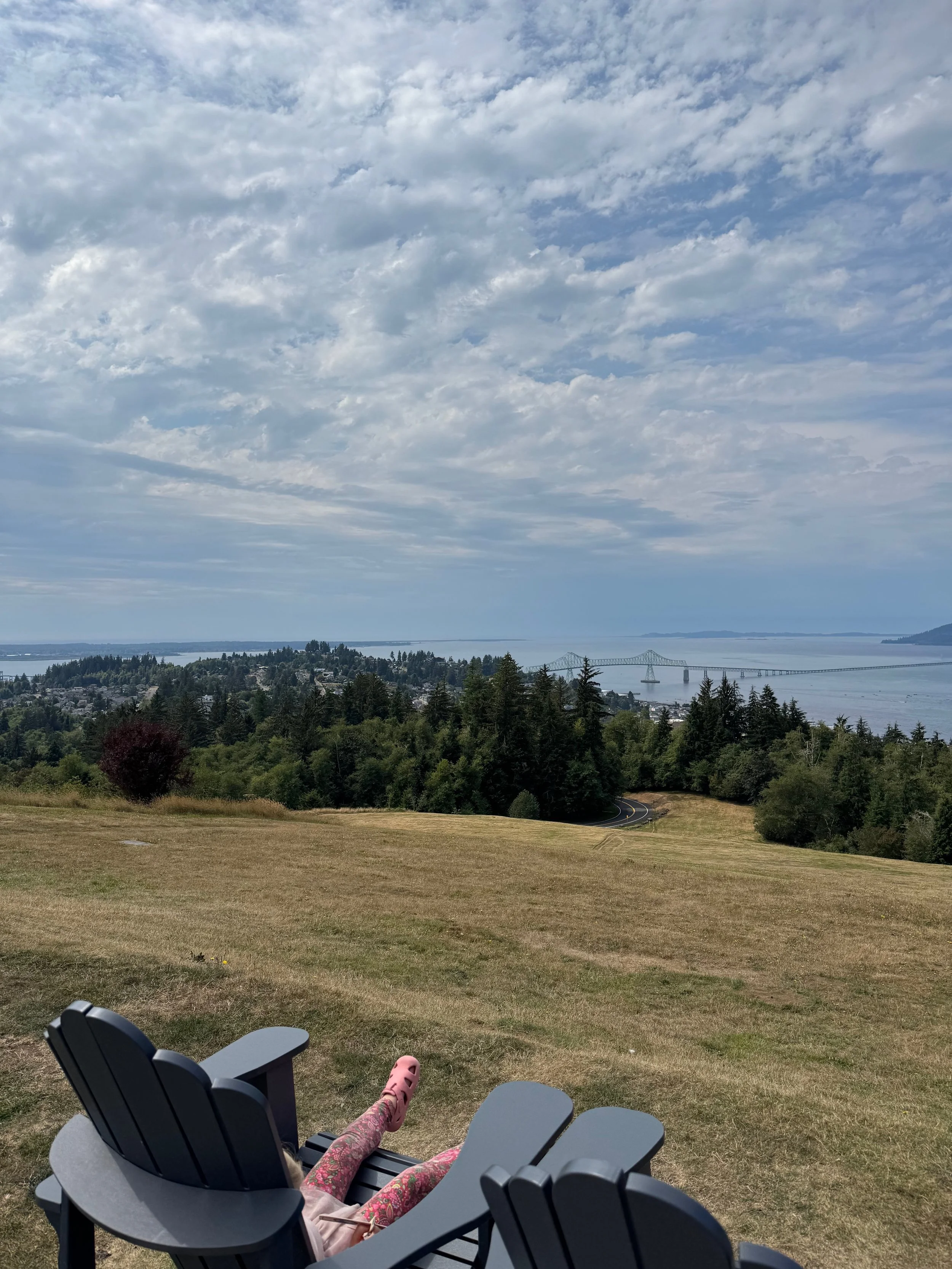
View near Astoria Column - Astoria, OR
Here are some book recommendations that are either set in or inspired by the Oregon Coast and the Redwoods to read while in the car on sitting on the beach. I always love bringing a book along with me that makes me feel even more immersed in the place where I am at. These books stretch across multiple different genres and reading levels.
Mink River by Brian Doyle – Interconnected stories of people living in a fictional Oregon coast small town
Sometimes a Great Notion by Ken Kesey - novel about a family of Oregon loggers defying a union strike
Searoad by Ursula K. Le Guin - Collection of interconnected stories detailing the drama that takes place in a fictional coastal Oregon town
The Wanderer by Robyn Carr - contemporary romance novel that takes place in a small Oregon coast town, the first of a series.
A Gift Upon the Shore by M. K. Wren - A post-apocalyptic story about two women on the Oregon coast dedicated to preserving books for future generations
Seven Tears into the Sea by Terri Farley - Young adult fantasy romance novel about a 17-year old girl falling for a selkie
The Hidden Life of Trees by Peter Wohlleben - Popular science book that describes how trees talk to one another
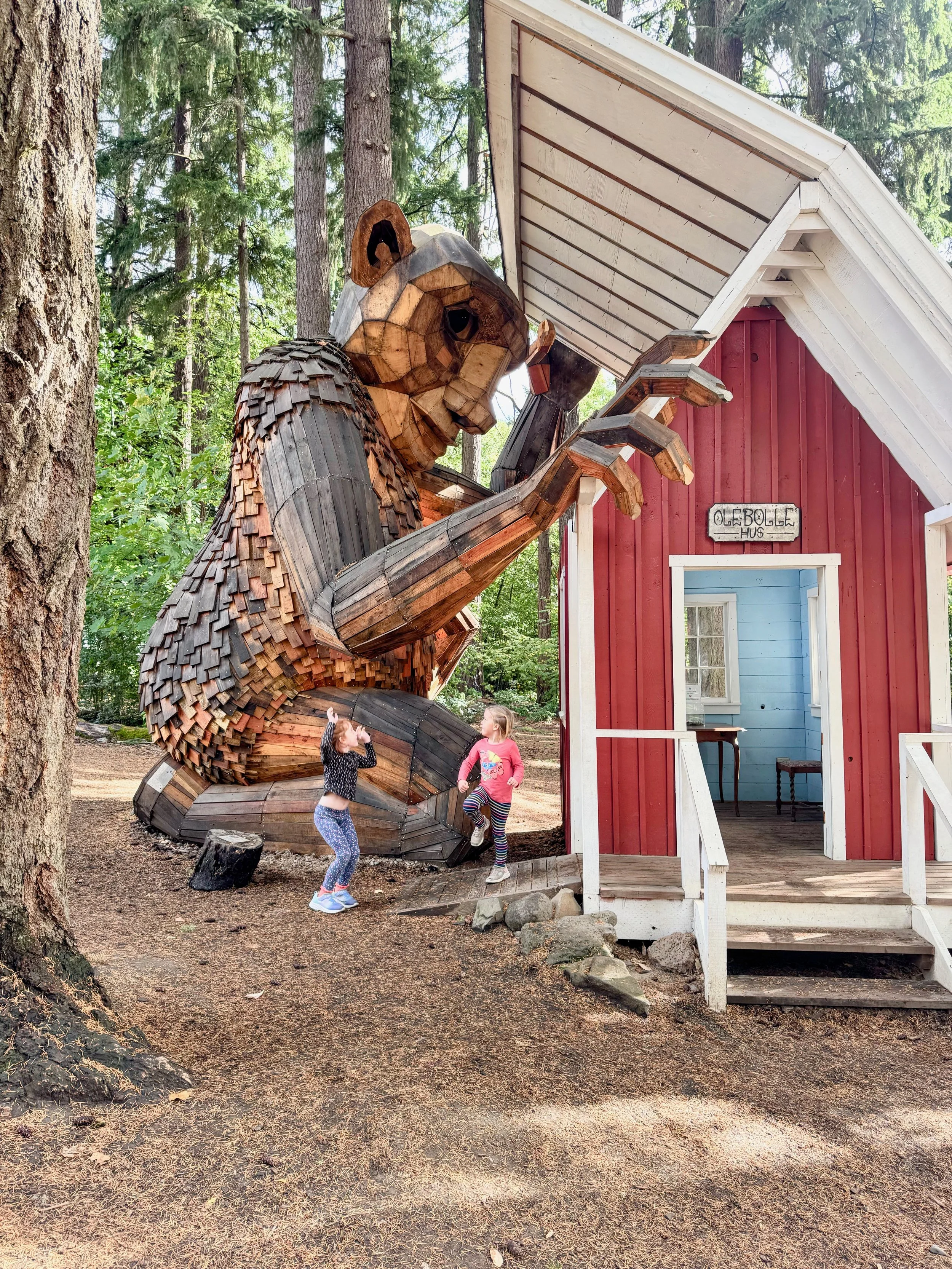

The final two days of this road trip! We spent these days in and around Portland, Oregon and making the drive back up to Seattle to end our trip. This part of the trip is far more of a choose your own adventure, as they are countless things to do around Portland. We visited the quirky Enchanted Forest Amusement Park, the last troll we needed to see of Thomas Dambo’s PNW trolls, and walked around downtown Portland. This article includes many more ideas of how to fill your time