Oregon & Redwood National Park Road Trip Days 5-6: Crescent City, CA to Eugene, OR
THIS POST MAY CONTAIN AFFILIATE LINKS. WHEN YOU CLICK ON THESE LINKS WE RECEIVE COMPENSATION, AT NO EXPENSE TO YOU, THAT HELPS THIS BLOG RUN. ALL OPINIONS ARE OUR OWN.
When the start of the Redwoods National Park is less than 30 minutes away from the end of the Oregon Coast, it only makes sense to add it on to your trip. While the Oregon Coast was definitely the main attraction of this road trip, our side trip into Redwoods National Park was definitely a highlight for all. We started Day 5 in Crescent City, CA - a great base city for exploring the Redwoods State and National Parks. This is the part of the road trip where you start to slow down a bit, but still are eager to see something dramatic and maybe something new. Redwoods allowed us to just stop at a few places, just do a couple hikes but for a large payoff. Then on Day 6, we started making our way back up Oregon to enjoy a few spots around Oregon’s I-5 before heading back to Seattle. If you missed the previous days of our trip, check out our itinerary overview or the recap of Days 1&2, and Days 3&4.
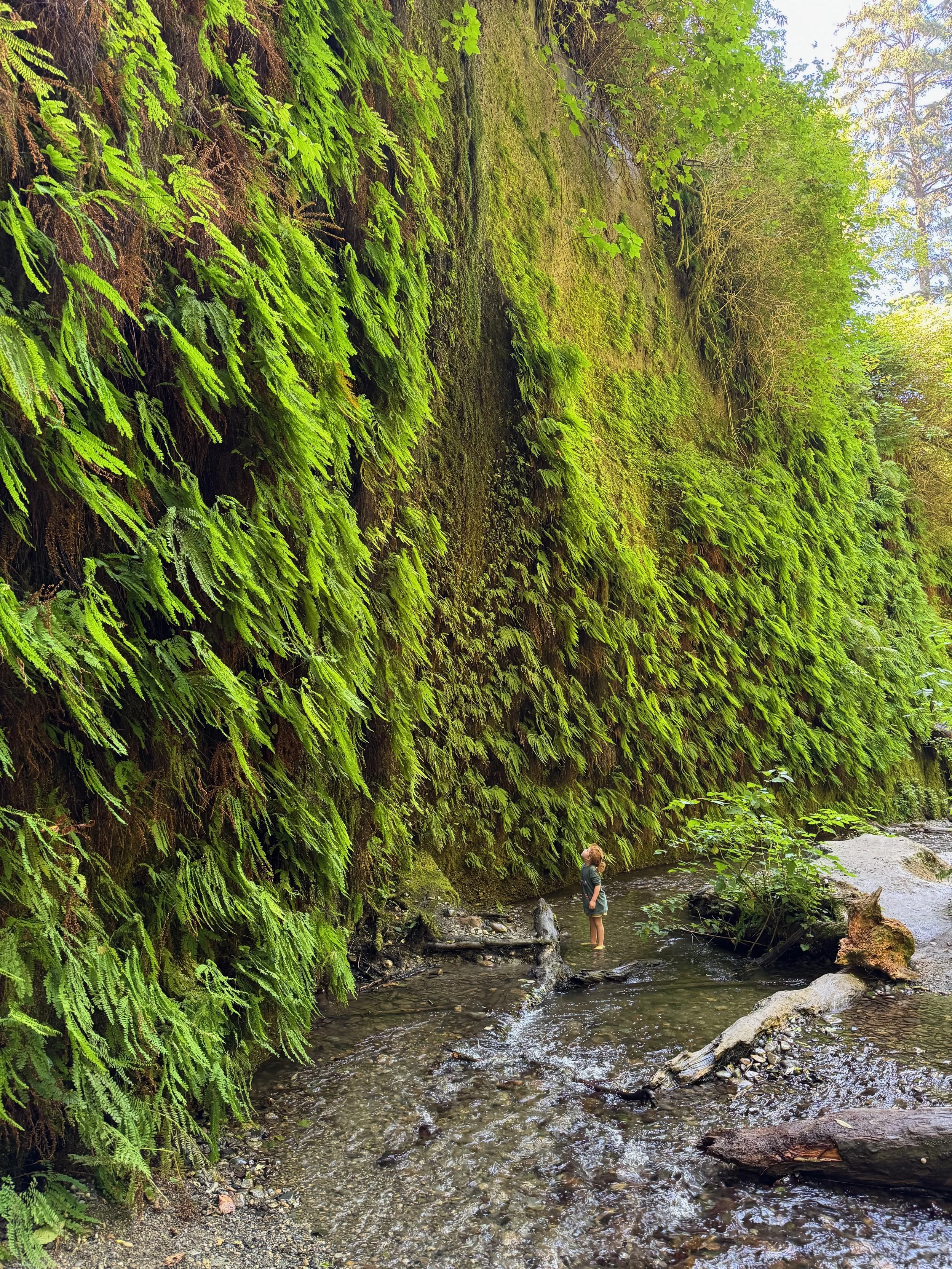
Fern Canyon Trail - Redwoods
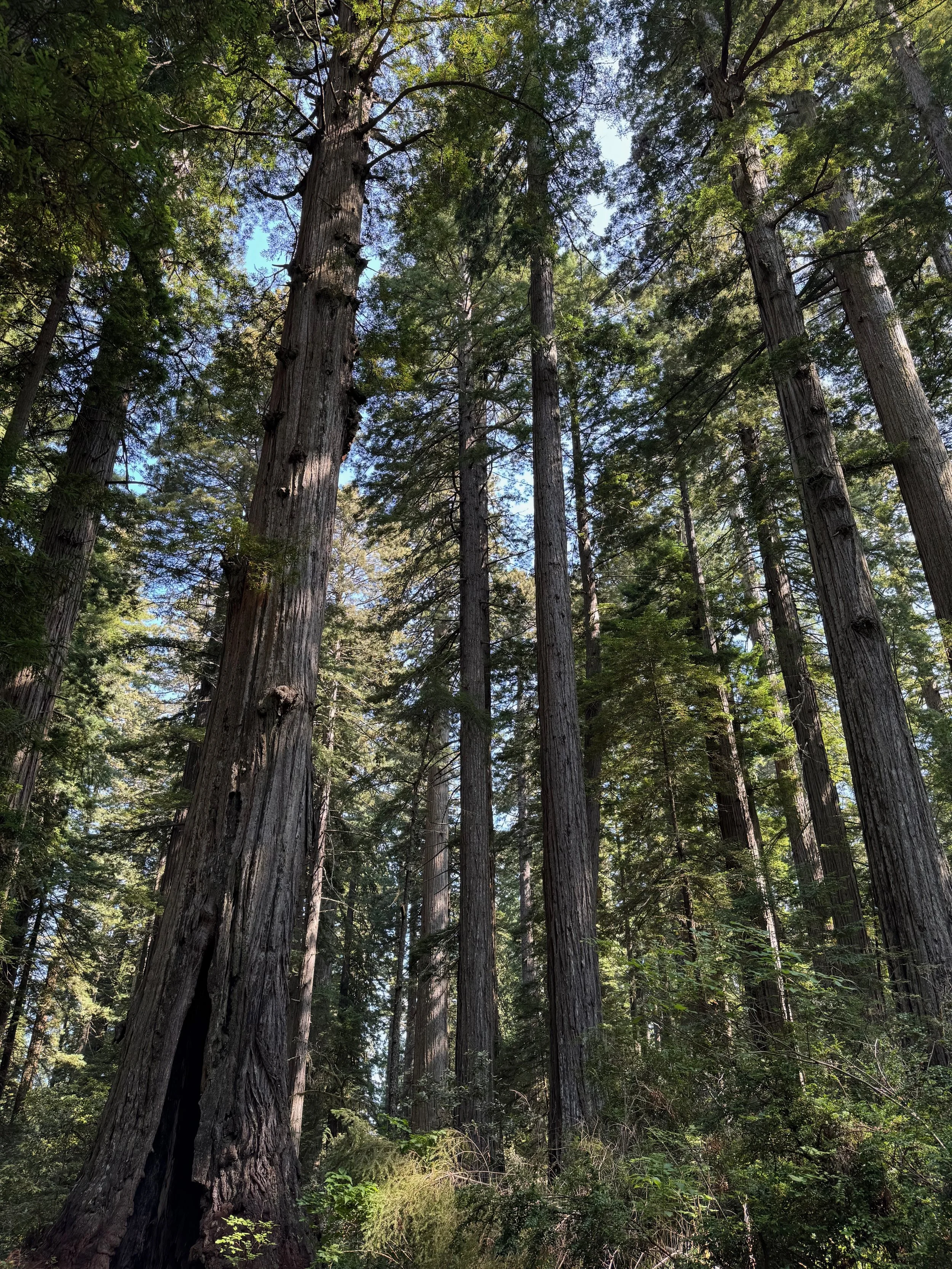
Lady Bird Johnson Trail - Redwoods
Overview
Day 5 - Staying in Crescent City, CA and exploring Redwood National Park. 2.5 hours of driving total. Stops at:
Lady Bird Johnson Trail
Fern Canyon Trail
Big Tree Wayside
Day 6 - Crescent City, CA to Eugene, OR. 4 hours of driving total. Stops at:
Redwoods National Park
Wildlife Safari
Map of Route
Redwood National and State Park Basics
The Redwood National and State Parks include the National Park along with 3 state parks. Jedediah Smith Redwoods State Park, Del Norte Coast Redwoods State Park, and Prairie Creek Redwoods State Park. We drove through almost all of these parks during our trip and visited multiple of the visitor centers. An important thing to note is that cell service is very limited throughout the park, so it is highly recommended that you download offline maps before entering. There are also very few gas stations and other amenities like restaurants and grocery stores. We ended up packing food we got in Crescent City for lunch for our day in the parks.
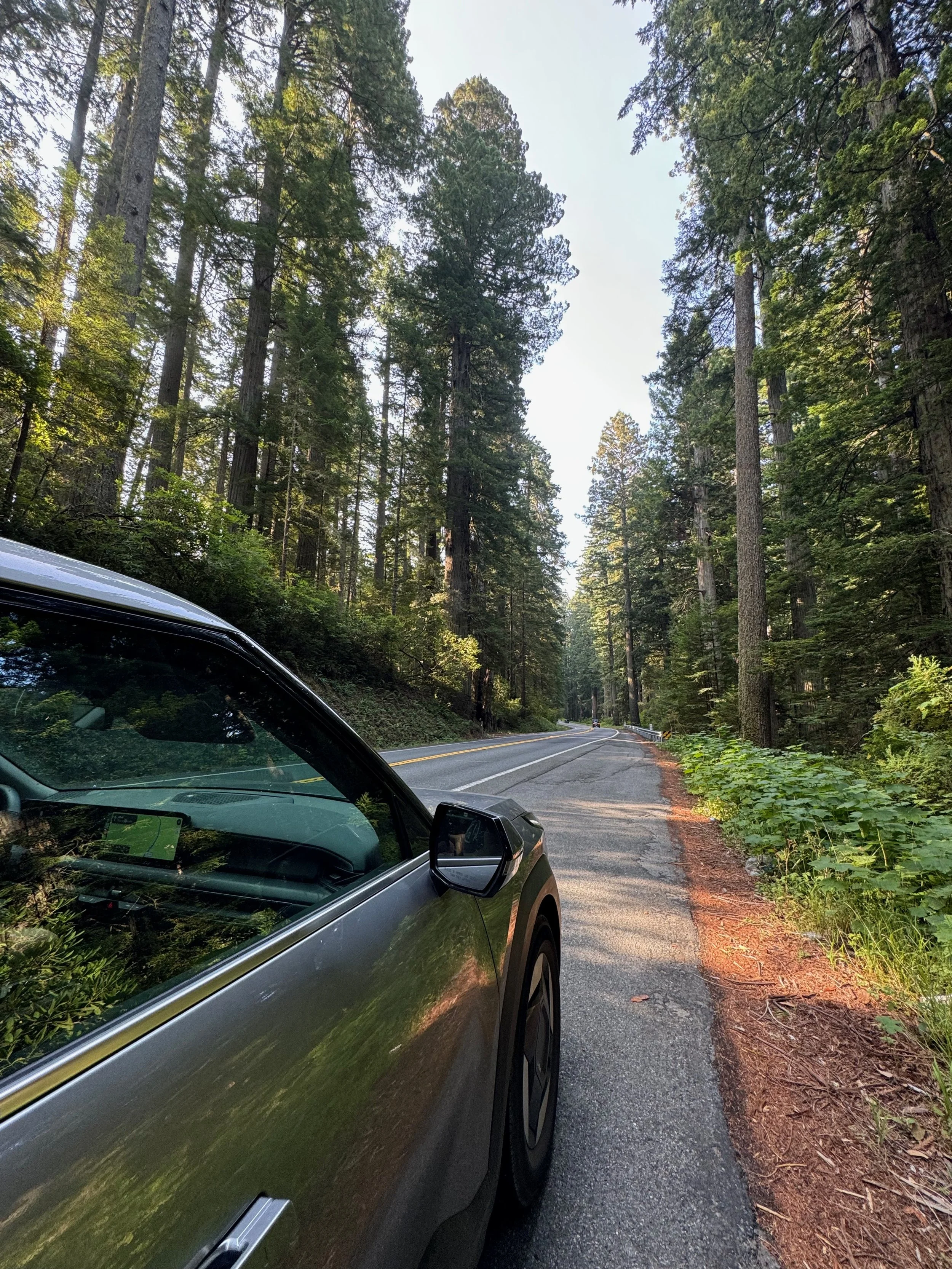
Weather can be a bit unpredictable, even in the summer, and you can often have rainy and foggy days – not unlike the rest of the Oregon Coast. It can be chilly in the summer as well, especially deep in the forest where there is little sunlight. Layers are helpful. There are several winding and dirt roads that you will need to take a much slower speed than expected. We had to make a couple river crossings in our normal SUV - but more on that later.
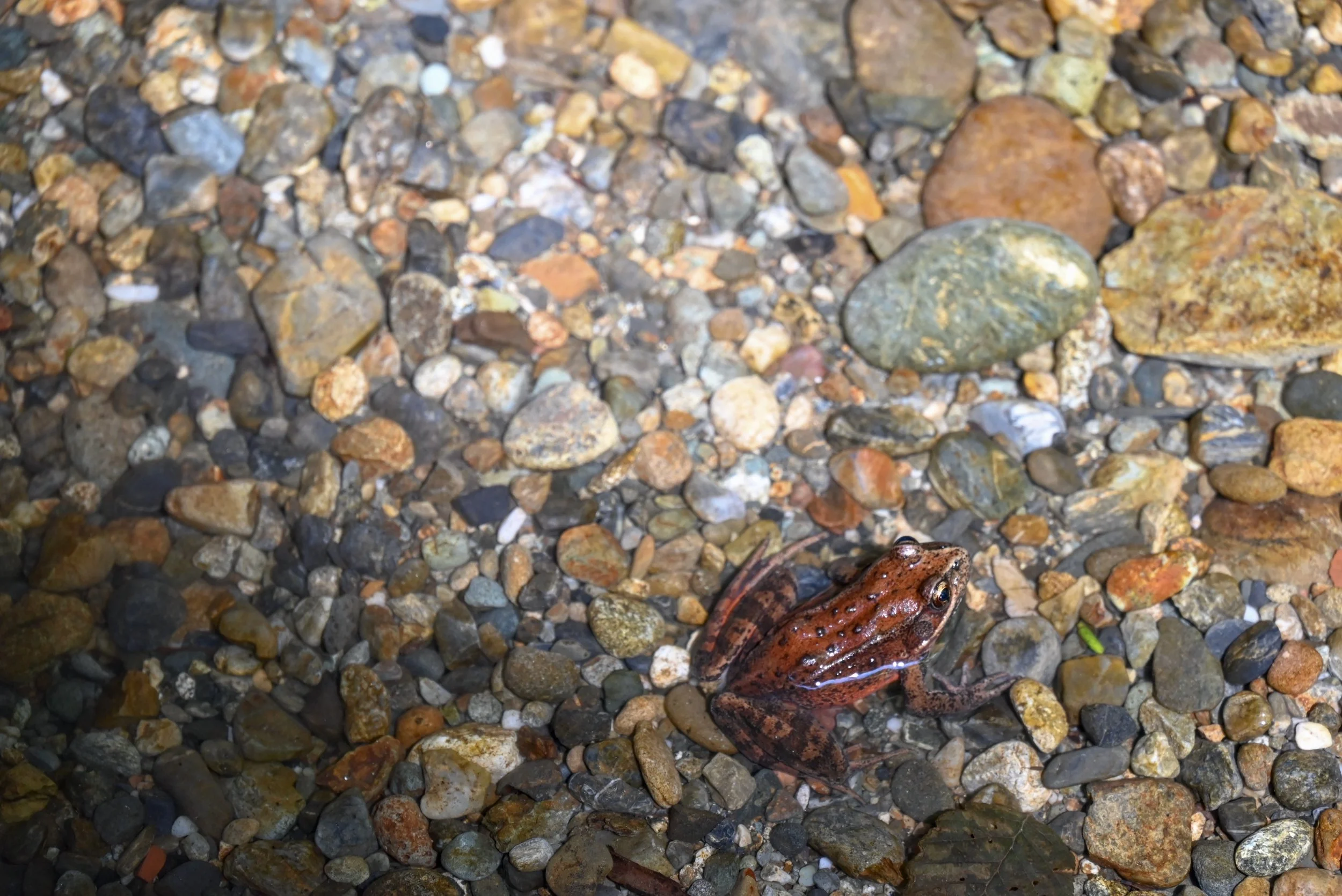
Wildlife you might expect to see? Elk - we saw a few herd of elk - especially around the Prairie Creek Visitor Center. Be sure to keep your distance from them as they can get aggressive. On the trail, you can see slugs including the yellow Banana slugs. On the beaches, you might be able to spot seals, sea lions, and migrating whales.
If you are traveling with kids, be sure to visit the visitor center to get a Junior Ranger booklet for your kids. It was a nice activity for the car rides.
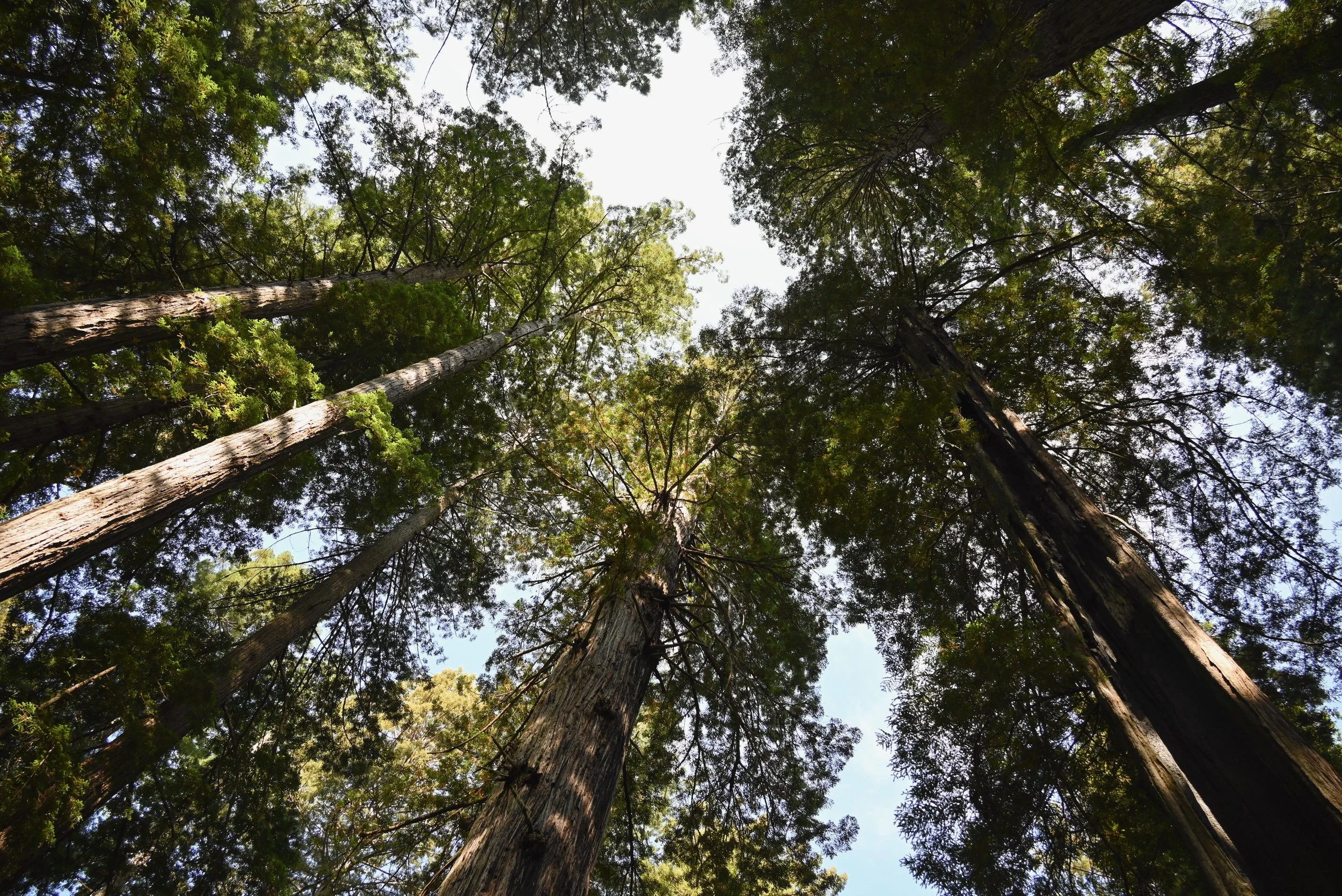
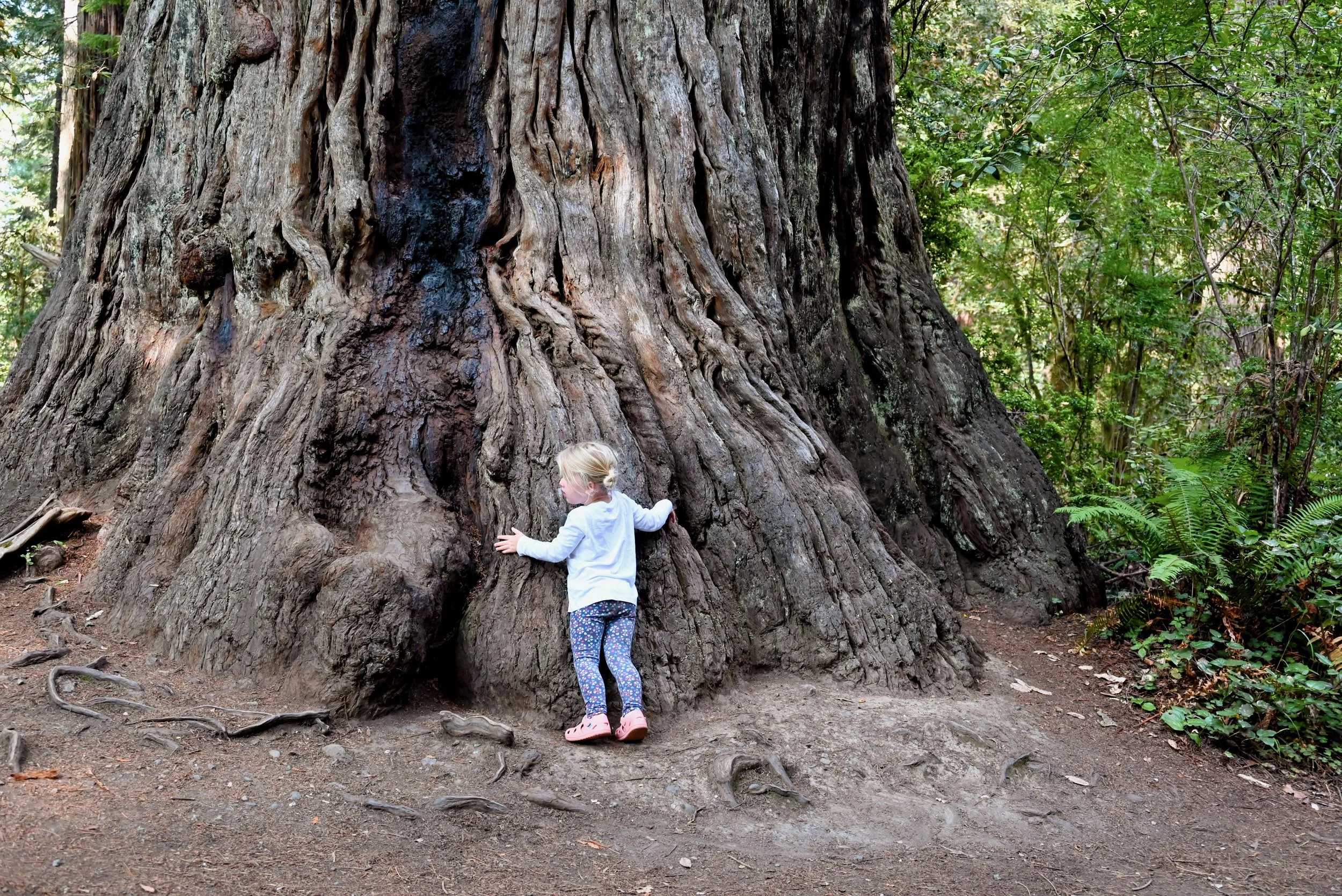
The Redwood National Park is known for having the tallest tree in the world - although you won’t be able to see it as the location is somewhere deep in the forest and the location is not given out to protect it. You will encounter both old-growth and second-growth forests. If you are unfamiliar with these terms, old-growth forests are ones that are ancient and have been left undisturbed. These forests have more of a variety of tree ages, multi-layer canopies, and unique features like nurse logs that support new tree saplings. A second growth forest is one that has regenerated after a disturbance - likely a human-man disturbance like logging, a fire or agricultural clearing. A second growth forest typically has multiple trees all the same age - likely younger, dense canopies and lower biodiversity. You will see a lot of signs about what type of forest you are in while you are in the Redwoods, this is due to how important it is to preserve the old growth forests and how rare they are. Only 5% of the original old-growth Redwood forests in the world remain and most are in this national park. Here is where you will find the massive trees and some of the most beautiful spots in the National Park.
Where to Stay
Night 5
We stayed in Crescent City, CA for two nights which acted as our home base for exploring the Redwoods. It had a great selection of hotels and restaurants and it was close to the end of the Oregon Coast. We stayed in Lighthouse Inn and enjoyed it for its convenient location, decent breakfast, and large rooms. Other good places to stay include Oceanview Inn and Crescent Beach Motel.
Another alternative is staying in the National Park at a camp or RV site. There is also a couple lodgings like the Historic Requa Inn in Klamath, CA.
Another popular home base for the Redwoods includes Trinidad, CA on the southern end of the Redwoods. While this isn’t ideal for this itinerary of heading back to Seattle at the end of the road trip. Trinidad might be a perfect option if your road trip takes you further down the California Coast.
Night 6
The 6th night we stayed in Eugene, OR as we made our way up to Portland. We tried to keep our driving minimal and wanted to give ourselves extra time in the morning of the 6th day to explore more of the Redwoods. Eugene is a 4 hour drive from Crescent City. On this day, you could easily choose to drive all the way up to Portland if you wanted, which is an extra hour and half. Or you could stay in Salem, OR near the Enchanted Forest, where we went on the morning of Day 7. In Eugene, we stayed in a nice VRBO on a farm just outside of Eugene.
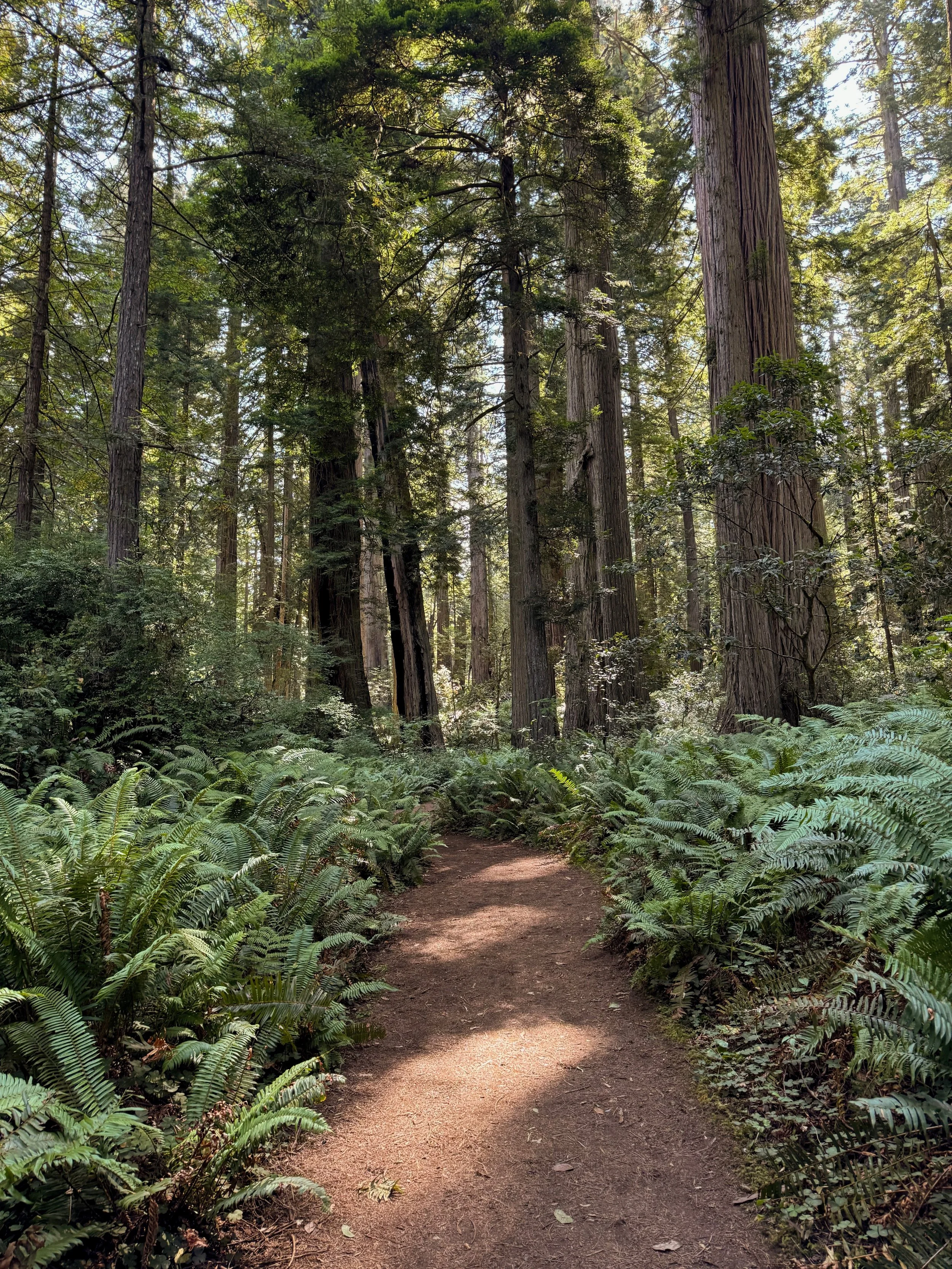
Lady Bird Johnson Trail
This is a great and rewarding 1.5 mile trail that takes you through both second-growth and old growth redwood forests. It is possibly the quickest way to get immersed in an old-growth forest as you just have to cross the bridge near the parking lot before you find yourself next to massive trees. This is a nice wide fairly flat trail. We found it to be fairly empty when we went on a Wednesday in August at 10am. We had no issues with parking and there were still spots available when we were done with the hike at 11:30am. If the parking is full, there are signs indicating that you cannot park on the side of the road before or after the parking lot. The drive up the road to the parking area is a bit bumpy and narrow, our car did fine but RVs or cars with trailers might have issues.
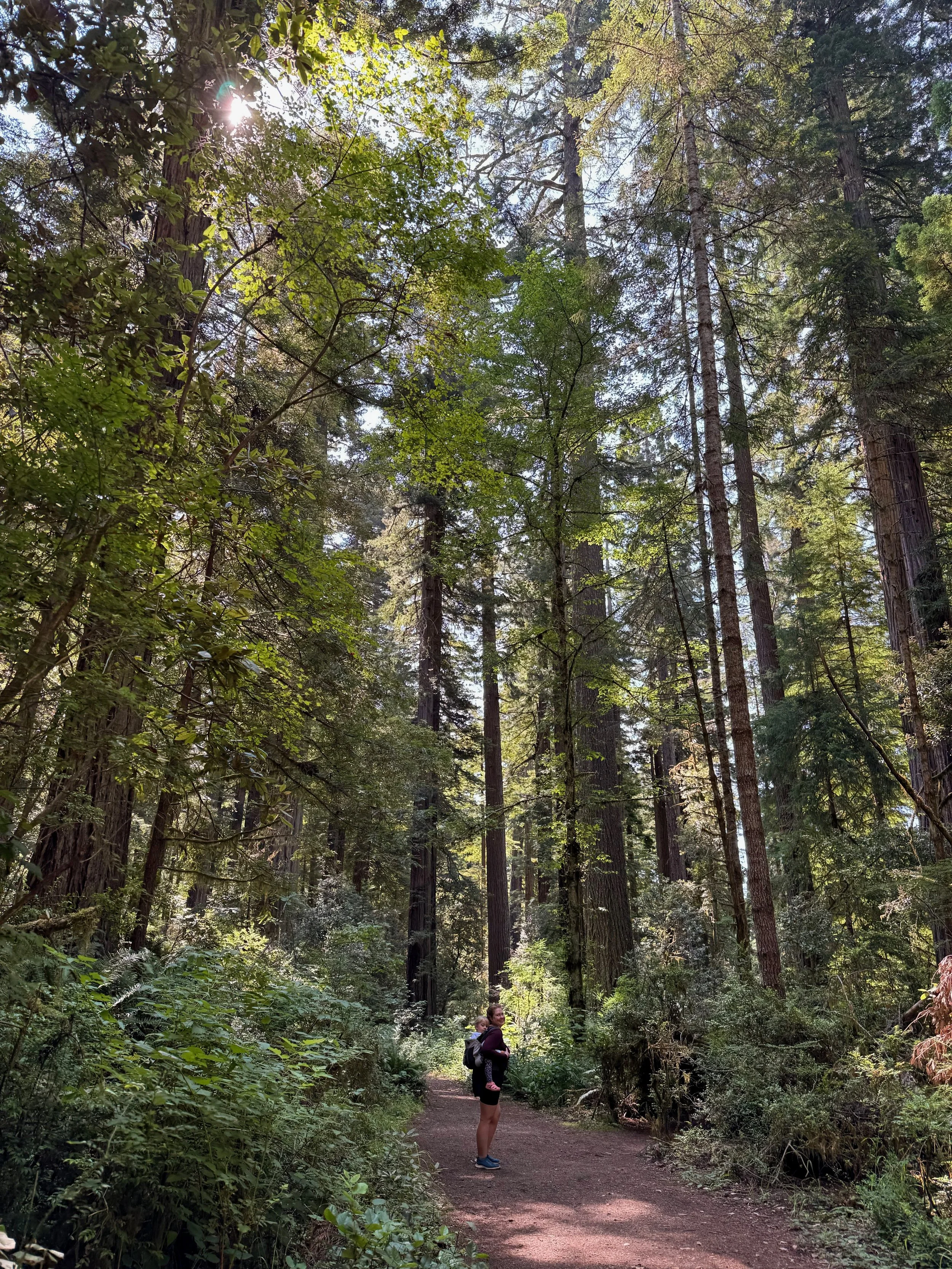
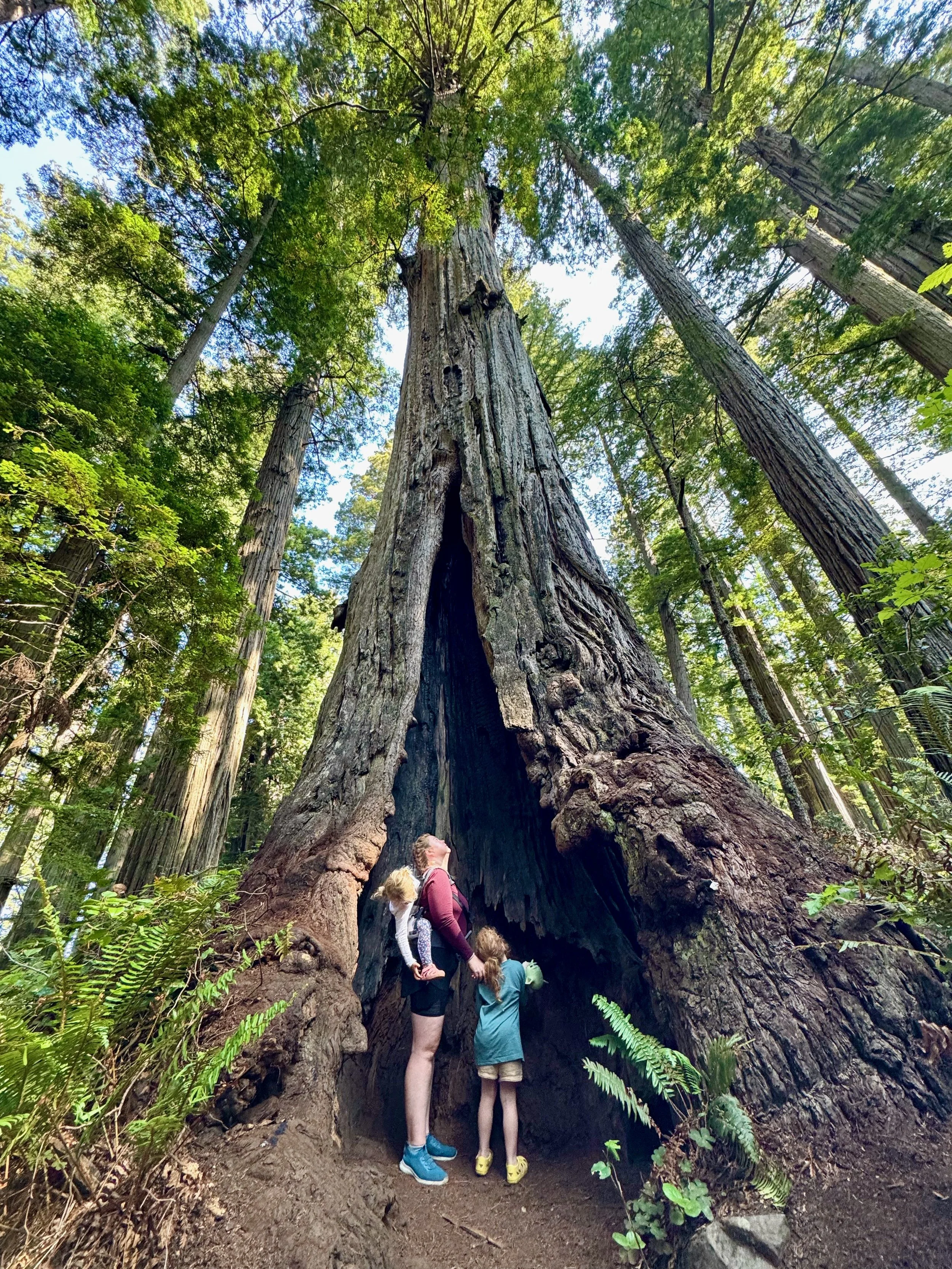
There are several numbered markers along the trail that you can learn more about via the guided tour on NPS park app. There is also a lovely plaque dedicated to Lady Bird Johnson who as First Lady, advocated for the protection of the park and helped create these preserved natural habitats.
Fern Canyon Trail
The Fern Canyon Trail is an absolute highlight of the Redwoods and I’d say is a must-do for any group. However, it does require some advanced planning. If you are visiting between May 15th and September 15th, you will need a permit to access this trail. These permits do book out. Advanced reservations open up on December 15th or 6 months prior to your hike. There are also day-before reservations that you can make starting at 9am the day before the day you want to do the hike. 175 reservations are available each day - 75 available 6 months before and 100 available one day before. This is a very popular hike, the parking lot is minimal and is down quite a long rocky road. If you are hoping to get one of the day before reservations, note that they do go fast and can be gone shortly after 9am. You do not need to pick a time when you make the reservation - it is good for the whole day that you have the permit for. To get to Fern Canyon, you will need to pass by Gold Bluffs Beach - these two attractions share the same permit. Once you arrive at the Gold Bluffs Beach kiosk, they will ask to see your permit and you will need to pay $12 day use fee (must be paid by exact cash as they typically don’t have service to use a card reader) or use your America the Beautiful Pass or California State Park pass.
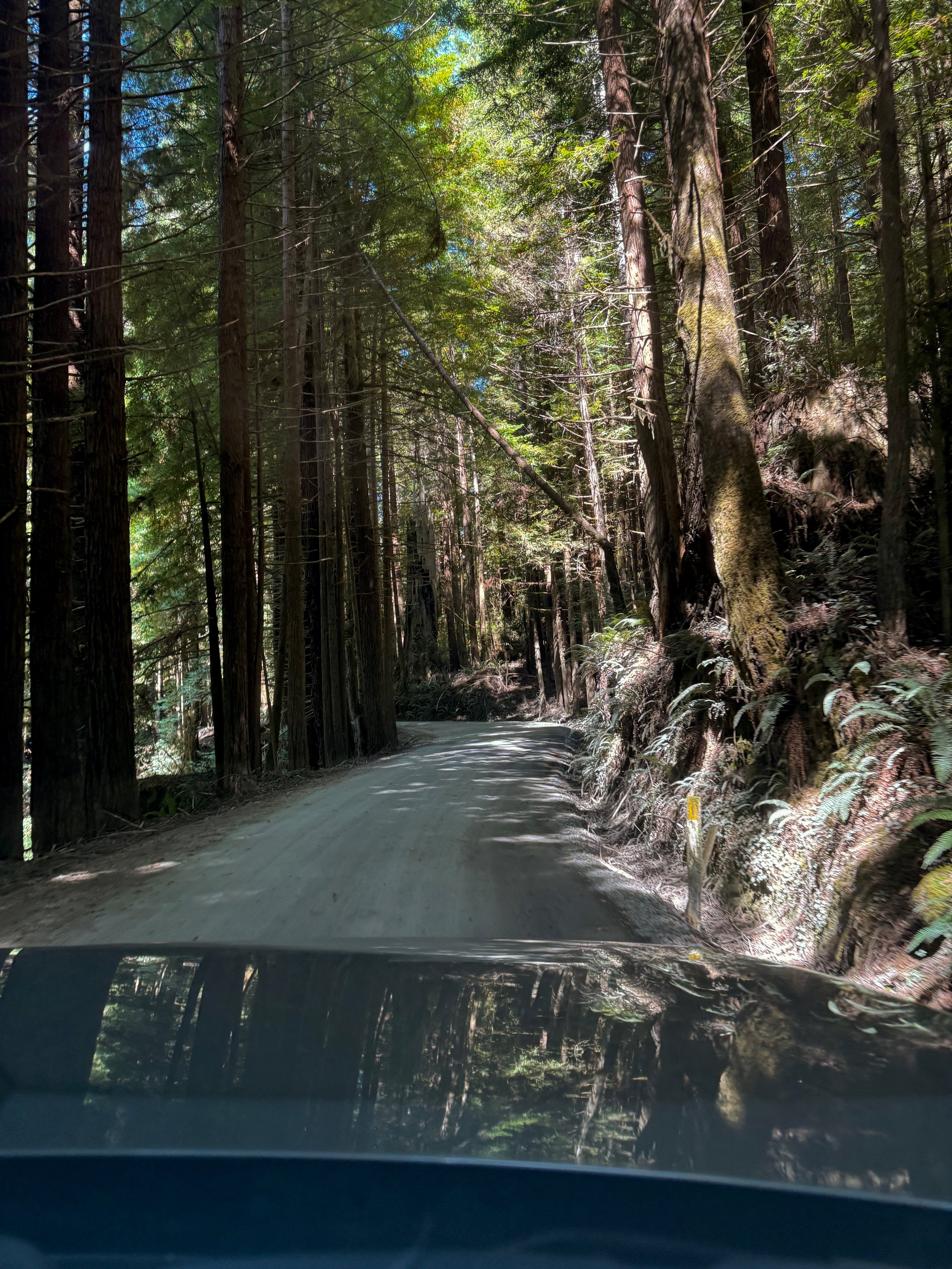
Getting to Gold Bluffs and Fern Canyon requires driving along Davison Road - which is a very winding dusty dirt road. It is about 8 miles and is narrow in spots, especially accounting for two direction traffic. Our standard SUV did fine, but RVs and trailers would have a difficult time. Closer to the trailhead, you will have to drive through 2 stream crossing. Our car is a little bit higher off the ground than sedans, but we did see several sedans make it through the crossing just fine. You can watch cars do it before you to try to figure out what part of the stream is the shallowest. Overall the drive wasn’t terrible but it is something you should be aware of. It will likely take you at least 30 minutes.
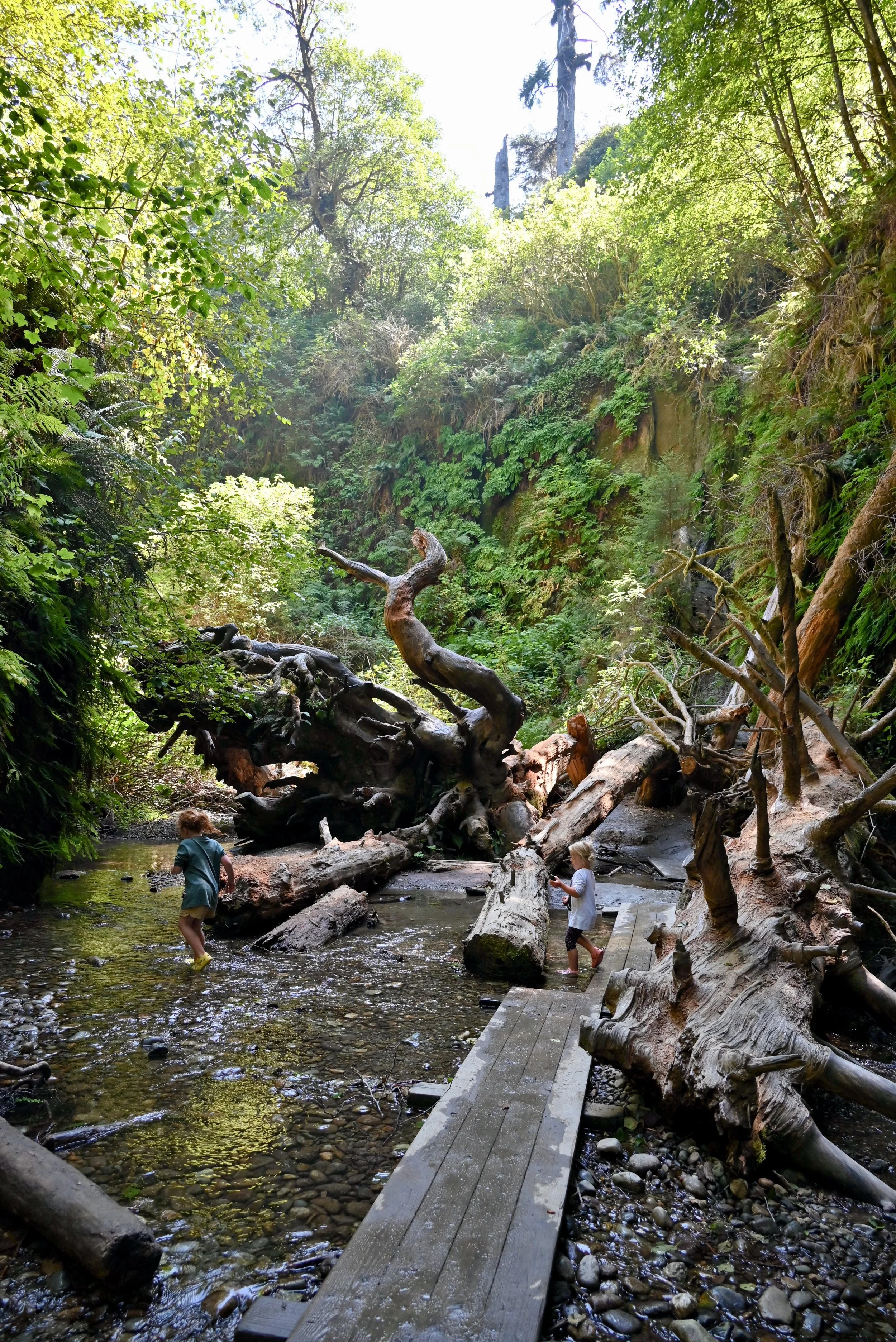
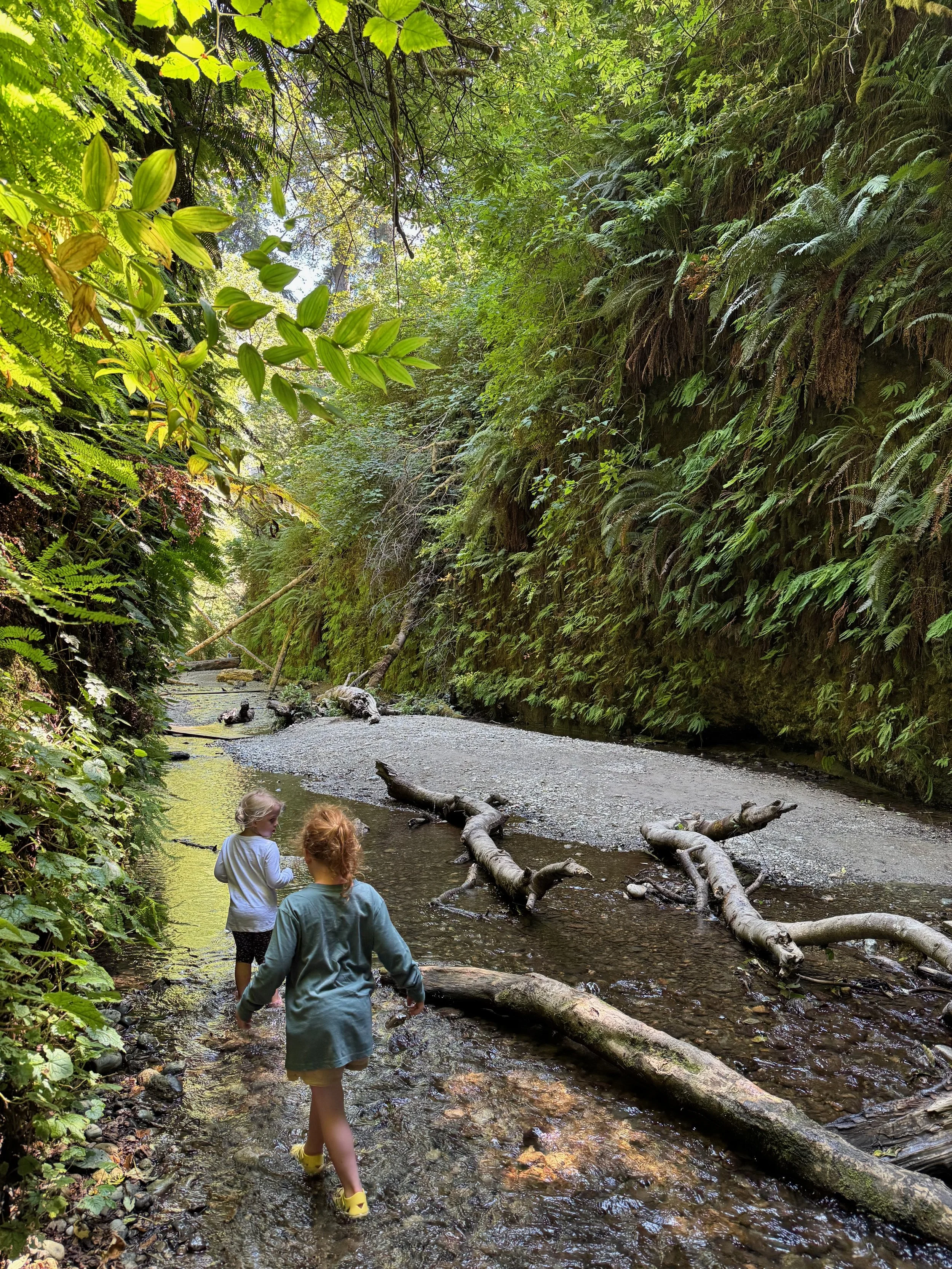
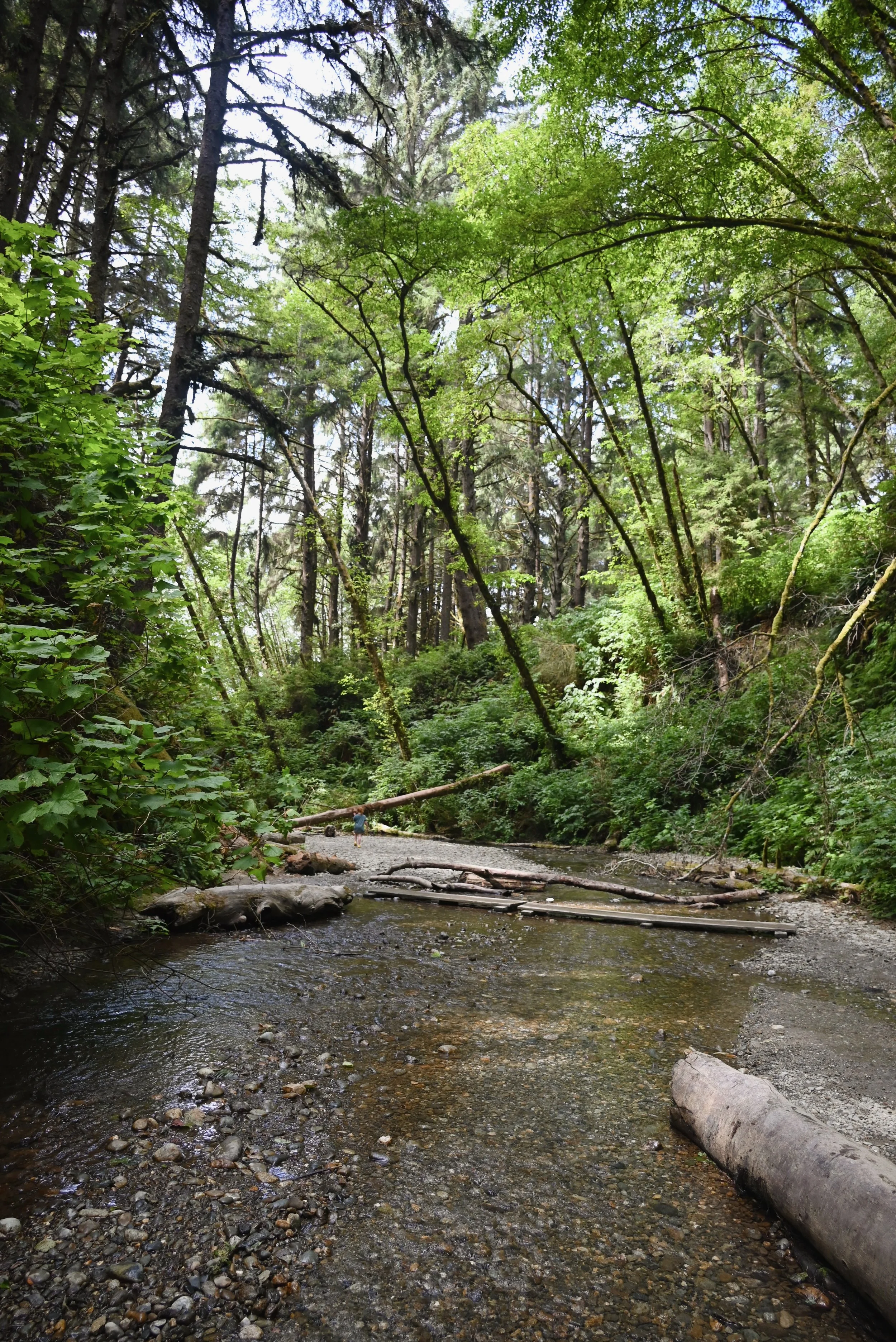
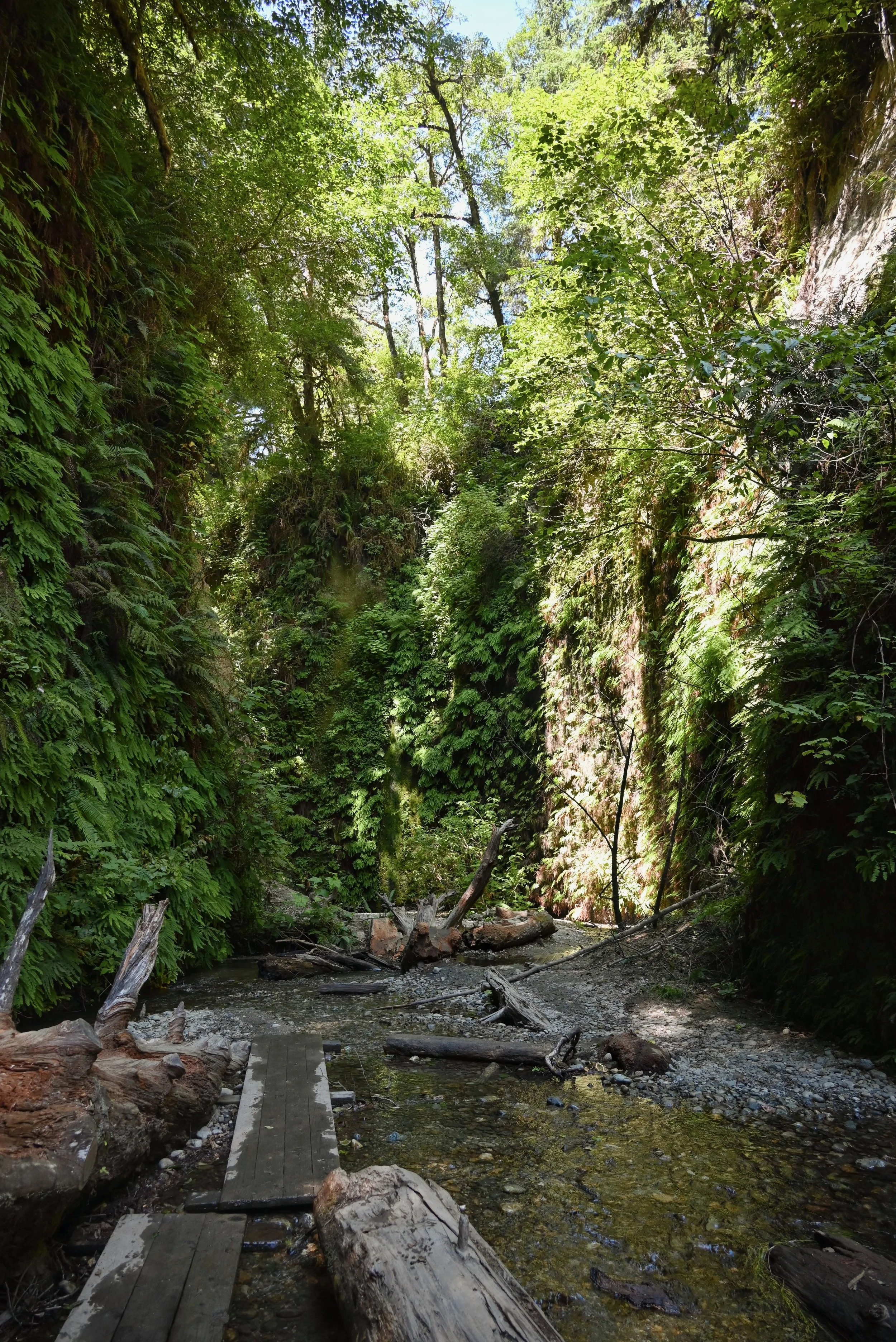
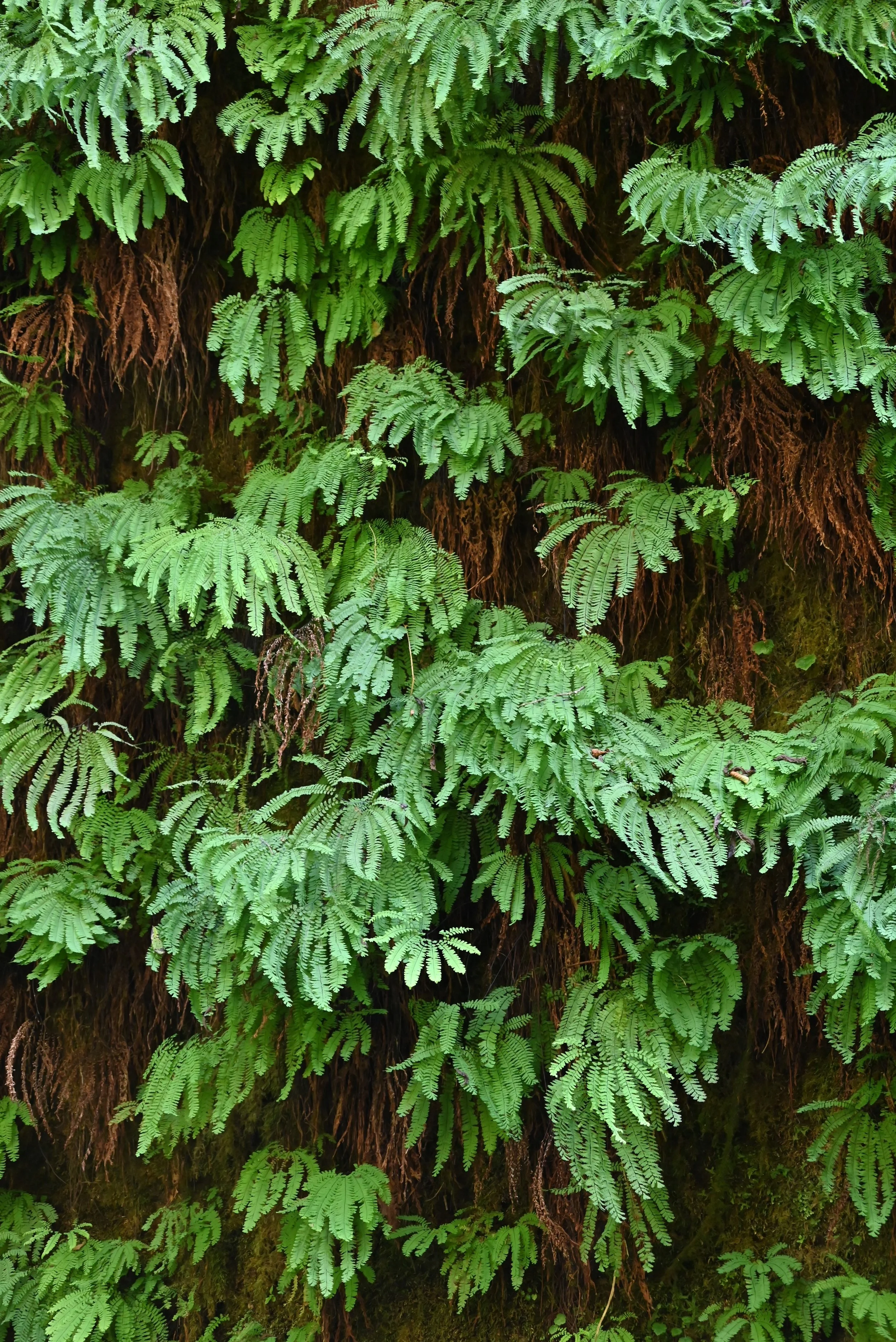
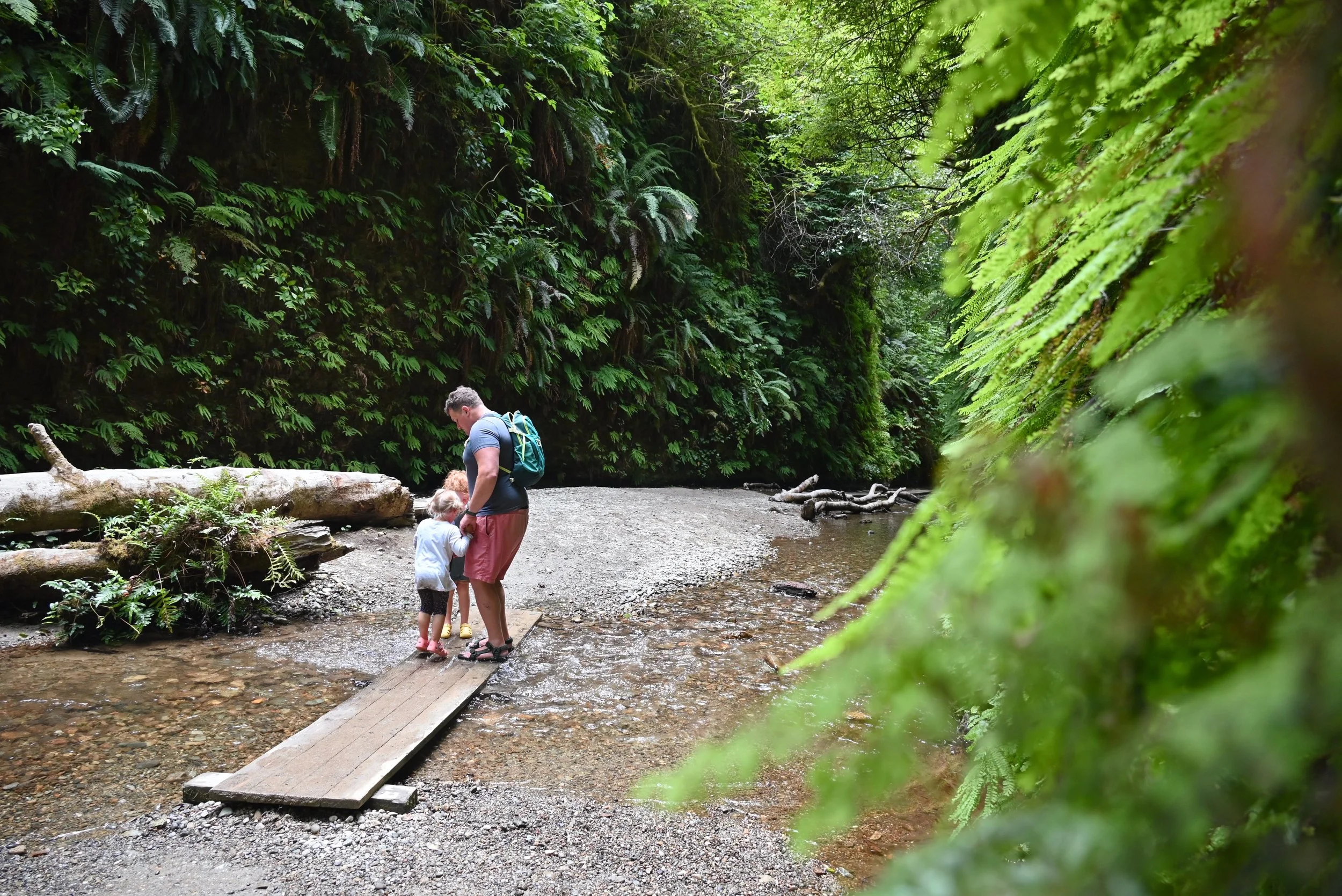
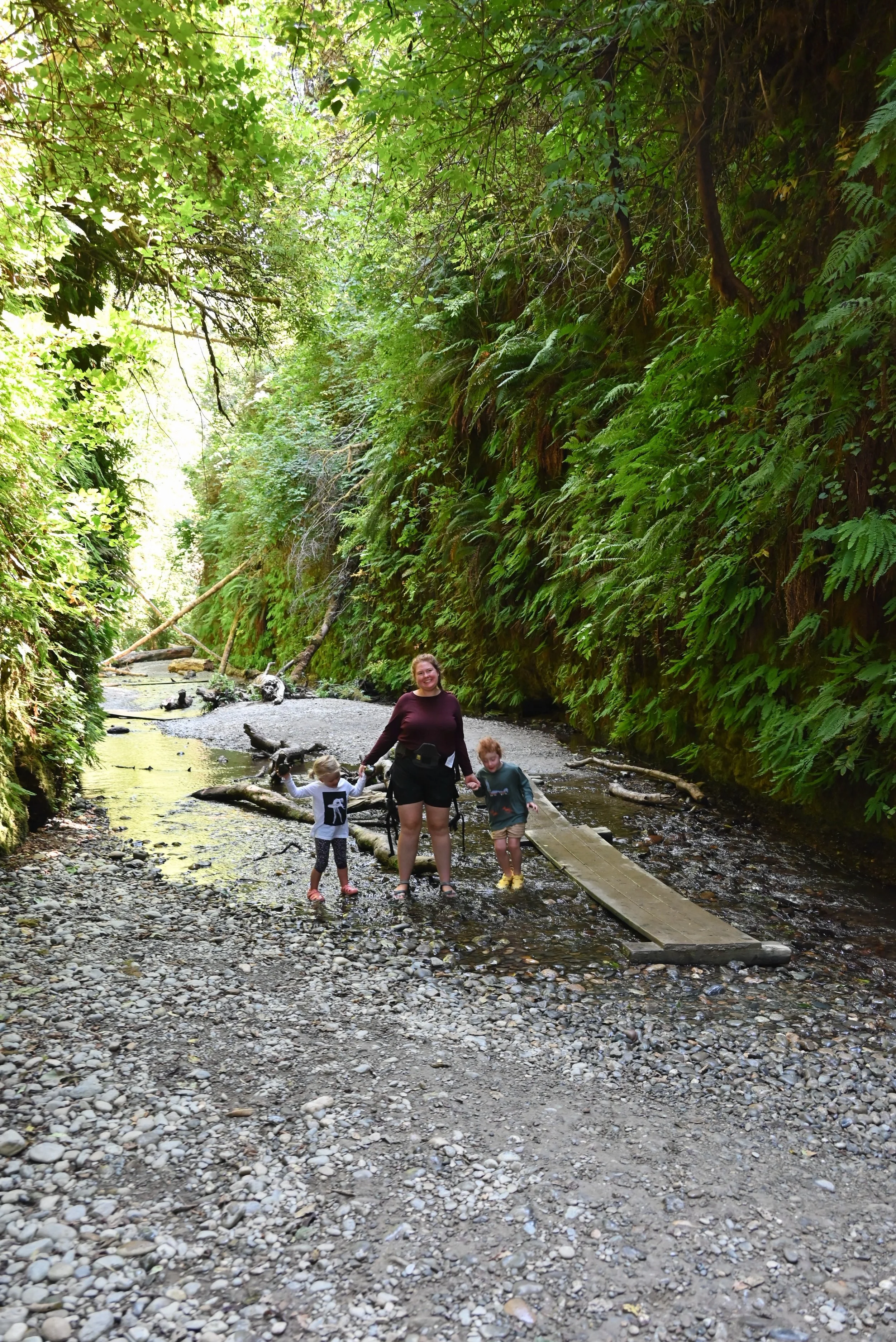
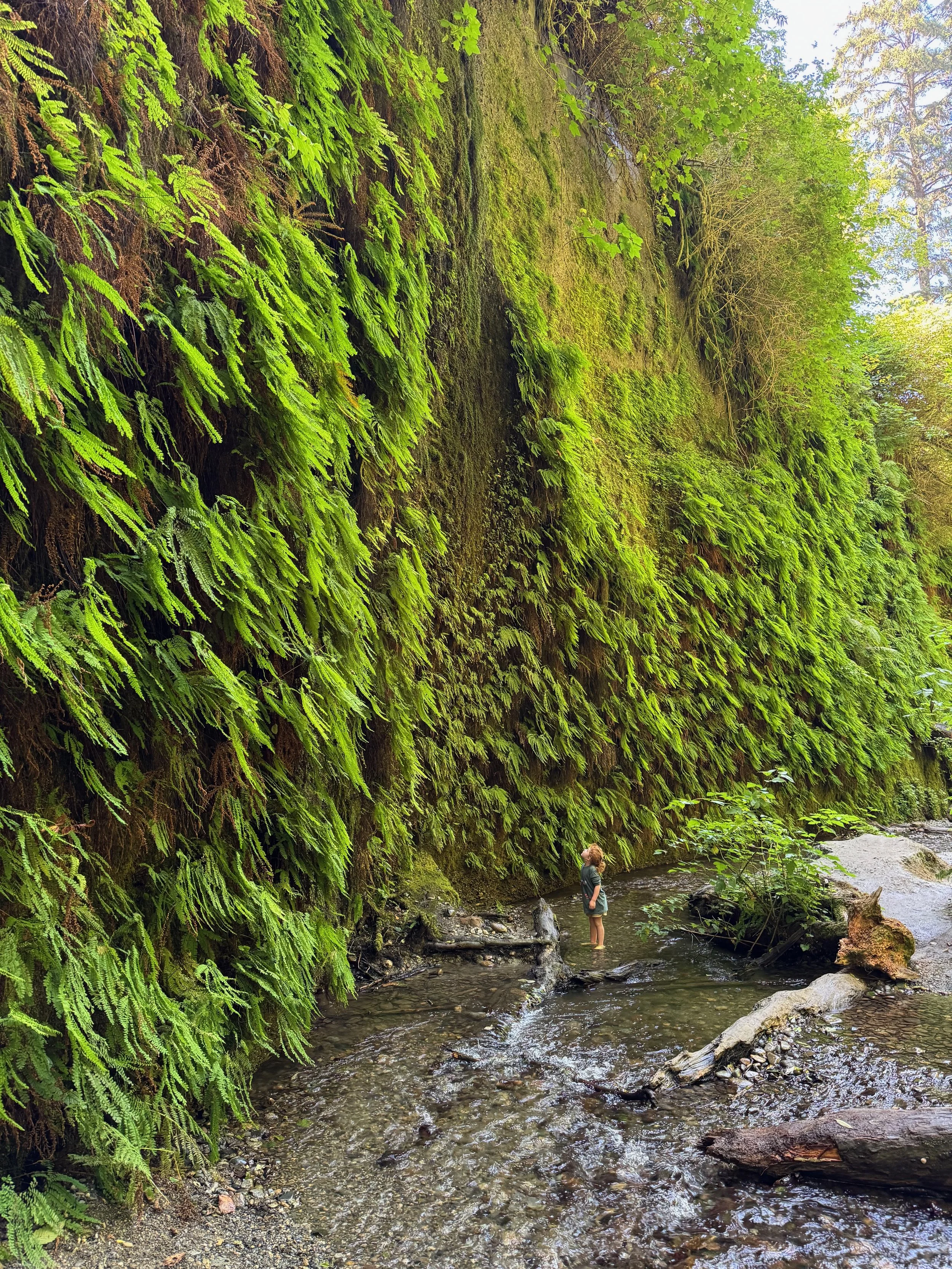
Now about the actual hike, there isn’t an actual trail through the canyon. You will be walking in the stream in the canyon. Bring waterproof shoes, rain boots, water shoes or even we saw people walking in flip flops. There were a few people we saw without waterproof shoes doing the hike and it honestly seemed to take a lot of the enjoyment out of it - constantly having to worry about where you step. Part of the charm of this hike is walking in the stream. There are footbridges throughout the stream that we did use, but we also just walked in the stream. Even with reservations and limited visitors, the trail is still fairly busy. However, we were still able to get pictures and moments with no one else around us. Fern Canyon is a very accurate name, with ferns covering the walls of the canyon on most of this trail.
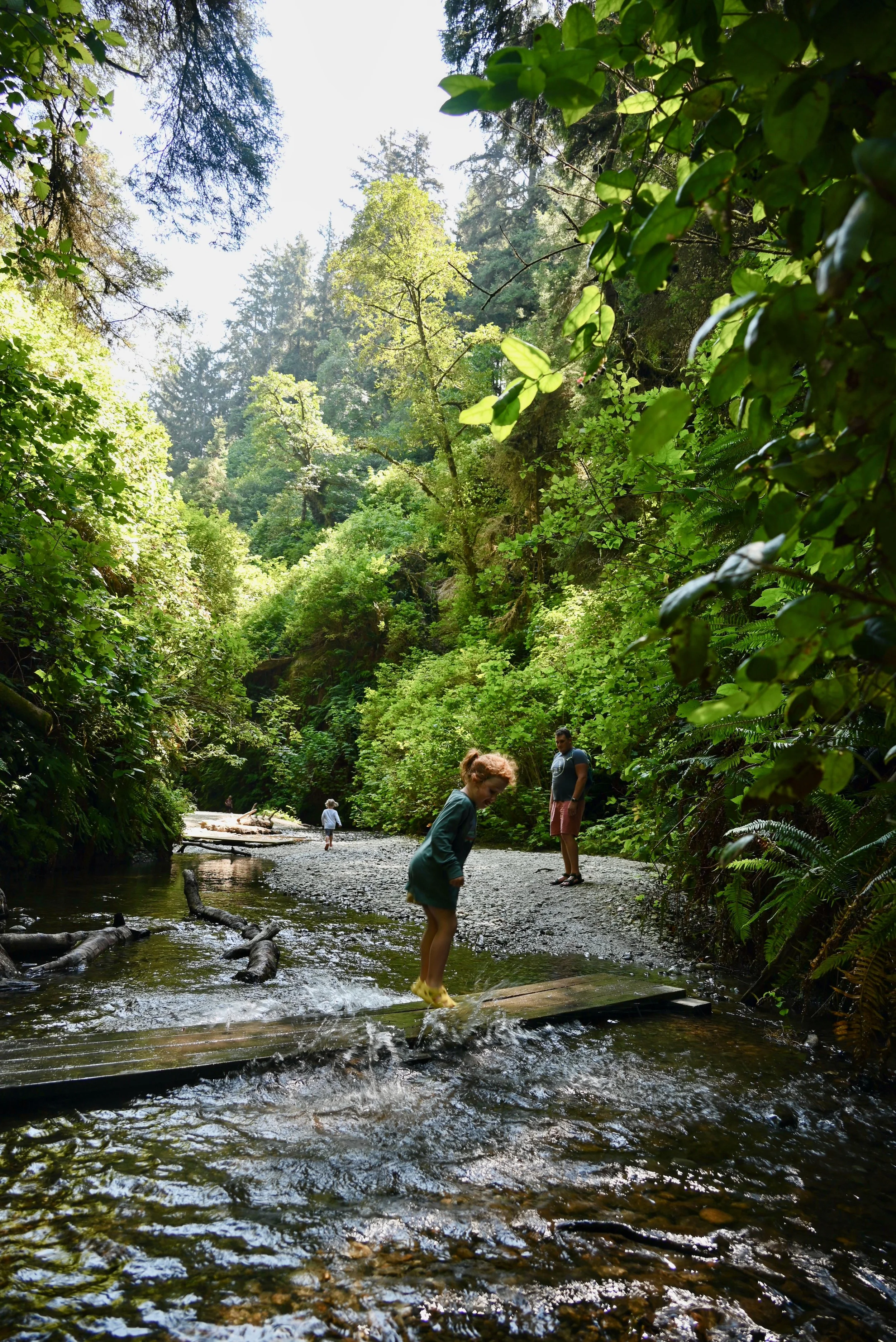
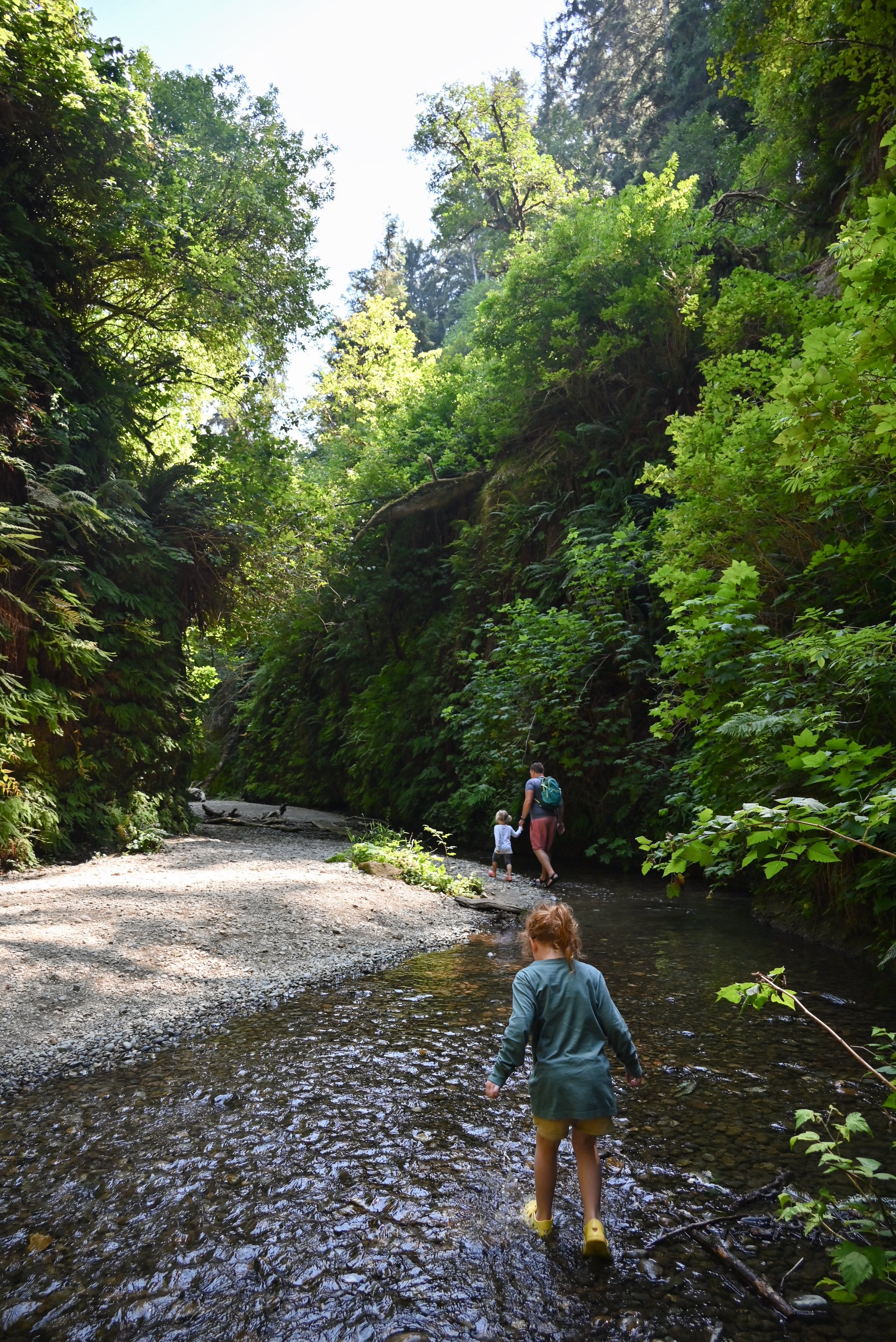
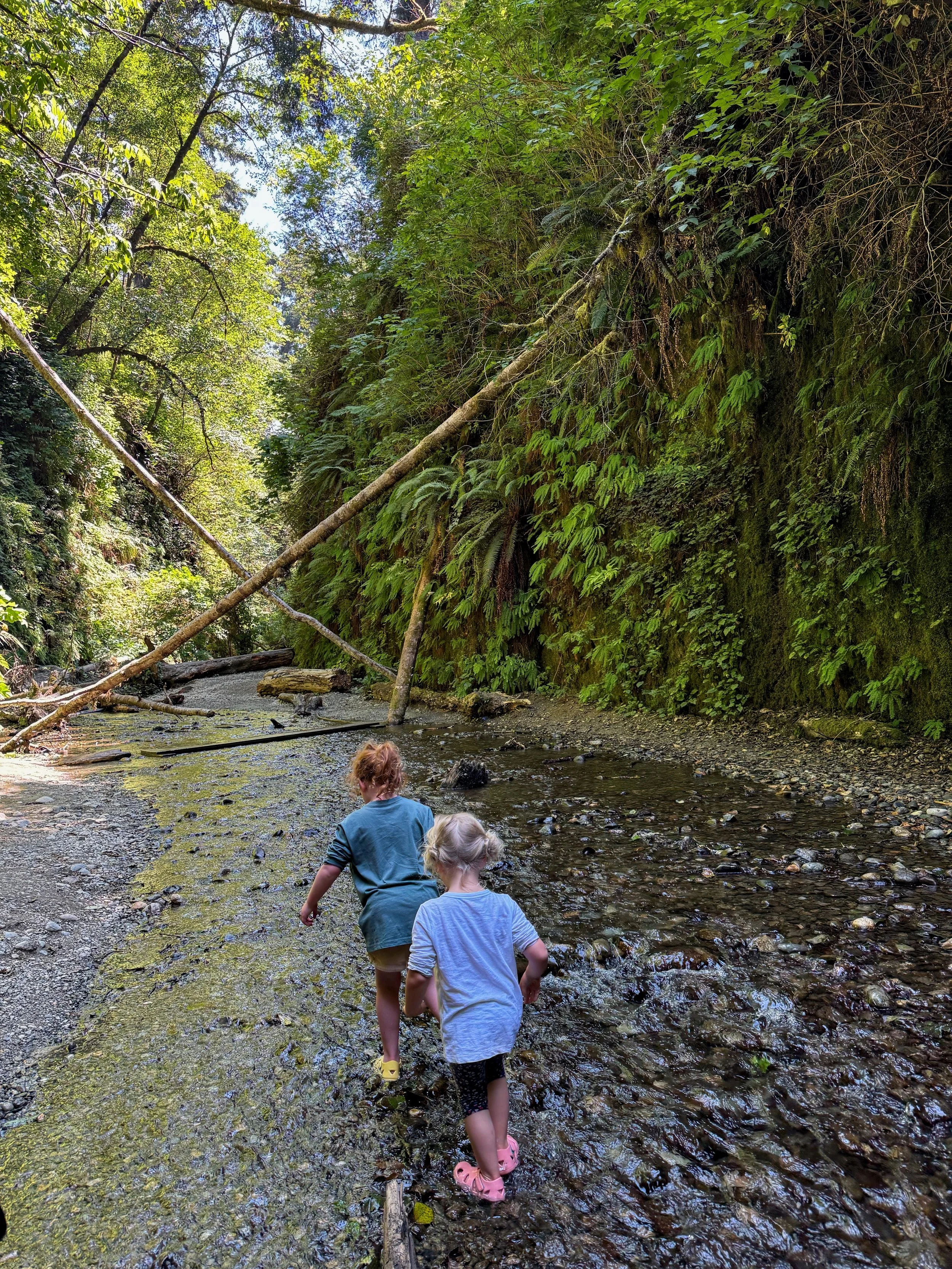
The trail is a loop and once you walk down the canyon, there is a set of stairs to the left that you go up to finish the loop. You are also able to walk down the canyon as far as you can then walk back through the canyon the way you came. We decided to do the later since our kids enjoying being in the stream so much. As far as I’ve heard, we did not miss much skipping the non-canyon part of the hike. There are a couple spots above where you can take pictures of the canyon from above though. If you have time you can also do the upper part of the hike and go into the canyon again for as long as you want. The entire trail done as the loop indicated on all trails is 1.2 miles, but we ended up walking a bit more than that as we explored the canyon.
After doing the Fern Canyon Trail, you can enjoy the Gold Bluffs Beach - a large sandy beach that is sure to not be crowded due to permits and how long it takes to get here. The beach access is right at the parking lot for Fern Canyon.
Newton B. Drury Scenic Parkway
After the bumpy drive back to highway 101, we visited Big Tree Wayside - just a couple miles down 101 and on the Newton B. Drury Scenic Parkway. Newton B. Drury Parkway is worth driving even if you don’t stop anywhere along the way. However, there are several hiking trails and stops along this road, but the views from the road worthwhile.
Elk Prairie
If you are coming from Fern Canyon, meaning from the South, the drive starts by driving past Prairie Creek Visitor Center - where you will likely spot elk in the fields nearby. This wide meadow is one of the best to see Roosevelt Elk. There are places near here to have a picnic. You can stop at the visitor center if you want to look inside for souvenirs or go to the bathroom. The rangers inside are also very helpful to giving advice.
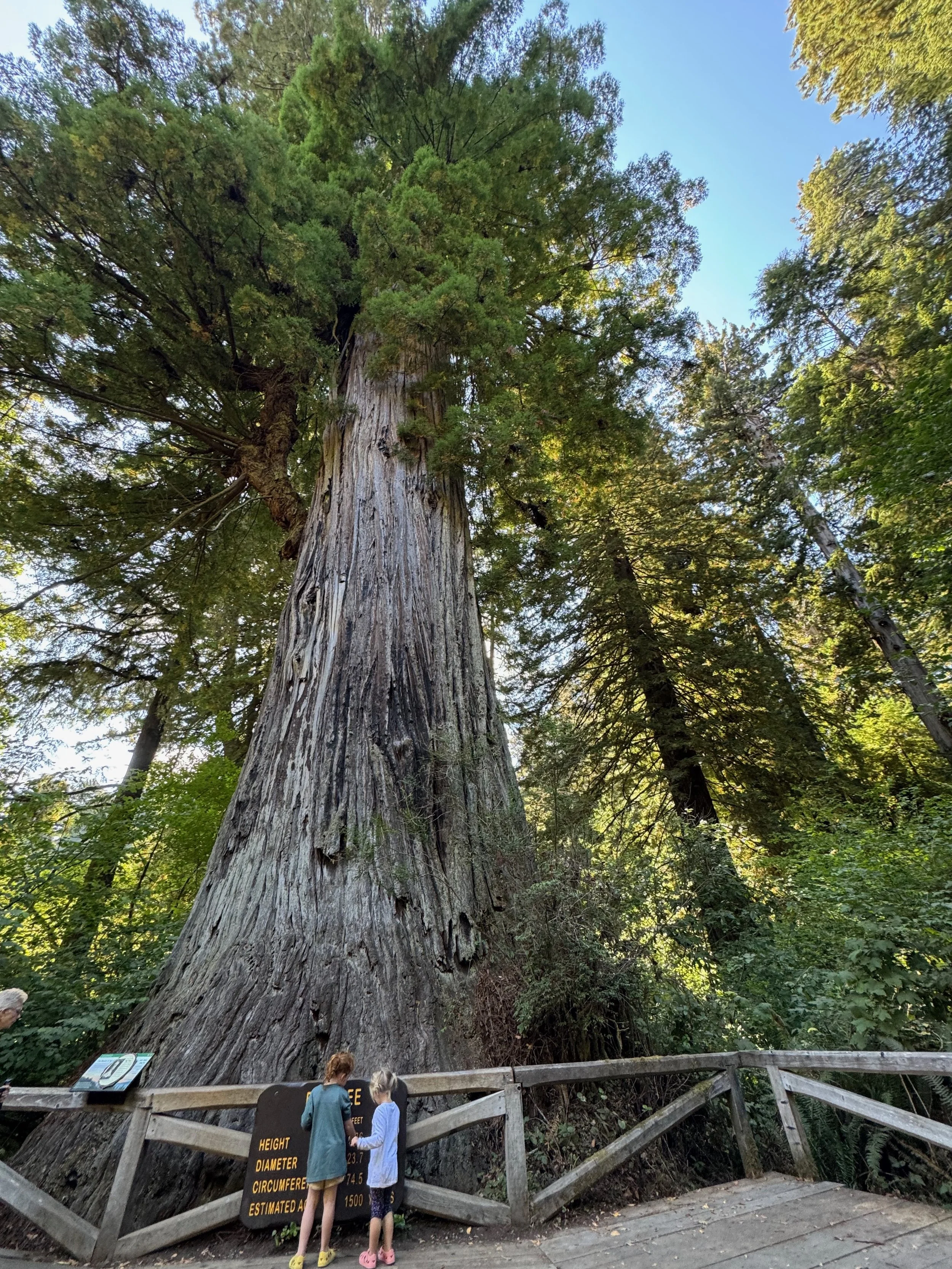
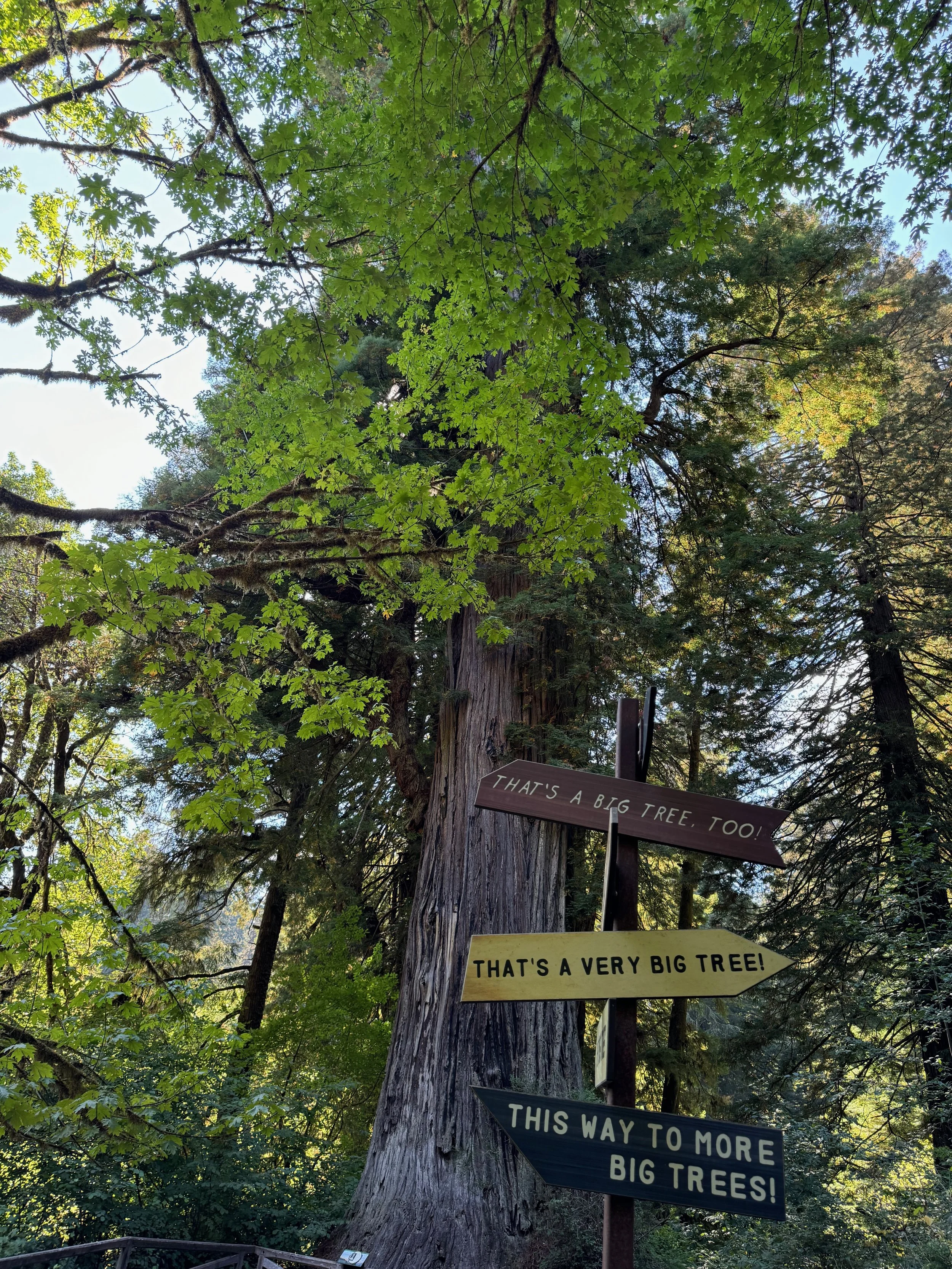
Big Tree Wayside
The most popular stop along this road. There is a large parking lot and a short paved walk (0.3 miles round trip) to a giant old-growth redwood. There are more trails from here if you wanted to hike further, or this can be a quick 10 minute stretch your legs kind of stop.
Some longer trails from here (or to here, depending on how you do them): The Cathedral Trees Trail takes you from the big tree back to the visitor center and passes several massive trees and so may ferns. The Karl Knapp trail is another easy trail from the visitor center to the big tree area. If you wanted to do a loop, you can take one of these trails to Big Tree and one trail back to the visitor center. If you do the loop, it is approximately 3 miles.
Corkscrew Tree
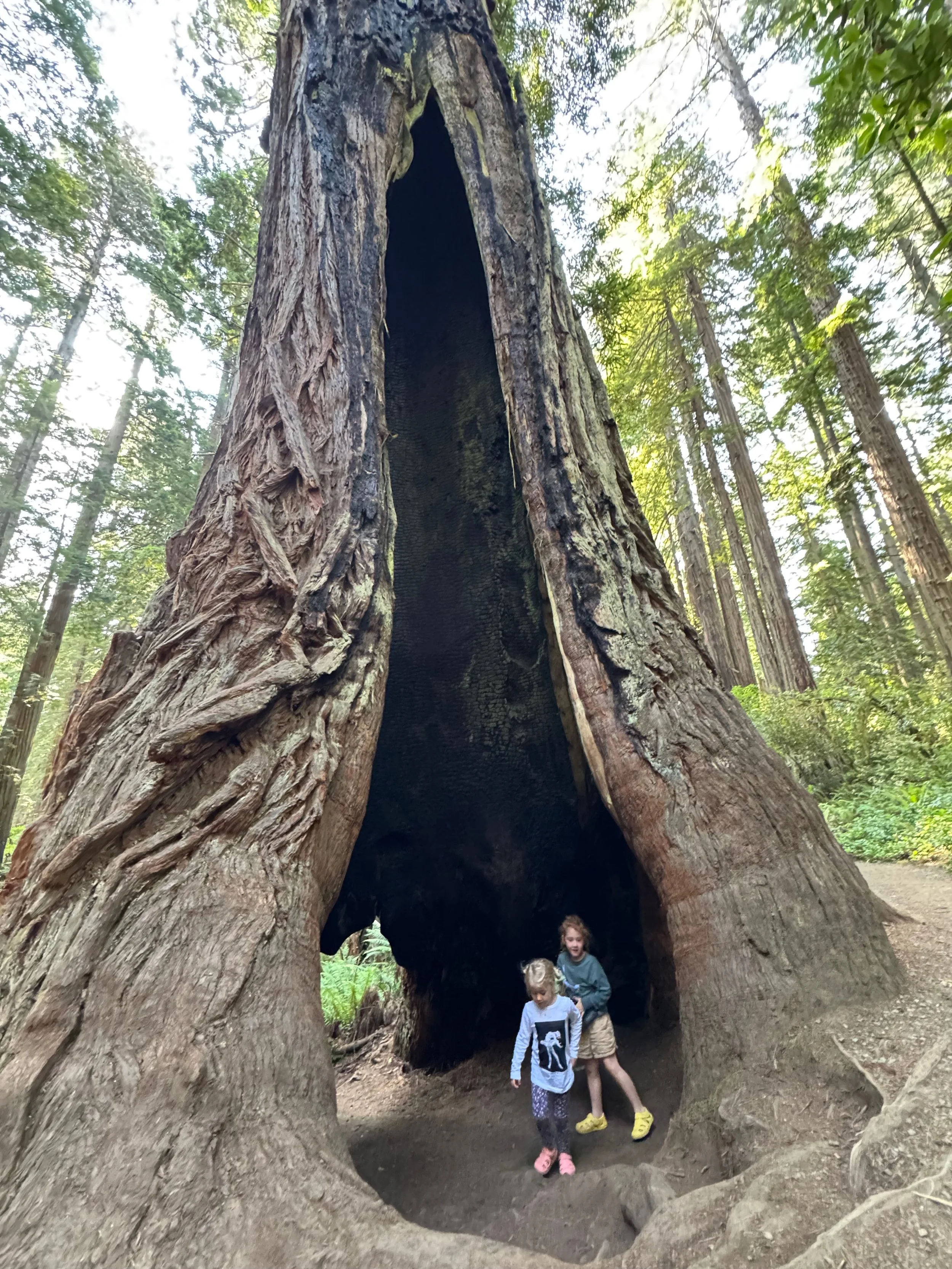
This unique large tree was formed from two trees that grew close together and formed a corkscrew shape. The tree is just a 5 minute walk from the small parking area. There was not a sign for us heading north but look for the cars parked on the side of the road very close after the big tree wayside.
More Stops along the way
There is so much to do in the Redwoods National and State Parks. If you have more time or want to spend more of the next day at the parks, here are some other options:
Tall Trees Grove – Another one of the most popular hikes in the national park and another one that requires a free permit. This is a beautiful 4.5 mile round-trip hike that is a bit difficult to get to. There is a 6 mile dirt road that is narrow and windy and a small parking lot at the end of it. This is considered a moderate hike and the entire experience will likely take at least 4 hours including driving time. Knowing all of this, most people consider it worth it as the grove is gorgeous.
Klamath River Overlook – a short drive from highway 101, you can visit Klamath River Overlook to get a beautiful view of the ocean and possibly spot migrating whales and native birds. There is about a mile long hike to get you to an overlook but it is not significantly better than the view from near the parking lot.
Trees of Mystery – This is a paid attraction outside of the national and state parks near Klamath. It includes a gondola throughout the forest and a redwood canopy trail featuring suspension bridges that costs $30 for adults and $15 for kids 3-12. They have some neat trees throughout the property as well. If you have the budget or have members of your group who have difficulty hiking, this is a good way to experience the Redwoods. While I’ll always choose national and state parks over private attractions, they do a good job at educating people about the area and giving access to nature in a different manner.
Enderts Beach – Half a mile hike down to this beach where you can explore tidepools and beautiful cliffs. This will be a good spot if low tide times overlap with this part of the trip rather than along the Oregon Coast.
James Irvine Trail – Long, all day hike that takes you 10.4 miles on an out and back trail from the Prairie creek visitor center to Fern Canyon. If you want a long hike or if you did not secure a permit for Fern Canyon, this is a way to enjoy the Redwoods on a beautiful scenic trail.
Trillium Falls Trail – A 2.7 mile moderate loop trail that takes you through the forest and ends at a waterfall. It is kid-friendly but there is some elevation gain. If you do the trail counterclockwise, you will see the falls early on or you can do it clockwise to end at the falls.
Bald Hills Road – Drive through this road, which is how you get to the Lady Bird Johnson Trail, to get some beautiful views of the park – including prairies and meadows, along with forests.
Howland Hill Road – A narrow 6-mile unpaved gravel route that takes you through the Jedediah Smith Redwoods State Park. This is a beautiful drive that takes you right next to old-growth redwoods. There are a few trail heads along this route including the Boy Scout Tree Trail or the Stout Memorial Grove Loop.
Stout Grove – Half a mile loop trail that allows you to see some beautiful views - trees, stream, etc in a short amount of time.
Grove of Titans Trail – A 1.8 mile trail that takes you into a grove of large redwoods. Parking, like the previous trail, is limited and it does get busy. Easy and rewarding trail.
Smith River – In the summer, you can swim in Smith River, but note the water will still be quite chilly. Beautiful clear water.
Day 6
More Redwoods National Park
This next morning, we visited the Jedidiah Smith area. We drove down Howland Hill Road, did the short Stout Grove trail and visited the Jedidiah Smith Visitor Center. You can choose to fill this morning with whatever else is on your Redwoods must-see list or any hike or activity listed above. Alternatively, you can spend the morning exploring Crescent City more including Battery Point Lighthouse which is only accessible during low tide.
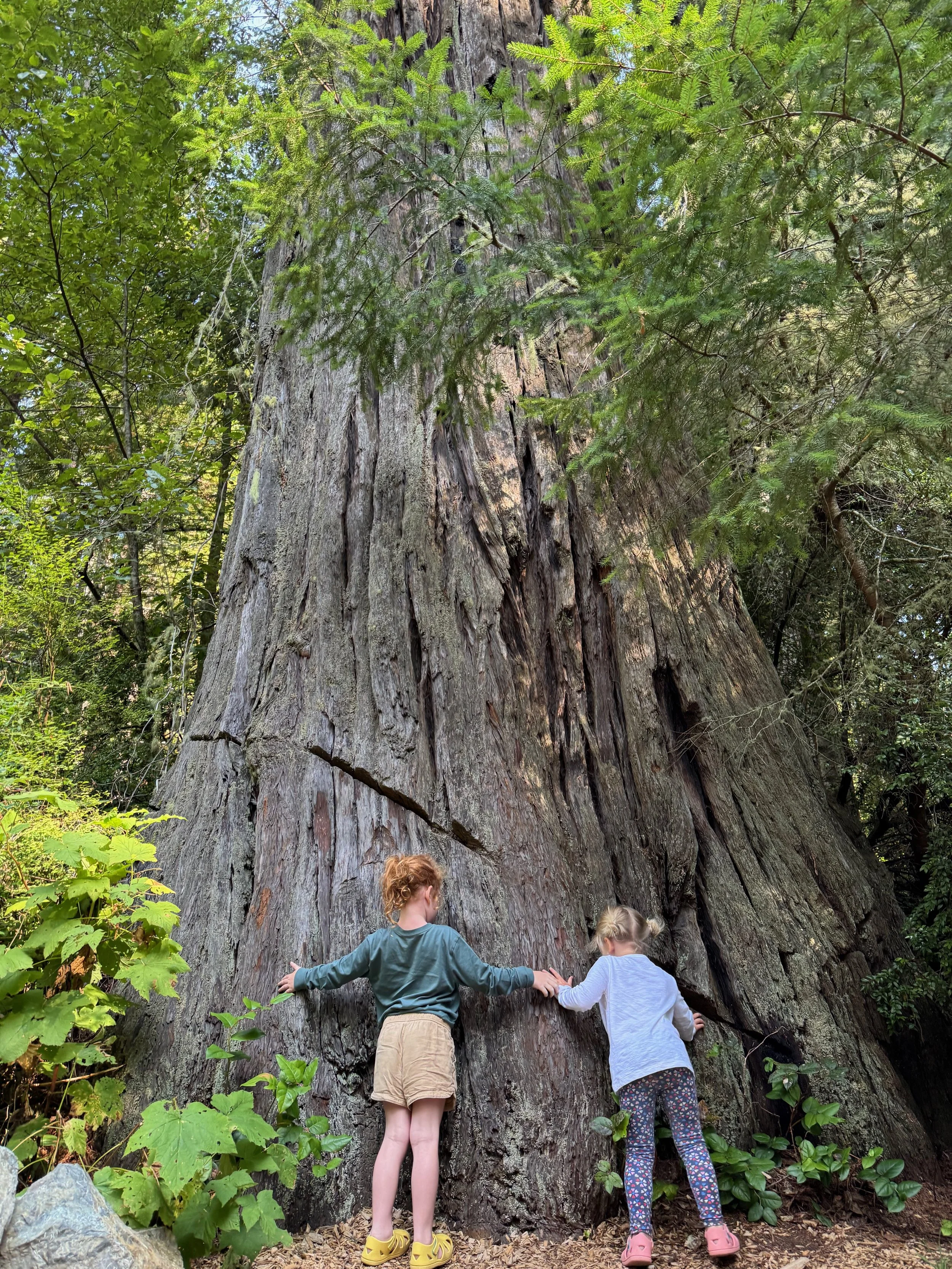
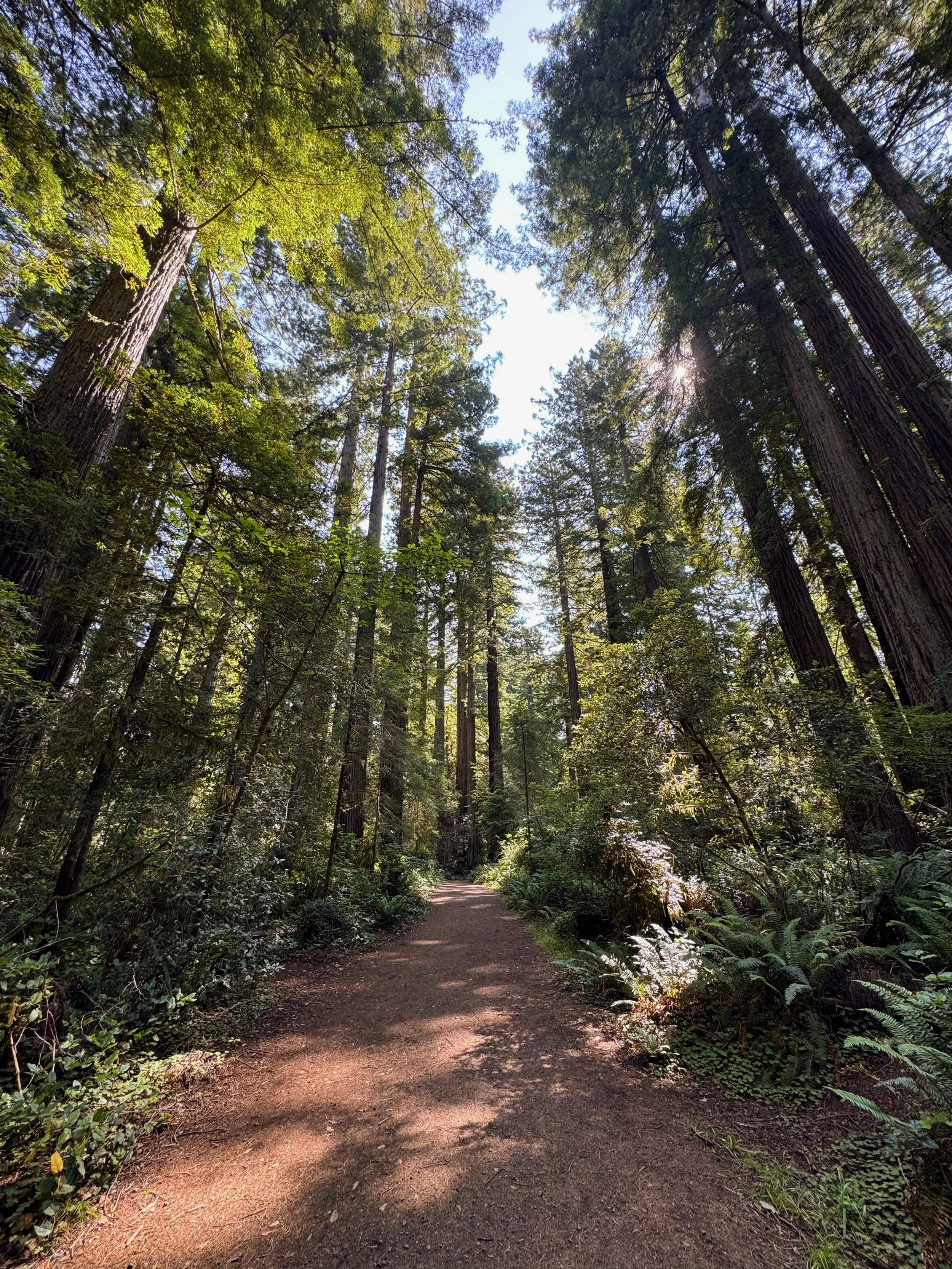
Day 6 definitely had less highlights than previous days of this trip, and that is okay. We treated this as our more relaxed day. We spent about 1.5 hours this morning exploring the Redwoods more and then headed back north through Oregon. You could easily stay on highway 101 and go back north along the coast, or you can take the faster but far more boring route using I-5. I will say, Redwood Highway route 199 that goes through California until Oregon to get to I-5 was beautiful as it stayed along the smith river and then creeks and streams most of the time. Crescent City to Portland via the coastal highway 101 will take you just under 8 hours. The fastest route back using I-5 is 5 hours and 45 minutes.
There are far more places to stop along the coastal route 101, as it detailed on the previous days of this itinerary. However there are a few places worth visiting if you are taking the short way back.
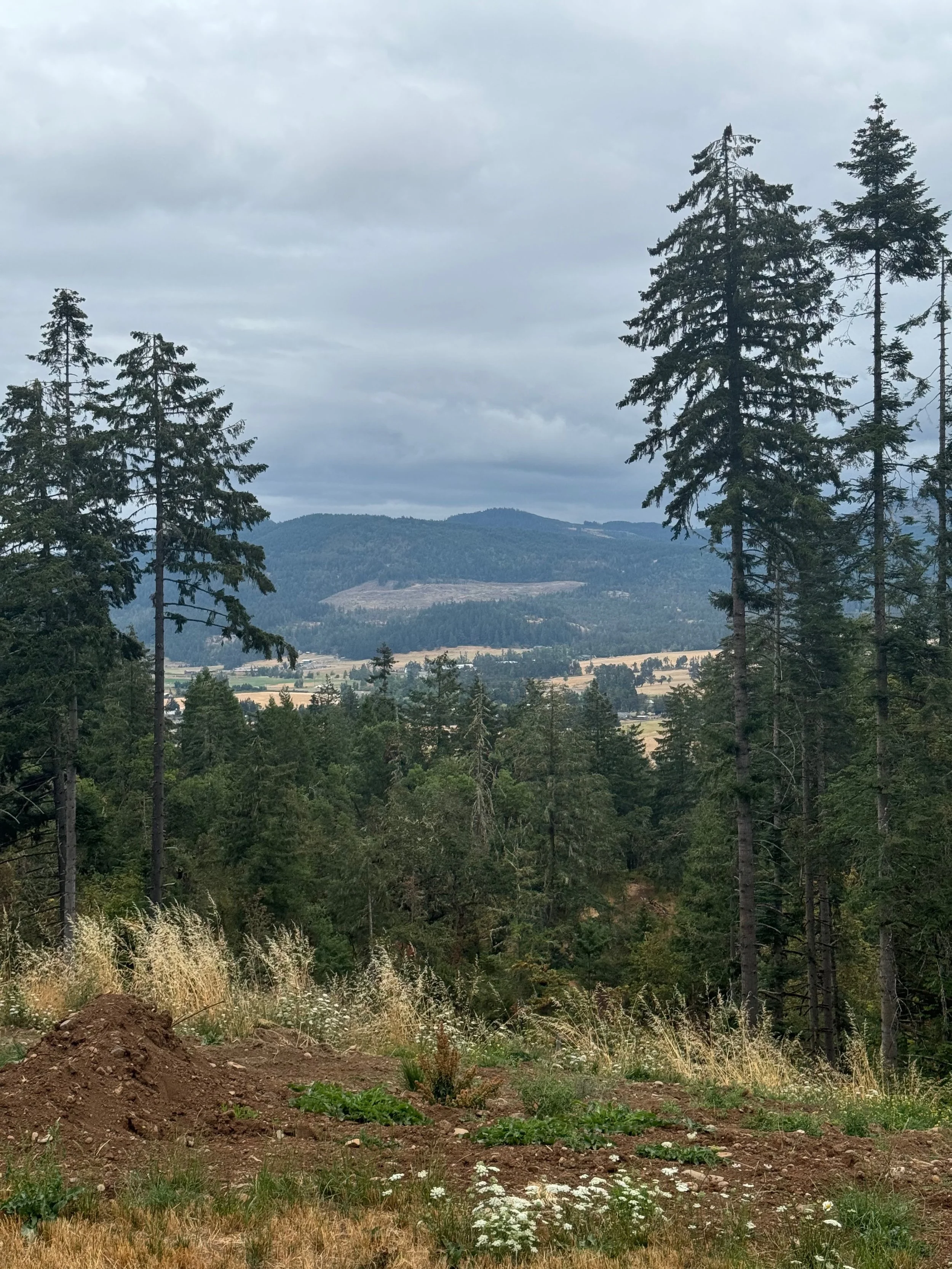
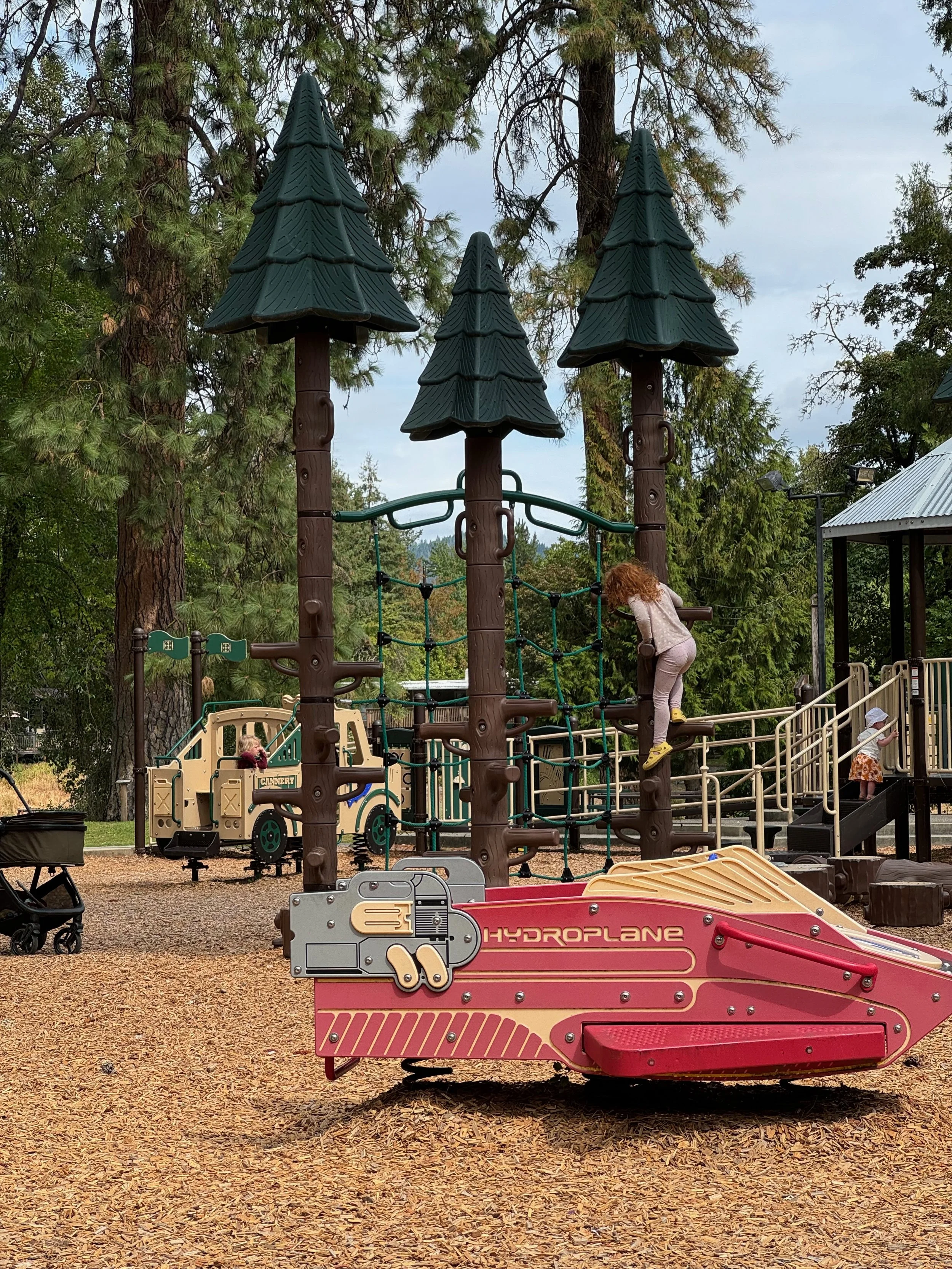
We stopped in Grants Pass, OR to get lunch and play at the large playground in Riverside Park. Grants Pass also has a nice riverside walk. The main stop we did was:
Wildlife Safari
Wildlife Safari is a non-profit AZA accredited zoo with a large free roaming natural habitat. There is a drive through Safari experience and a free Safari Village with interactive animal exhibit. The Drive Thru Wildlife Safari is done in your own vehicle at your own pace. You drive 10 MPH or slower and get to see animals from Africa, Asia and the Americas. They are free roaming and may be right next to the road or a bit farther away. Animals you may see include lions, zebras, giraffes, bison, bears, yaks, cheetahs, wolves and more. It takes about 60-90 minutes to drive all the way through and you are allowed to do the loop multiple times. The Drive Thru is fairly pricey at $30 per adult and $23 per child.
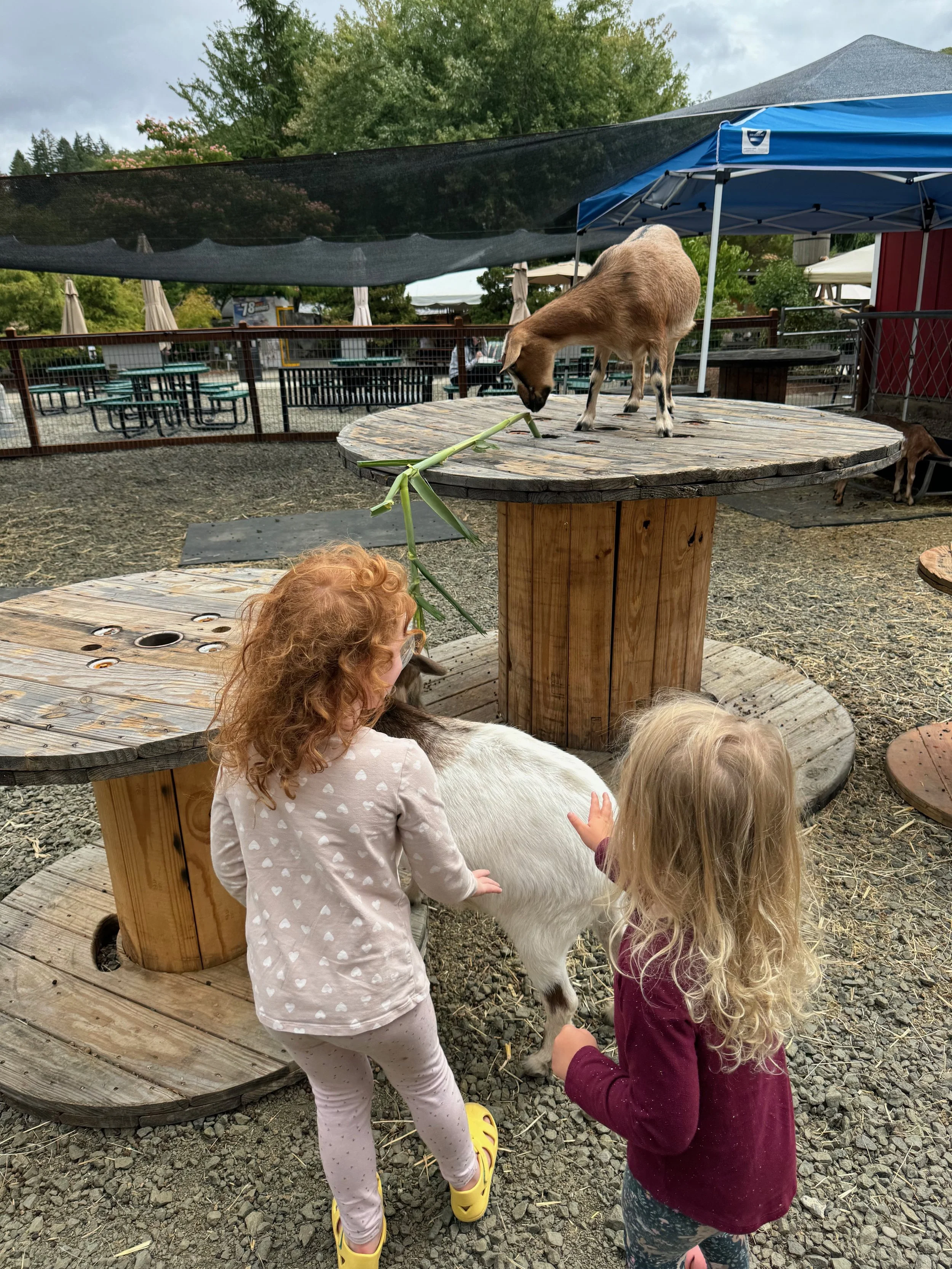
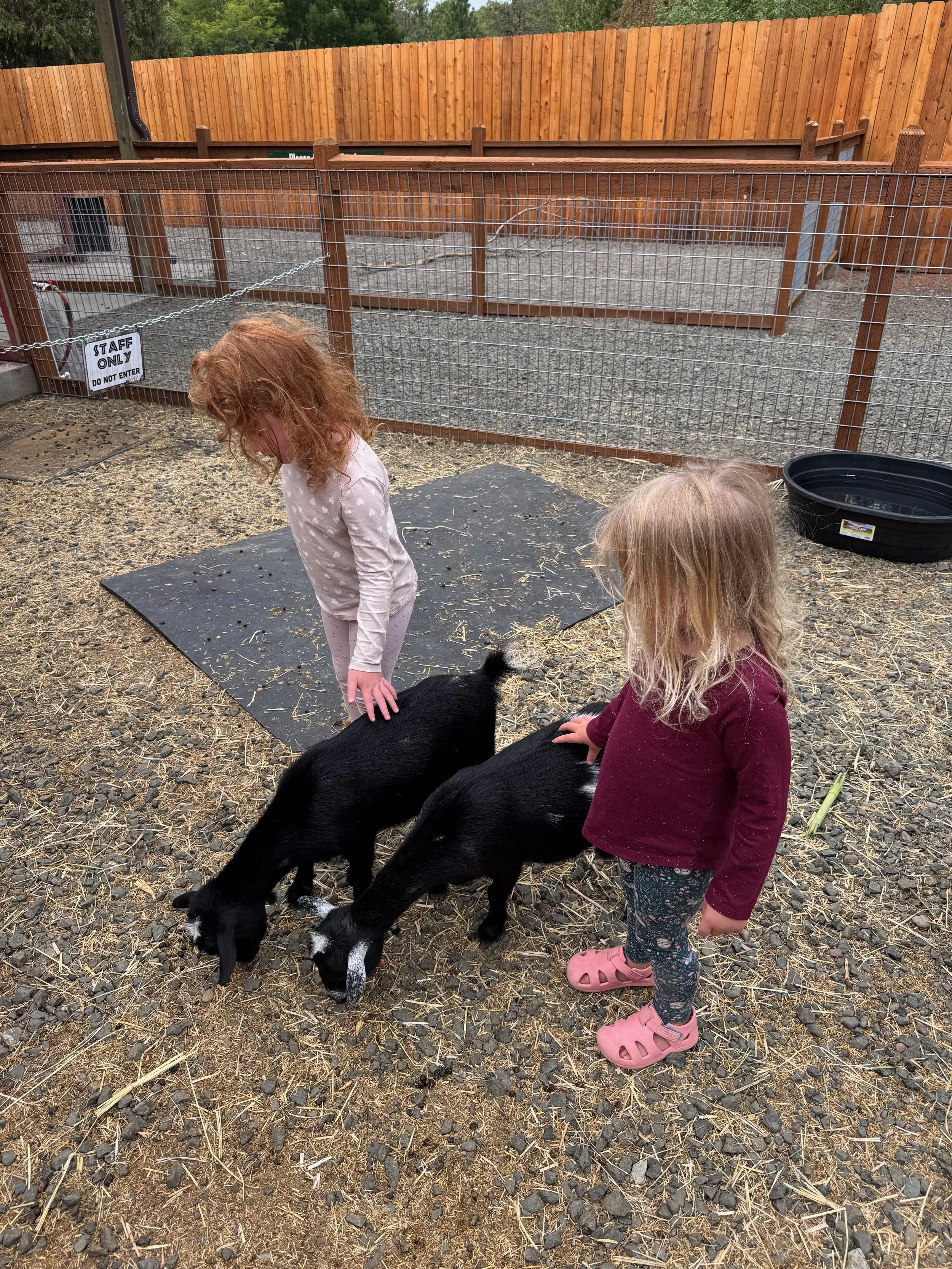
We opted to just visit the free Safari Village. This is a walk through experience with some animal exhibits including goats and donkeys to pet. There are also train rides – for a fee – and playgrounds. In the Safari Village, along with the petting zoo animals, you can see cheetahs, red pandas, flamingos, lemurs, alligators and birds. We ended up spending about an hour here and it worked out to be a great free stop.
More Stops along the way
Oregon Caves National Monument & Preserve – This is about a 20-minute detour from US-199 and it is managed by the National Parks Service. These caves are only accessible by guided tours, which do sell out during the summer months. The cave tours cost $20 per person or $10 if you are an America the Beautiful pass holder, there is no fee other than the cost of the tour.
Oregon Vortex – about 10 minutes off I-5, this strange attraction features multiple strange optical illusions. Balls rolling uphill, buildings tilted, brooms standing on their own. It is currently closed due to flooding damage but hopes to reopen in early 2027.
Winchester Dam Fish Ladder – right off I-5, where you can watch Salmon swimming up the ladder from May to October. There are underwater viewing windows.
Cottage Grove, OR – Known as the covered bridge capital of Oregon and has a cute historic downtown along with several covered bridges.
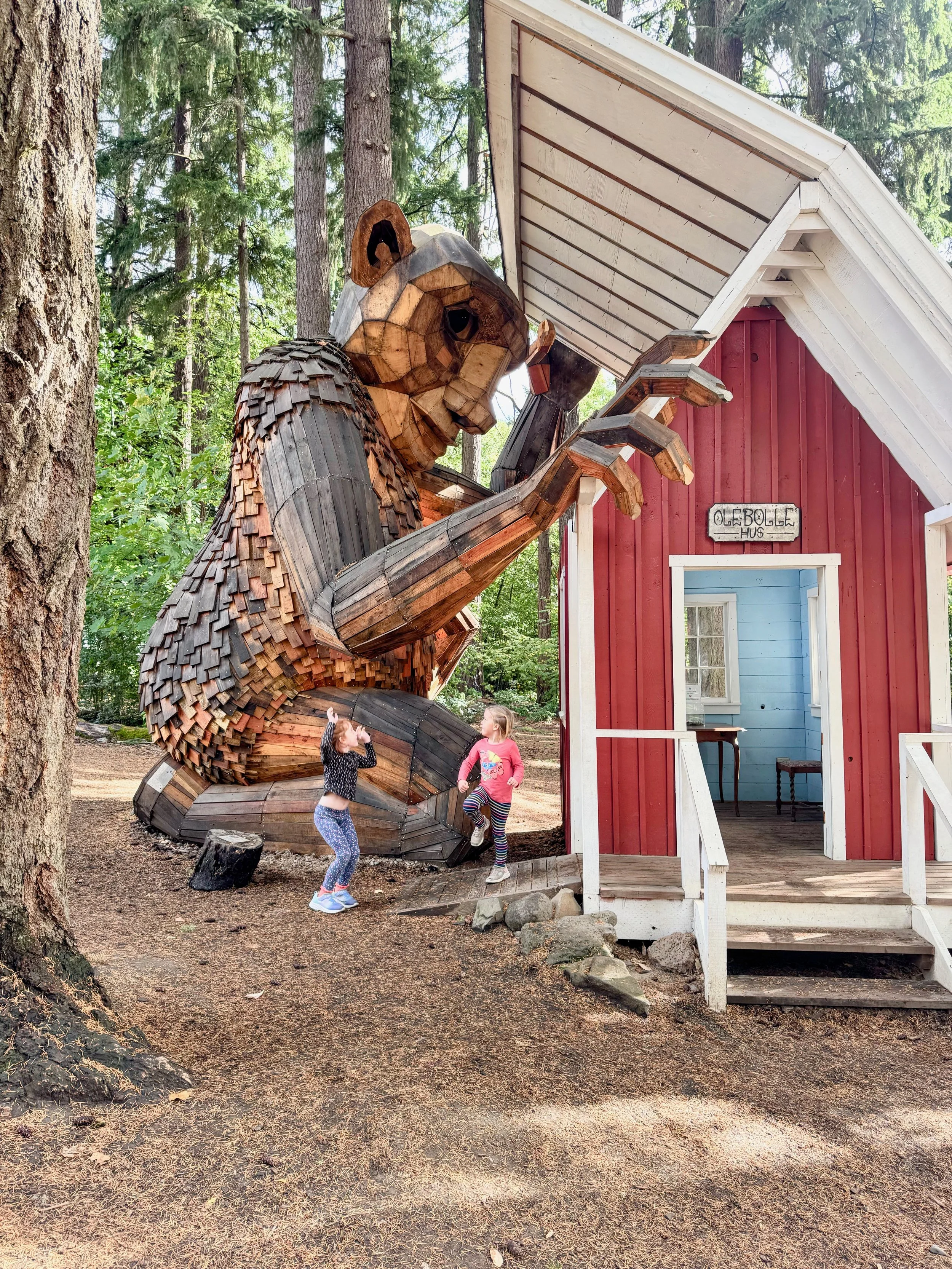
The final two days of this road trip! We spent these days in and around Portland, Oregon and making the drive back up to Seattle to end our trip. This part of the trip is far more of a choose your own adventure, as they are countless things to do around Portland. We visited the quirky Enchanted Forest Amusement Park, the last troll we needed to see of Thomas Dambo’s PNW trolls, and walked around downtown Portland. This article includes many more ideas of how to fill your time